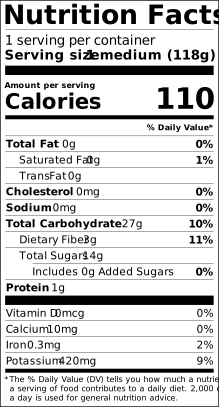
A medium banana (118 g peeled) has 105 calories, 27 g of carbohydrate, 1.3 g of protein and almost no fat. The numbers below come from USDA's record for raw banana and update with the serving you pick, from an extra small banana to a cup of mash.
FDA standard format. Values use the FDA rounding rules for the serving you pick. Nutrients USDA does not report for this food print as 0 on the panel and as "not reported" in the table.
Download this label:SVG · PNG Free to use as a reference. A label for a product you sell needs your full recipe and ingredient statement.
Opens the free label generator with this amount of banana already added. Add the rest of your ingredients and the label updates as you go.
All nutrients for this serving
1 medium (7" to 7-7/8" long) (118 g)
Nutrient
Per serving
% DV*
Per 100 g
Calories and macronutrients
Calories
105
89
Total fat
0.4 g
0%
0.33 g
Saturated fat
0.1 g
1%
0.11 g
Trans fat
0 g
0 g
Monounsaturated fat
<0.1 g
0.03 g
Polyunsaturated fat
0.1 g
0.07 g
Cholesterol
0 mg
0%
0 mg
Sodium
1.2 mg
0%
1 mg
Total carbohydrate
27 g
10%
22.8 g
Dietary fiber
3.1 g
11%
2.6 g
Total sugars
14.4 g
12.2 g
Added sugars
0 g
0%
0 g
Protein
1.3 g
1.09 g
Vitamins
Vitamin D
0 mcg
0%
0 mcg
Vitamin A
3.5 mcg
0%
3 mcg
Vitamin C
10 mg
11%
8.7 mg
Vitamin E
0.12 mg
1%
0.1 mg
Vitamin K
0.59 mcg
0%
0.5 mcg
Thiamin (B1)
<0.1 mg
3%
0.03 mg
Riboflavin (B2)
0.09 mg
7%
0.07 mg
Niacin (B3)
0.78 mg
5%
0.67 mg
Vitamin B6
0.43 mg
25%
0.37 mg
Folate (DFE)
24 mcg
6%
20 mcg
Vitamin B12
0 mcg
0%
0 mcg
Choline
12 mg
2%
9.8 mg
Minerals
Calcium
5.9 mg
0%
5 mg
Iron
0.31 mg
2%
0.26 mg
Potassium
422 mg
9%
358 mg
Magnesium
32 mg
8%
27 mg
Phosphorus
26 mg
2%
22 mg
Zinc
0.18 mg
2%
0.15 mg
Copper
0.09 mg
10%
0.08 mg
Manganese
0.32 mg
14%
0.27 mg
Selenium
1.2 mcg
2%
1 mcg
Other
Water
88.4 g
74.9 g
Caffeine
0 mg
0 mg
Alcohol
0 g
0 g
* Percent Daily Values are based on a 2,000 calorie diet (FDA reference values for adults and children 4 years and older). Per-100 g values are USDA figures before label rounding.
Banana nutrition by serving size
Every serving below is a USDA household measure for this food, a fraction of one, or a unit conversion. Amounts are USDA values scaled by weight; only the Nutrition Facts panel applies the coarser FDA label rounding.
Serving
Weight
Calories
Total carbohydrate
Protein
Total fat
Dietary fiber
Total sugars
1 cup, mashed
225 g
200
51.4 g
2.5 g
0.7 g
5.9 g
27.5 g
1 cup, sliced
150 g
134
34.3 g
1.6 g
0.5 g
3.9 g
18.3 g
1 extra small (less than 6" long)
81 g
72
18.5 g
0.9 g
0.3 g
2.1 g
9.9 g
1 small (6" to 6-7/8" long)
101 g
90
23.1 g
1.1 g
0.3 g
2.6 g
12.4 g
1 medium (7" to 7-7/8" long)
118 g
105
27 g
1.3 g
0.4 g
3.1 g
14.4 g
1 large (8" to 8-7/8" long)
136 g
121
31.1 g
1.5 g
0.4 g
3.5 g
16.6 g
1 extra large (9" or longer)
152 g
135
34.7 g
1.7 g
0.5 g
4 g
18.6 g
1 NLEA serving
126 g
112
28.8 g
1.4 g
0.4 g
3.3 g
15.4 g
1/2 medium banana
59 g
53
13.5 g
0.6 g
0.2 g
1.5 g
7.2 g
100 g
100 g
89
22.8 g
1.1 g
0.3 g
2.6 g
12.2 g
Banana calories by size
USDA weighs banana in several sizes. Calories rise with weight:
Serving
Weight
Calories
Total carbohydrate
1 extra small (less than 6" long)
81 g
72
18.5 g
1 small (6" to 6-7/8" long)
101 g
90
23.1 g
1 medium (7" to 7-7/8" long)
118 g
105
27 g
1 large (8" to 8-7/8" long)
136 g
121
31.1 g
1 extra large (9" or longer)
152 g
135
34.7 g
How many carbs are in a banana?
A medium banana (118 g) has 27 g total carbohydrate, including 3.1 g dietary fiber and 14.4 g total sugars. Carbohydrate minus fiber is 23.9 g.
How much potassium is in a banana?
A medium banana (118 g) has 422 mg of potassium, 9% of the Daily Value. 100 g has 358 mg. That is below the 10% DV a serving needs for a "good source" claim.
How much sugar is in a banana?
A medium banana (118 g) has 14.4 g total sugars. None of it is added sugar.
How much vitamin B6 is in a banana?
A medium banana (118 g) has 0.43 mg of vitamin B6, 25% of the Daily Value. 100 g has 0.37 mg. At 20% DV or more per serving, that meets the FDA threshold for an "excellent source" claim.
How much protein is in a banana?
A medium banana (118 g) has 1.3 g protein, 3% of the 50 g Daily Value. 100 g has 1.09 g. That is below the 10% DV a serving needs for a "good source" claim.
Banana nutrition per 100 grams
100 g of banana has 89 calories, 1.09 g protein, 22.8 g carbohydrate, 2.6 g fiber, 12.2 g sugars and 0.33 g fat.
Where the calories in banana come from
About 93% of the calories in banana come from carbohydrate, 3% from fat and 4% from protein (Atwater factors of 4, 9 and 4 calories per gram).
What is a banana?
The banana sold in most US stores is the Cavendish, a seedless dessert banana eaten raw. It is picked green and ripens after harvest, when much of its starch turns into sugars. That is why a spotty banana tastes sweeter and mashes more easily than a firm yellow one.
Plantains are close relatives that stay starchy and are almost always cooked. Smaller and red varieties such as baby (finger) bananas and red bananas are sold too, but USDA's standard record, used on this page, is for raw dessert banana, weighed without the peel.
What are bananas used for?
Most bananas are eaten as they are, as a portable snack. Beyond that, their uses follow ripeness:
Yellow and firm: sliced onto cereal, oatmeal or yogurt, or packed whole in a lunch.
Very ripe: mashed into banana bread, muffins and pancakes, where they add sweetness and moisture. Many bakers use mashed banana to replace part of the egg or fat in a recipe.
Frozen: blended into smoothies for body, or on their own into a soft-serve style frozen dessert.
Cooked: caramelized in a pan for desserts such as bananas Foster, or baked.
Foods made with bananas
Banana bread. The most common use for overripe bananas, made with flour, sugar, eggs and butter or oil. All-Purpose Flour · Sugar · Egg · Butter
Banana muffins and pancakes. The same idea as banana bread in smaller portions, often with oats. Oats · Whole Milk
Smoothies. Frozen banana is the base of many smoothies, blended with milk or yogurt and other fruit. Whole Milk · Greek Yogurt · Strawberry
Banana pudding. A layered dessert of vanilla custard, sliced banana and wafer cookies. Whole Milk · Vanilla Extract
Banana chips. Thin slices that are usually fried and sweetened, so their nutrition is very different from fresh banana.
Peanut butter and banana sandwich. A classic pairing on bread or toast. Peanut Butter · White Bread
Simple ways to use bananas
Two-ingredient frozen banana dessert
Freeze peeled banana slices, then blend until smooth. Add peanut butter or cocoa if you like.
Keep bananas at room temperature until they are as ripe as you like. To speed ripening, put them in a paper bag; bananas give off ethylene, the gas that drives ripening, and the bag keeps it close. Once ripe, they can go in the refrigerator: the peel turns brown or black, but the fruit inside stays firm for a few more days. For baking and smoothies, peel ripe bananas and freeze them in a sealed bag or container.
Labeling a product made with bananas
If you sell banana bread, muffins or smoothies, the label has to reflect your recipe, not a whole banana. Weigh the banana you actually use, peeled, and enter it with your other ingredients in the label generator. For baked goods, the finished weight is lower than the raw batter because water evaporates, so set your serving size from the baked product. The FDA reference amount for your product category is in the RACC lookup.
Banana nutrition label for Canada, the EU and the UK
The same serving of banana, drawn by the label formats other markets require: the Canadian bilingual Nutrition Facts table, the EU nutrition declaration (per 100 g, energy in kJ and kcal, salt instead of sodium) and the UK nutrition information table with reference intakes. The generator switches between these and many more from one recipe.
Nutrition Facts
Valeur nutritive
Per 1 medium (118g) / pour 1 medium (118g)
Calories
110
% Daily Value* / % valeur quotidienne*
Fat / Lipides
0 g
1 %
Saturated / Saturés
0 g + Trans 0 g
1 %
Cholesterol / Cholestérol
0 mg
0 %
Sodium
0 mg
0 %
Carbohydrate / Glucides
27 g
10 %
Fibre / Fibres
3 g
11 %
Sugars / Sucres
14 g
14 %
Protein / Protéines
1 g
Vitamin D / Vitamine D
0 mcg
0 %
Calcium
6 mg
0 %
Iron / Fer
0 mg
2 %
Potassium
422 mg
12 %
*5% or less is a little, 15% or more is a lot
*5 % ou moins c'est peu, 15 % ou plus c'est beaucoup
Canada: bilingual table
Nutrition Declaration
Per 100g
Energy
372 kJ / 89 kcal
Fat
0.3 g
of which saturates
0.1 g
Carbohydrate
23 g
of which sugars
12 g
Protein
1.1 g
Salt
0.0 g
EU 1169/2011: per 100 g, kJ and kcal, salt
Nutrition Information
Typical values (1 servings per pack)
Per 100g
Per 118g
%RI*
Energy
372 kJ 89 kcal
439 kJ 105 kcal
5.3%
Fat
0 gg
0 gg
<1%
of which saturates
0.1g
0.1g
<1%
Carbohydrate
23g
27g
10%
of which sugars
12g
14g
16%
Fibre
2.6g
3.1g
-
Protein
1.1g
1.3g
2.6%
Salt
0 gg
0 gg
<1%
*Reference Intake of an average adult (8400 kJ / 2000 kcal).
This pack contains approximately 1 servings.
UK FIR 2014: per 100 g and per serving, %RI
Frequently asked questions about banana
Does a banana's nutrition change as it ripens?+
Yes, mainly in the type of carbohydrate. As a banana ripens, much of its starch turns into sugars, which is why it tastes sweeter. Total carbohydrate and calories change much less. USDA's record, used here, is for a raw banana at eating ripeness.
Are bananas high in potassium?+
A medium banana has 422 mg, which is 9% of the 4,700 mg Daily Value used on US labels. A large banana has 487 mg (10% DV). Bananas are a familiar source of potassium, but by label rules they are not in the "high" range of 20% DV or more.
How much does a banana weigh without the peel?+
USDA weighs bananas without the peel: about 101 g for a small, 118 g for a medium and 136 g for a large banana. A banana weighed in its skin reads noticeably heavier, because the peel is a sizable share of the whole fruit.
Is a banana a good source of fiber?+
A medium banana has 3.1 g of fiber, 11% of the 28 g Daily Value. At 10 to 19% DV per serving, that meets the FDA threshold for a "good source" claim.
How many calories are in half a banana?+
Half of a medium banana (59 g) has 53 calories and 13.5 g of carbohydrate. Pick "1/2 medium banana" in the serving list, or set the quantity box to 0.5 for any other size.
How do I calculate the nutrition facts for banana bread?+
Add the weight of every ingredient, including the peeled banana, to the label generator, then set the number of servings from the baked loaf. The generator totals the nutrients and applies FDA rounding. Using a recipe-level calculation is the only way to get numbers that match your product.
What is a serving of banana?+
This page defaults to 1 medium (7" to 7-7/8" long) (118 g), a USDA household measure. The serving size on a packaged food label is set by the FDA reference amount (RACC) for its category, so a product label can use a different amount. The selector above shows every USDA measure for banana.
Can I use banana in a Nutrition Facts label calculation?+
Yes. Open the generator with banana added, enter the weight you use, add your other ingredients and the label is calculated from the same USDA record shown here. A label for a product you sell must reflect your actual recipe and finished serving.
Nutrient values are from USDA FoodData Central, SR Legacy (April 2018 release, public domain), record 173944: "Bananas, raw". Values are stored per 100 g exactly as USDA reports them and scaled to each serving by weight. The Nutrition Facts panel applies the FDA rounding rules in 21 CFR 101.9; tables and text show the scaled amounts at reading precision, so a figure can differ slightly from the panel. A nutrient USDA does not report for this food is shown as not reported, never as a guessed value.
SR Legacy predates the added sugars field. This is a whole or unsweetened food, so added sugars are shown as 0 g. View the USDA record ↗
Make a Nutrition Facts label with banana
Add banana and the rest of your recipe. The label, %DV and serving math are done for you. Free to start.