Carbs in Vegetables: Chart per Serving and per 100 g
Carbs and fiber in 35 common vegetables per serving and per 100 g, from USDA data, with the lowest-carb and starchy vegetables compared.
Most non-starchy vegetables have 2 to 7 g of total carbohydrate per 100 g, while starchy vegetables such as potatoes, sweet potatoes, corn and peas have 14 to 21 g per 100 g. In USDA FoodData Central, the lowest-carb vegetables on this list are bok choy (2.2 g per 100 g), green leaf lettuce and celery, and the highest is a baked potato (21.2 g).
The chart below lists 35 common vegetables with carbohydrate and fiber for a typical serving and per 100 g, so you can compare equal weights. Every vegetable links to its full nutrition page, where you can change the serving and see the complete Nutrition Facts label. Values are from USDA FoodData Central (SR Legacy); most are raw, and the potato, sweet potato and butternut squash rows are cooked as noted.
Carbs in vegetables chart
| Vegetable | Form | Serving | Carbs | Fiber | Carbs per 100 g | Fiber per 100 g |
|---|---|---|---|---|---|---|
| Bok Choy | raw | 1 cup, shredded (70 g) | 1.5 g | 0.7 g | 2.2 g | 1 g |
| Green Leaf Lettuce | raw | 1 cup shredded (36 g) | 1 g | 0.5 g | 2.9 g | 1.3 g |
| Celery | raw | 1 cup chopped (101 g) | 3 g | 1.6 g | 3 g | 1.6 g |
| Zucchini | raw | 1 cup, chopped (124 g) | 3.9 g | 1.2 g | 3.1 g | 1 g |
| White Mushrooms | raw | 1 cup, pieces or slices (70 g) | 2.3 g | 0.7 g | 3.3 g | 1 g |
| Romaine Lettuce | raw | 1 cup shredded (47 g) | 1.5 g | 1 g | 3.3 g | 2.1 g |
| Radishes | raw | 1 cup slices (116 g) | 3.9 g | 1.9 g | 3.4 g | 1.6 g |
| Cucumber | raw | 1/2 cup slices (52 g) | 1.9 g | 0.3 g | 3.6 g | 0.5 g |
| Spinach | raw | 1 cup (30 g) | 1.1 g | 0.7 g | 3.6 g | 2.2 g |
| Arugula | raw | 1/2 cup (10 g) | 0.4 g | 0.2 g | 3.7 g | 1.6 g |
| Swiss Chard | raw | 1 cup (36 g) | 1.3 g | 0.6 g | 3.7 g | 1.6 g |
| Asparagus | raw | 1 cup (134 g) | 5.2 g | 2.8 g | 3.9 g | 2.1 g |
| Tomato | raw | 1 medium whole (123 g) | 4.8 g | 1.5 g | 3.9 g | 1.2 g |
| Cremini Mushrooms | raw | 1 cup whole (87 g) | 3.7 g | 0.5 g | 4.3 g | 0.6 g |
| Kale | raw | 1 cup (21 g) | 0.9 g | 0.9 g | 4.4 g | 4.1 g |
| Green Bell Pepper | raw | 1 medium (119 g) | 5.5 g | 2 g | 4.6 g | 1.7 g |
| Cauliflower | raw | 1 cup chopped (107 g) | 5.3 g | 2.1 g | 5 g | 2 g |
| Collard Greens | raw | 1 cup, chopped (36 g) | 2 g | 1.4 g | 5.4 g | 4 g |
| Cabbage | raw | 1 cup, chopped (89 g) | 5.2 g | 2.2 g | 5.8 g | 2.5 g |
| Eggplant | raw | 1 cup, cubes (82 g) | 4.8 g | 2.5 g | 5.9 g | 3 g |
| Bean Sprouts | raw | 1 cup (104 g) | 6.2 g | 1.9 g | 5.9 g | 1.8 g |
| Red Bell Pepper | raw | 1 medium (119 g) | 7.2 g | 2.5 g | 6 g | 2.1 g |
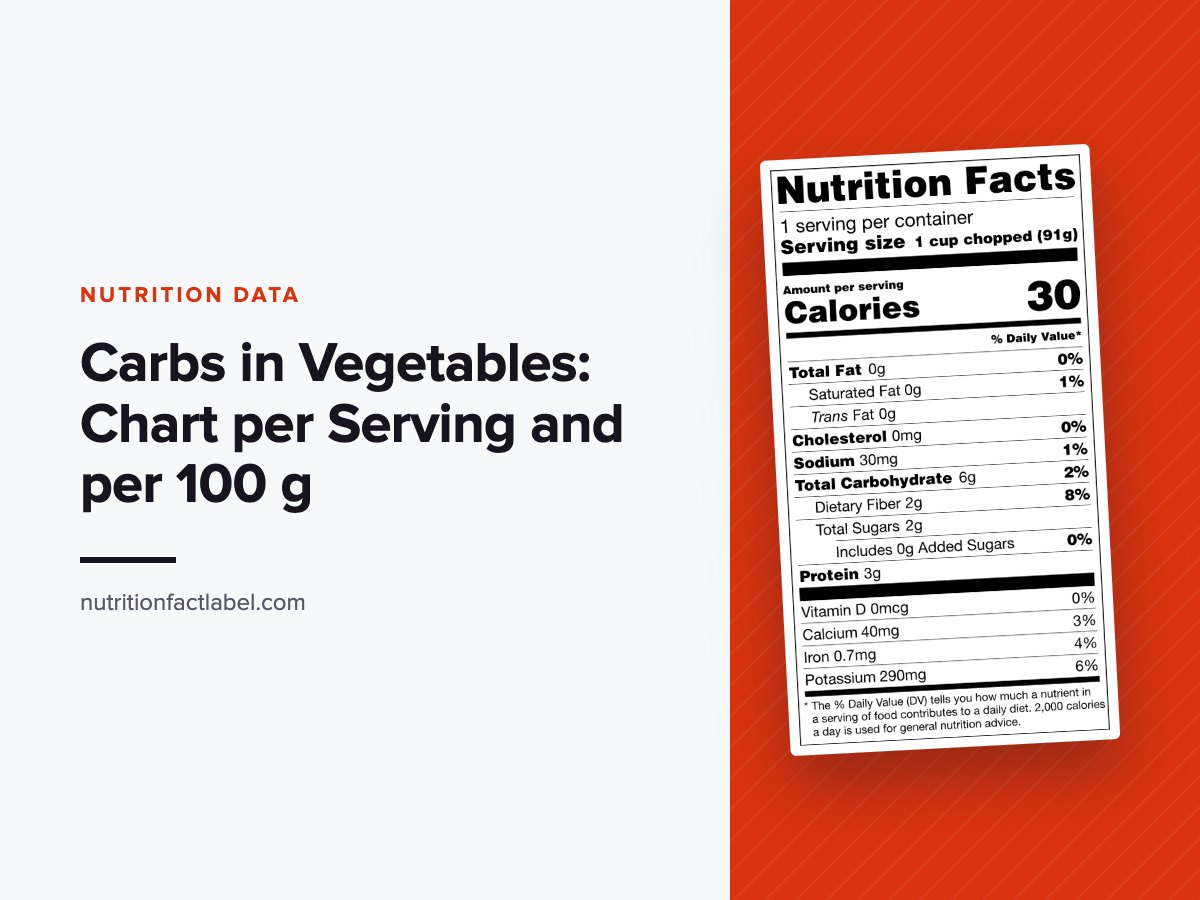
| Broccoli | raw | 1 cup chopped (91 g) | 6 g | 2.4 g | 6.6 g | 2.6 g |
| Green Beans | raw | 1 cup 1/2" pieces (100 g) | 7 g | 2.7 g | 7 g | 2.7 g |
| Okra | raw | 1 cup (100 g) | 7.5 g | 3.2 g | 7.5 g | 3.2 g |
| Brussels Sprouts | raw | 1 cup (88 g) | 7.9 g | 3.3 g | 9 g | 3.8 g |
| Onion | raw | 1 medium (110 g) | 10.3 g | 1.9 g | 9.3 g | 1.7 g |
| Beets | raw | 1 cup (136 g) | 13 g | 3.8 g | 9.6 g | 2.8 g |
| Carrot | raw | 1 medium (61 g) | 5.8 g | 1.7 g | 9.6 g | 2.8 g |
| Butternut Squash | baked | 1 cup, cubes (205 g) | 21.5 g | 6.6 g | 10.5 g | 3.2 g |
| Artichoke | raw | 1 artichoke, medium (128 g) | 13.5 g | 6.9 g | 10.5 g | 5.4 g |
| Green Peas | raw | 1 cup (145 g) | 21 g | 8.3 g | 14.5 g | 5.7 g |
| Sweet Corn | raw | 1 cup (145 g) | 27.1 g | 2.9 g | 18.7 g | 2 g |
| Sweet Potato | baked | 1 medium (114 g) | 23.6 g | 3.8 g | 20.7 g | 3.3 g |
| Potato | baked | 1 potato medium (173 g) | 36.6 g | 3.8 g | 21.2 g | 2.2 g |
Total carbohydrate includes fiber, sugars and starch. Serving weights are USDA household measures, so a cup of leafy greens weighs much less than a cup of chopped broccoli or peas. Compare the per-100 g columns when you want a like-for-like view.
Lowest-carb vegetables per 100 g
Per 100 g, the ten lowest-carb vegetables in this chart are bok choy, green leaf lettuce, celery, zucchini, white mushrooms, romaine lettuce, radishes, cucumber, spinach, arugula. Leafy greens are also very light, so a full cup of raw spinach (30 g) has only about 1.1 g of carbohydrate.
Starchy vegetables: potatoes, corn, peas and squash
Starchy vegetables carry most of their calories as starch. A medium baked potato with skin (173 g) has about 36.6 g of carbohydrate, a cup of sweet corn about 27.1 g, a cup of green peas about 21 g and a cup of baked butternut squash about 21.5 g. Baked sweet potato has a similar amount per 100 g to white potato.
Which vegetables have the most fiber?
Per 100 g, the highest-fiber vegetables here are green peas (5.7 g), artichoke (5.4 g), kale (4.1 g), collard greens (4 g), brussels sprouts (3.8 g). A medium Artichoke (128 g) has about 6.9 g of fiber, more than half of its total carbohydrate.
Total carbs, fiber and "net carbs" on a label
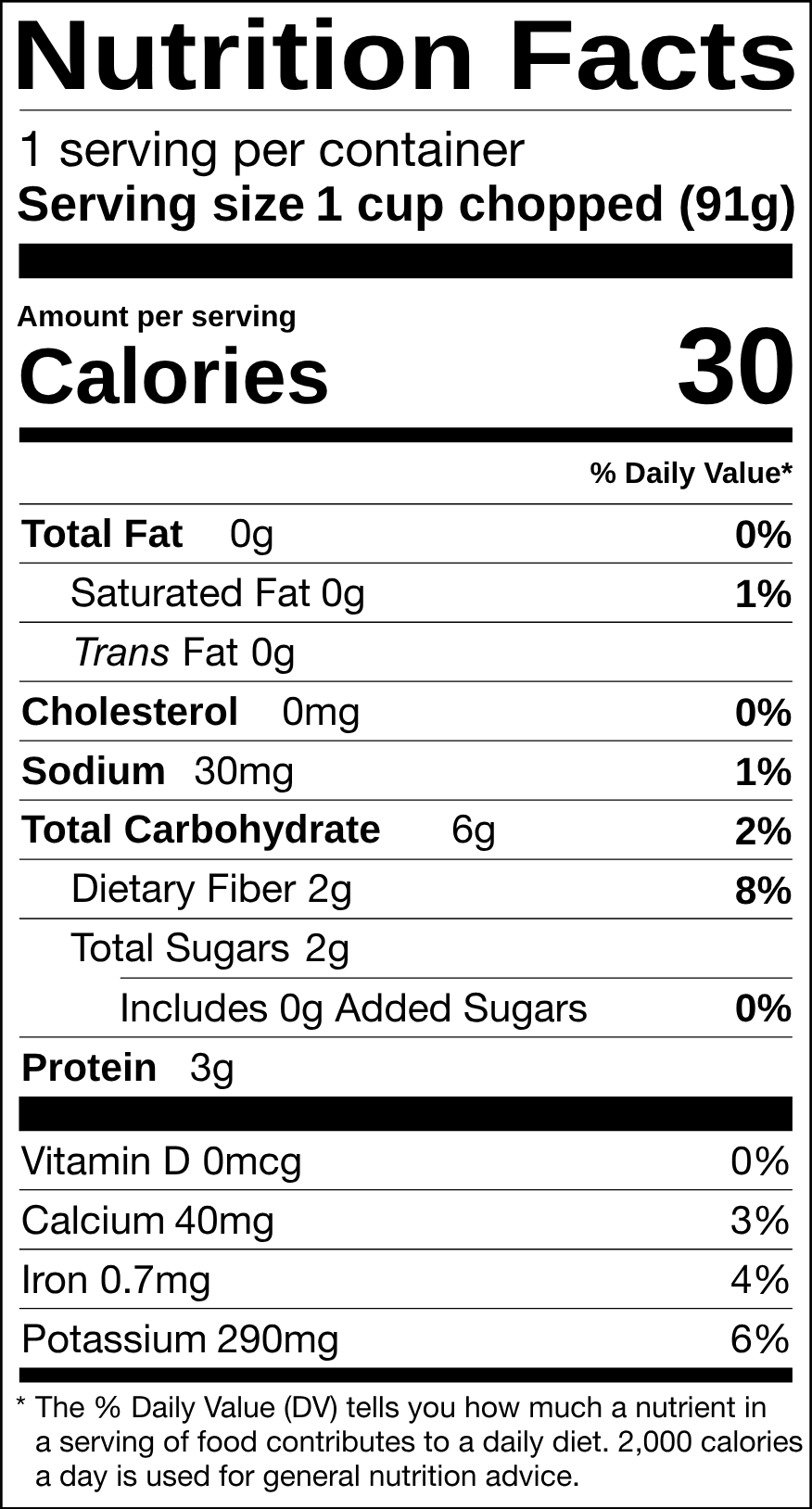
On a US Nutrition Facts label, Total Carbohydrate includes dietary fiber and total sugars, and both are listed underneath it. "Net carbs" (total carbohydrate minus fiber) is not a term defined by FDA, so it does not appear as a line on the panel. If you sell a product made with vegetables, our recipe nutrition calculator works out total carbohydrate and fiber from your ingredient weights, and the nutrition facts label generator turns the result into a label.
Raw vs cooked vegetables
Cooking removes water, so cooked vegetables usually have more carbohydrate per 100 g than the same vegetable raw, even though the total in the whole vegetable barely changes. Compare raw with raw and cooked with cooked, and weigh the portion in the state you will eat it. Each food page lists other USDA forms, such as boiled, frozen and canned, under "compared with other forms".
Source and method
All values come from USDA FoodData Central, SR Legacy (April 2018), as published on each linked food page. Per-serving values are calculated from the per-100 g data and the USDA serving weight, then rounded to one decimal. Brands and growing conditions vary, so use your own product data for a label.