Beverage Nutrition Label: FDA Rules and Requirements
Create a beverage nutrition label using FDA serving sizes, dual-column rules, juice declarations, Added Sugars, caffeine and labeling requirements.
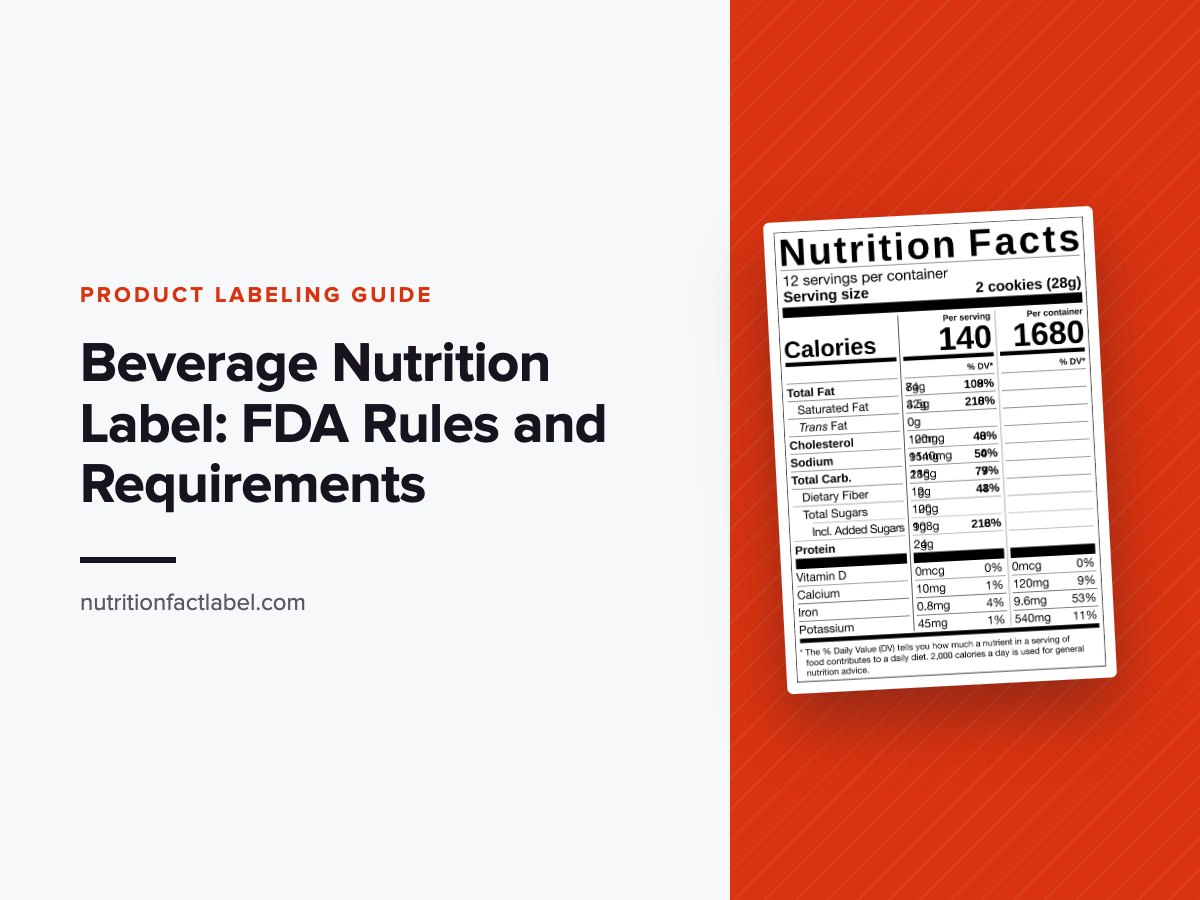
A beverage nutrition label declares nutrients per serving using the FDA reference amount that applies to the drink category, which is 12 fl oz (360 mL) for carbonated and many noncarbonated beverages, then formats the information under 21 CFR 101.9. Juice, milk-based drinks and some other beverages use different reference amounts, so product classification comes first.
This guide is for founders making juice, soda, functional drinks, flavored water, energy drinks or ready-to-drink coffee. It explains serving sizes, dual-column labels, juice declarations, Added Sugars, caffeine and the basic steps for creating an FDA compliant panel.
Beverage nutrition label serving size rules
Your beverage serving size depends on the FDA Reference Amount Customarily Consumed, or RACC, for the category that best describes your product.
The FDA RACC for carbonated and noncarbonated beverages, water, and flavored or sweetened coffee and tea is 12 fl oz (360 mL). Fruit juices, nectars and fruit drinks use an 8 fl oz (240 mL) RACC. Milk, milk-substitute beverages and milk-based drinks also use an 8 fl oz (240 mL) RACC.
These distinctions matter because the RACC determines how you apply the package-size rules. The RACC lookup tool finds the reference amount for your exact category.
For an individually packaged product containing less than 200 percent of its applicable RACC, FDA serving size rules generally treat the entire container as one serving. A 16.9 fl oz bottle of a typical noncarbonated beverage with a 12 fl oz RACC contains about 141 percent of the RACC, so the bottle is labeled as one serving.
Do not apply that example automatically to juice. A 16.9 fl oz juice bottle is about 211 percent of the 8 fl oz juice RACC. An individually packaged product containing at least 200 percent and no more than 300 percent of the applicable RACC generally requires nutrition information per serving and per container, unless an exemption applies.
This means two bottles with the same physical size can require different serving presentations because they belong to different FDA food categories.
Once you know the RACC and package relationship, you can choose the correct Nutrition Facts format.
Beverage label requirements for standard and dual-column formats
Most beverage cans and bottles use the standard vertical Nutrition Facts format when enough label space is available.
A single-serving soda, flavored water or RTD beverage may display one set of nutrition information for the entire container when the package qualifies as a single-serving container. The panel still follows the type, hierarchy, nutrient order and formatting requirements in 21 CFR 101.9.
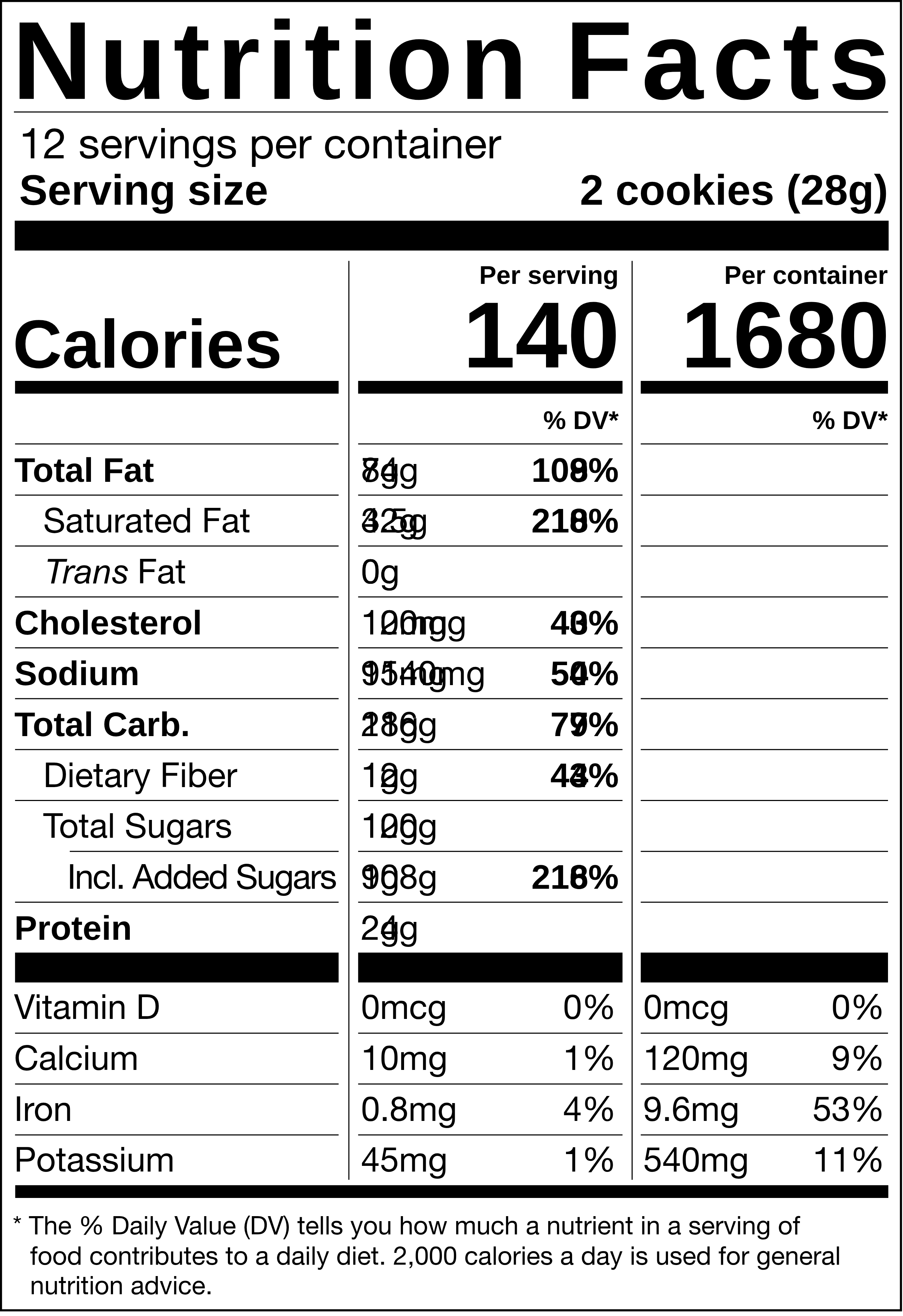
A dual-column nutrition label is generally required for individually packaged products containing at least 200 percent and up to and including 300 percent of the applicable RACC, unless an exception applies. One column displays nutrition information per serving. The other displays the values for the entire bottle or container.
For example, FDA uses a 24 fl oz soda as an example of a product that can require dual-column labeling because its 12 fl oz RACC makes the package 200 percent of the reference amount.
Small cans and bottles can present a different design problem. When qualifying packages have limited label space, FDA regulations provide alternative tabular presentations and other modified formatting provisions under 21 CFR 101.9. Do not simply scale a standard panel down until it fits.
Choose the regulatory format from the package dimensions and RACC rules first, then build the artwork around it.
Juice percentage and Added Sugars
Juice beverages can require information beyond the standard Nutrition Facts panel, particularly a percentage juice declaration.
Under 21 CFR 101.30, a beverage that purports to contain fruit or vegetable juice must declare the percentage of juice on the information panel, and a product with no juice that looks or is described as if it contains juice must state that it contains less than 1% juice or no juice. A product made entirely from qualifying juice might therefore state "100% Juice," while a juice drink containing a smaller proportion must declare the appropriate percentage. The calculation rules are more detailed when concentrates are involved.
The FDA RACC for juices, nectars and fruit drinks is 8 fl oz (240 mL), which differs from the 12 fl oz RACC used for many carbonated and noncarbonated drinks.
Your juice nutrition label requirements also include Total Sugars and, when applicable, Added Sugars. Sugars naturally occurring in 100 percent fruit or vegetable juice are not treated as added sugars merely because the juice naturally contains sugar. FDA rules also provide specific treatment for juice concentrates used toward the total juice percentage declaration or for Brix standardization.
Sugar, syrups, honey and qualifying amounts of concentrated juice used as sweeteners can contribute to Added Sugars. The label displays Added Sugars in grams and as %DV when declaration is required.
The Daily Value for Added Sugars is 50 g for adults and children age 4 and older. The DV calculator applies the correct reference values and rounding.
For context, FDA considers 5% DV or less low and 20% DV or more high for a nutrient. A sweetened drink can therefore contribute a substantial percentage of the Daily Value in one bottle even when the ingredient list looks relatively short.
After sugar and juice declarations, functional beverages often raise a different set of questions.
Caffeine, functional ingredients and claims
Caffeine does not have a required line inside the standard Nutrition Facts panel, but many beverage brands voluntarily state the amount of caffeine elsewhere on the package.
When caffeine is added as a standalone ingredient, FDA requires it to appear in the ingredient statement. If caffeine occurs naturally in another ingredient, such as coffee or chocolate, that ingredient appears in the ingredient statement instead. FDA also notes that many packaged beverages voluntarily disclose their caffeine quantity.
Functional drinks may contain vitamins, minerals, electrolytes, amino acids, botanical ingredients or other components. Any required nutrients must appear correctly on the drink nutrition label, while other ingredients still need appropriate identification elsewhere on the package.
Be especially careful with marketing claims. Adding a functional ingredient does not automatically allow you to claim that the drink prevents, treats or cures a disease.
Structure-function and other benefit claims have separate regulatory requirements and limitations, so claims such as "supports focus" or "supports immunity" should be reviewed independently rather than treated as part of Nutrition Facts generation. The claim validator checks nutrient content claims against the values you declare.
That distinction becomes even more important for beverages that fall outside the ordinary FDA nutrition labeling framework.
Beverages the FDA nutrition label rules do not cover
Not every beverage sold in the United States uses the standard FDA Nutrition Facts framework.
Many wine, distilled spirits and malt beverage products fall under Alcohol and Tobacco Tax and Trade Bureau, or TTB, labeling rules instead. TTB currently does not require standard nutrient content labeling for alcohol beverages under its jurisdiction. It permits voluntary nutrient information under specified formats and conditions.
Bottled water is regulated by the FDA, but it also has product-specific standards under 21 CFR Part 165. Plain products containing insignificant amounts of required nutrients may qualify for nutrition-labeling exemptions under 21 CFR 101.9(j), while bottled water with added fluoride must meet the fluoride limits and statements in 21 CFR 165.110, and water with added sweeteners, flavors or nutrients is labeled like any other beverage.
Small manufacturers should also check whether they qualify for a small business nutrition labeling exemption. The exemption has specific sales, volume and claim-related conditions, so do not assume that being a startup automatically qualifies your beverage.
If the standard Nutrition Facts rules apply, the next task is producing reliable nutrient values.
Getting beverage nutrient values
Database-based formulation analysis can produce reliable nutrition values for many beverages when you know the exact ingredients, quantities and finished batch volume.
A simple soda containing water, sugar, flavoring and acid can often be calculated directly from supplier specifications and reliable ingredient data in recipe nutrition analysis. The same approach works for many juices, flavored waters and formulated functional drinks.
More complex products deserve additional attention. Brewing and filtration can change what remains in RTD coffee or tea. Fermentation changes the composition of products such as kombucha. Fortified drinks may contain vitamins or minerals at levels above the label claim to account for expected losses during processing and shelf life.
Do not automatically use the amount of a vitamin added to the mixing tank as the amount declared on the finished beverage Nutrition Facts label. Actual nutrient levels, formulation tolerances, processing losses and applicable FDA compliance rules need to support the declaration.
Laboratory testing can make sense for fermented, brewed or heavily processed drinks, or when you need analytical confirmation of fortification levels. Straightforward formulations may be handled through database analysis when the underlying data is dependable.
Once the nutrient values are ready, you can generate the panel.
FDA beverage regulations to check before creating your label
FDA beverage regulations depend on the type of drink you produce. Classification affects the applicable RACC, serving presentation and whether additional requirements beyond the standard Nutrition Facts panel apply.
For example:
- Carbonated and many noncarbonated beverages use a 12 fl oz (360 mL) RACC.
- Juices, nectars and fruit drinks use an 8 fl oz (240 mL) RACC and can require a percentage juice declaration.
- Milk, milk-substitute beverages and milk-based drinks use an 8 fl oz (240 mL) RACC.
- Bottled water has product-specific standards under 21 CFR Part 165.
- Many alcoholic beverages fall under TTB labeling rules instead of the standard FDA Nutrition Facts framework.
Package size also matters. Depending on how much of the applicable RACC a container holds, the beverage can require single-serving or dual-column nutrition information.
Identify your product category before using another beverage as a labeling reference.
Create your beverage nutrition label free
You can create an FDA compliant nutrition label for drinks with the NFL label generator once you have your product classification, serving size and nutrient values.
- Choose the US FDA format and enter the applicable serving information. For a typical soda, that may be based on the 12 fl oz beverage RACC. For juice or a milk-based drink, confirm the correct category before entering the serving.
- Enter calories and the required nutrient values for the declared serving.
- Review Total Sugars, Added Sugars, sodium and any declared vitamins or minerals carefully.
- Select the appropriate label format, including a dual-column format when your package requires one.
NutritionFactLabel creates FDA compliant US labels for free. You do not need an account or credit card. The free label has no watermark and can be exported as a JPG.
Use the finished panel in your bottle, can or carton artwork after checking the rest of the package labeling separately.
Beverage nutrition label FAQ
What is the serving size for a beverage?
The serving size depends on the beverage category and package size. The FDA RACC is 12 fl oz (360 mL) for carbonated and many noncarbonated beverages, while juices, nectars, fruit drinks and milk-based beverages generally use 8 fl oz (240 mL). Package-size rules can make the entire container one serving.
Does my drink need a dual-column label?
Your drink generally needs dual-column labeling when an individually sold container contains at least 200 percent and up to and including 300 percent of its applicable RACC, unless an exception applies. One column shows values per serving, while the second shows nutrition information for the entire container.
Do beverages have to declare caffeine?
No. Caffeine quantity is not a required nutrient in the standard Nutrition Facts panel. Added caffeine must appear in the ingredient statement, and brands commonly disclose milligrams of caffeine voluntarily elsewhere on the package. Naturally occurring caffeine can be represented through the caffeine-containing ingredient, such as coffee.
Do alcoholic drinks need a Nutrition Facts label?
No. Alcoholic beverages under TTB jurisdiction generally do not use the standard mandatory FDA Nutrition Facts label. TTB currently allows voluntary nutrient information under specific formats and conditions. Product jurisdiction can vary, so confirm whether your particular alcoholic beverage falls under TTB or FDA labeling requirements before creating the package.
What are the label requirements for beverages?
A bottled or canned beverage needs a statement of identity, the net contents in fluid ounces, a Nutrition Facts panel, the ingredient list, any major allergens, and the name and address of the business. Drinks that purport to contain juice add the percent juice declaration under 21 CFR 101.30, and caffeinated or fortified drinks need an early decision on whether they are conventional foods or dietary supplements. Distilled spirits, wines with 7% alcohol by volume or more, and beers made from malted barley and hops fall under TTB rules instead; wines below 7% ABV and beers made without both malted barley and hops (many gluten-free beers, for example) are labeled under FDA rules.
Do beverages need FDA approval?
No. FDA does not approve beverage formulas or beverage labels before they are sold. Bottlers register their facilities with FDA and follow current good manufacturing practices, juice processors follow juice HACCP in 21 CFR Part 120, and bottled water has its own standard in 21 CFR 165.110. The brand is responsible for a truthful, compliant label, and FDA can act after the product is on the market.
Launching a drink? Build your beverage panel now in the free NFL label generator, no account, no watermark.