Calories in Fruit: Chart by Size, Cup and 100 g
Calories in 32 common fruits per piece, per cup and per 100 g, from USDA data, with the lowest-calorie fruits and dried fruit compared.
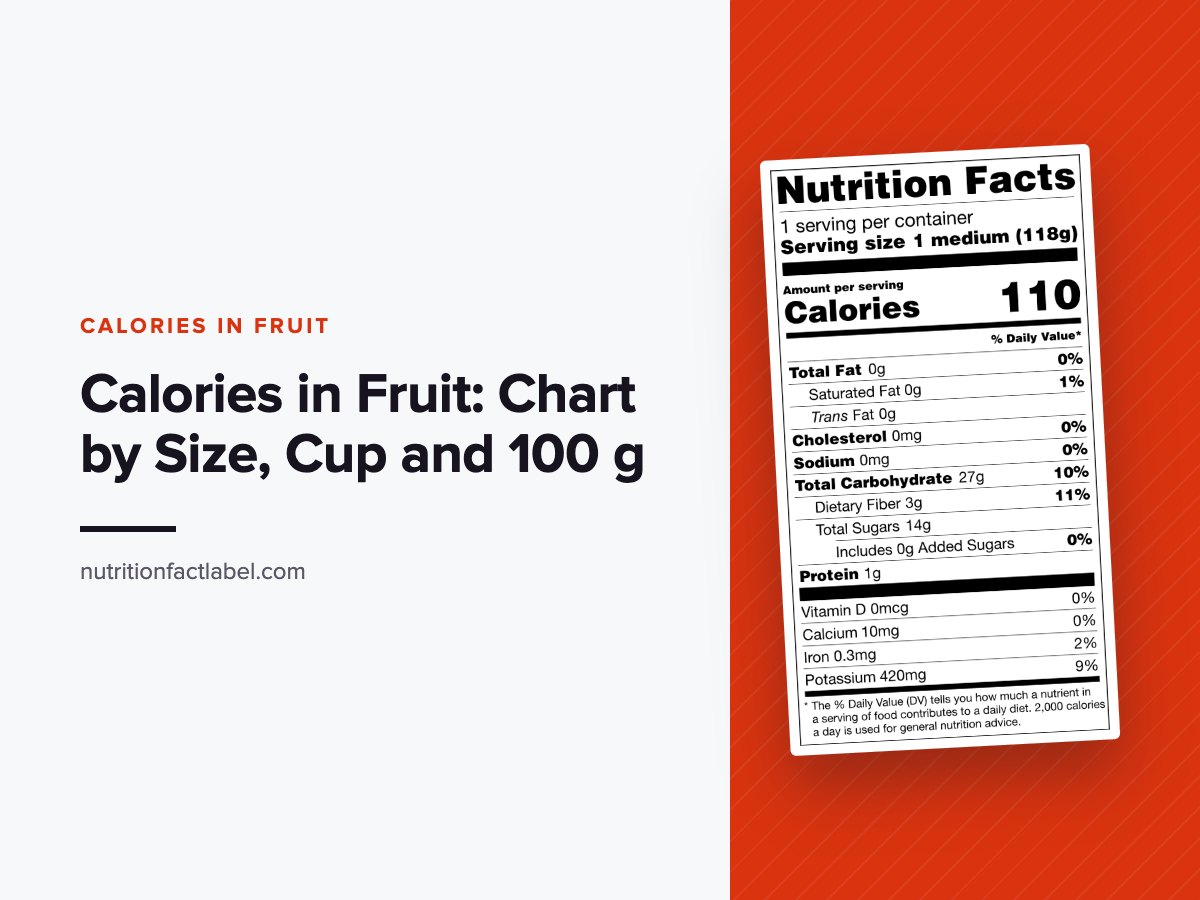
Most fresh fruits have 30 to 70 calories per 100 g. In USDA FoodData Central, a medium apple (182 g) has about 95 calories, a medium banana (118 g) about 105, a medium orange (131 g) about 62 and a cup of whole strawberries about 46. Avocado and dates are the outliers, at 160 and 282 calories per 100 g.
The chart below covers 32 fruits by single fruit or piece, by cup and per 100 g, sorted from lowest to highest calories per 100 g. Each fruit links to its full nutrition page, where you can pick any USDA serving and see the full Nutrition Facts label. Weights are edible fruit, without peel, pits or rind.
Calories in fruit chart
| Fruit | One fruit or piece | Calories | Per cup | Per 100 g |
|---|---|---|---|---|
| Lemon | 1 lemon (58 g) | 17 | not listed | 29 |
| Watermelon | 1 wedge, 1/16 melon (286 g) | 86 | 46 (152 g) | 30 |
| Lime | 1 lime (67 g) | 20 | not listed | 30 |
| Strawberry | 1 medium strawberry (12 g) | 4 | 46 (144 g) | 32 |
| Grapefruit | 1/2 medium grapefruit (128 g) | 41 | 74 (230 g) | 32 |
| Cantaloupe | 1 large wedge (102 g) | 35 | 54 (160 g) | 34 |
| Honeydew | 1 wedge, 1/8 melon (125 g) | 45 | 61 (170 g) | 36 |
| Peach | 1 medium peach (150 g) | 59 | 60 (154 g) | 39 |
| Blackberries | not listed | not listed | 62 (144 g) | 43 |
| Papaya | 1 small papaya (157 g) | 68 | 62 (145 g) | 43 |
| Nectarine | 1 medium nectarine (142 g) | 62 | 63 (143 g) | 44 |
| Plum | 1 plum (66 g) | 30 | 76 (165 g) | 46 |
| Cranberries | not listed | not listed | 46 (100 g) | 46 |
| Orange | 1 medium orange (131 g) | 62 | 85 (180 g) | 47 |
| Clementine | 1 clementine (74 g) | 35 | not listed | 47 |
| Apricot | 1 apricot (35 g) | 17 | 74 (155 g) | 48 |
| Pineapple | 1 slice, 3.5 in (84 g) | 42 | 83 (165 g) | 50 |
| Apple | 1 medium apple (182 g) | 95 | 57 (109 g) | 52 |
| Raspberries | 10 raspberries (19 g) | 10 | 64 (123 g) | 52 |
| Tangerine | 1 medium tangerine (88 g) | 47 | 103 (195 g) | 53 |
| Pear | 1 medium pear (178 g) | 101 | 80 (140 g) | 57 |
| Blueberries | 50 blueberries (68 g) | 39 | 84 (148 g) | 57 |
| Mango | 1 whole mango (336 g) | 202 | 99 (165 g) | 60 |
| Kiwi | 1 kiwi (69 g) | 42 | 110 (180 g) | 61 |
| Cherries | 1 cherry (8 g) | 5 | 97 (154 g) | 63 |
| Grapes | 10 grapes (49 g) | 34 | 104 (151 g) | 69 |
| Figs | 1 medium fig (50 g) | 37 | not listed | 74 |
| Pomegranate | 1 pomegranate (282 g) | 234 | 72 (1/2 cup, 87 g) | 83 |
| Banana | 1 medium banana (118 g) | 105 | 134 (150 g) | 89 |
| Avocado | 1 whole avocado (201 g) | 322 | 240 (150 g) | 160 |
| Medjool Dates | 1 Medjool date (24 g) | 66 | not listed | 277 |
| Dates | 1 Deglet Noor date (7 g) | 20 | 415 (147 g) | 282 |
Lowest-calorie fruits per 100 g
Per 100 g, the lowest-calorie fruits here are lemon (29), watermelon (30), lime (30), strawberry (32), grapefruit (32), cantaloupe (34). Melons and berries are mostly water, so a full cup of diced watermelon has only about 46 calories.
Why one fruit can range widely in calories
Size changes the answer more than variety. A small apple (149 g) has about 77 calories and a large one (223 g) about 116. A Medjool date (24 g) has about 66 calories, more than three times a Deglet Noor date (7.1 g, about 20), because it is bigger, not because it is a different kind of food. When accuracy matters, weigh the fruit and use the per-100 g column.

Fresh, dried and juiced fruit
Drying removes water, so dried fruit has far more calories per gram than fresh. Compare fresh figs (74 calories per 100 g) with dried figs (249), or fresh apricots with dried apricots (241). Juice keeps the sugar but loses most of the fiber; see apple juice for an example.
Using fruit in a product you sell
If you make jams, smoothies or baked goods, total the fruit by weight in the recipe nutrition calculator and turn the result into a label with the nutrition facts label generator. On a US label, the sugar already in fruit counts as total sugars, while sugar you add counts as added sugars.
Source and method
All values come from USDA FoodData Central, SR Legacy (April 2018), as published on each linked food page. Calories per serving are calculated from the per-100 g value and the USDA serving weight, then rounded to the nearest calorie.