Granola Bar Nutrition Label: FDA Serving Size Rules
Create a granola bar nutrition label using FDA serving size rules. Learn about added sugars, claims, allergens, recipe analysis and a free label preview.
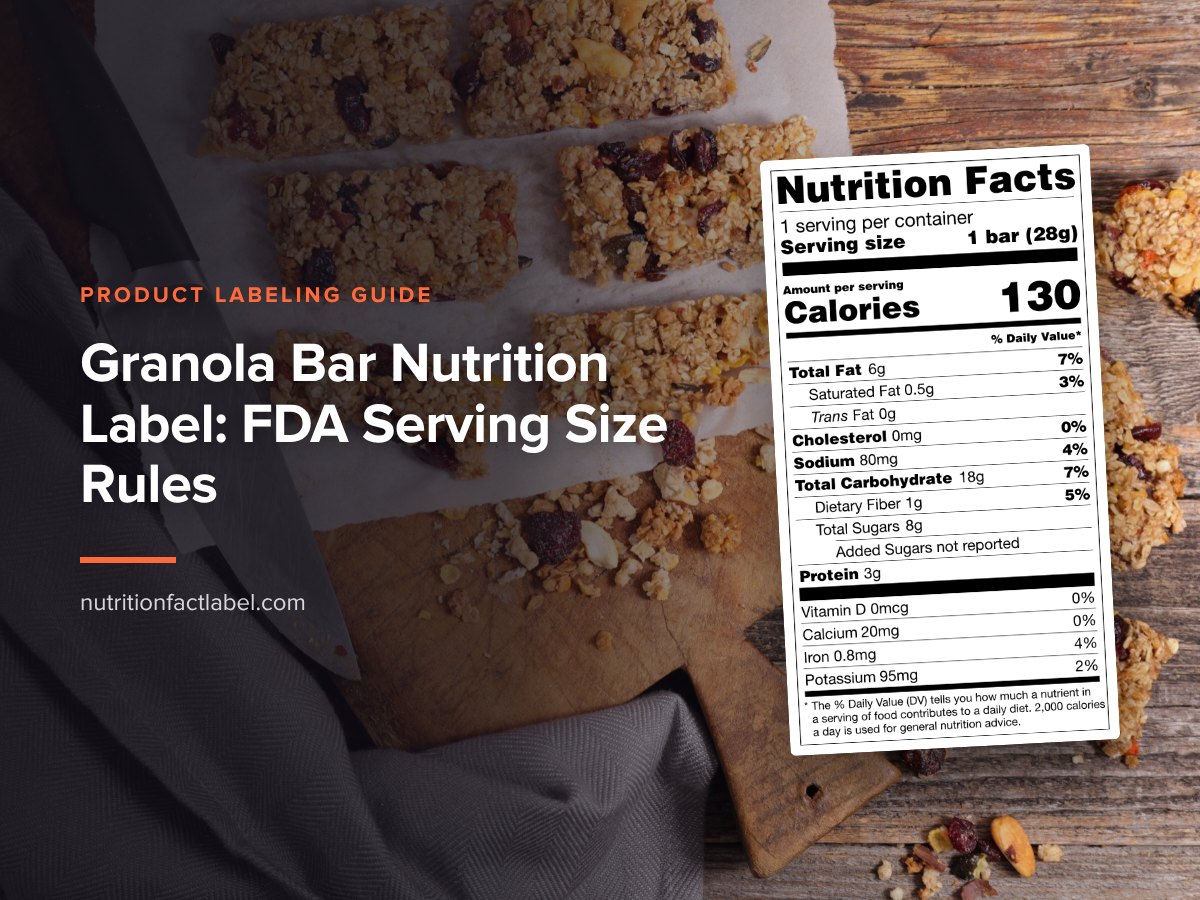
A granola bar nutrition label generally uses the FDA RACC of 40 g for grain-based bars such as breakfast bars, granola bars and rice cereal bars. Loose granola can fall under ready-to-eat cereal categories instead, where the RACC varies by product density. Both products follow 21 CFR 101.9.
This guide is for founders selling granola, granola bars, protein bars or energy bars at retail. It covers serving sizes, nutrition claims, Added Sugars, recipe analysis, allergens and the practical steps for creating an FDA compliant panel.
Granola bar nutrition label serving sizes versus loose granola
Granola bars and loose granola can use different FDA reference amounts even when they contain similar ingredients.
FDA assigns grain-based bars with or without filling or coating, including breakfast bars, granola bars and rice cereal bars, a RACC of 40 g. The serving statement is expressed as an appropriate number of pieces with the gram weight. You can confirm the category with the RACC lookup tool.
If one bar weighs 38 g, one bar is close to the 40 g reference amount. If an individually packaged bar contains less than 200 percent of its RACC, it is generally treated as one serving under the applicable single-serving serving size rules. A large bar approaching or exceeding twice the RACC needs additional review under 21 CFR 101.9.
A 12-bar box usually lists the serving as one bar when each bar is individually sized around the applicable RACC, with approximately 12 servings per container when the outer box is itself the retail package.
Loose granola works differently because ready-to-eat breakfast cereal RACCs depend on density:
- Cereals weighing less than 20 g per cup use a 15 g RACC.
- Cereals weighing at least 20 g but less than 43 g per cup generally use a 40 g RACC.
- Dense cereals weighing 43 g or more per cup generally use a 60 g RACC.
You should therefore measure the bulk density of loose granola before assigning its serving size.
For example, a 12 oz pouch weighs about 340 g. If the applicable RACC is 40 g, the pouch contains about 8.5 reference servings before the required servings-per-container rounding is applied. If the product falls into the 60 g category, the same pouch contains fewer than six reference servings.
Correct classification comes before any nutrition calculation.
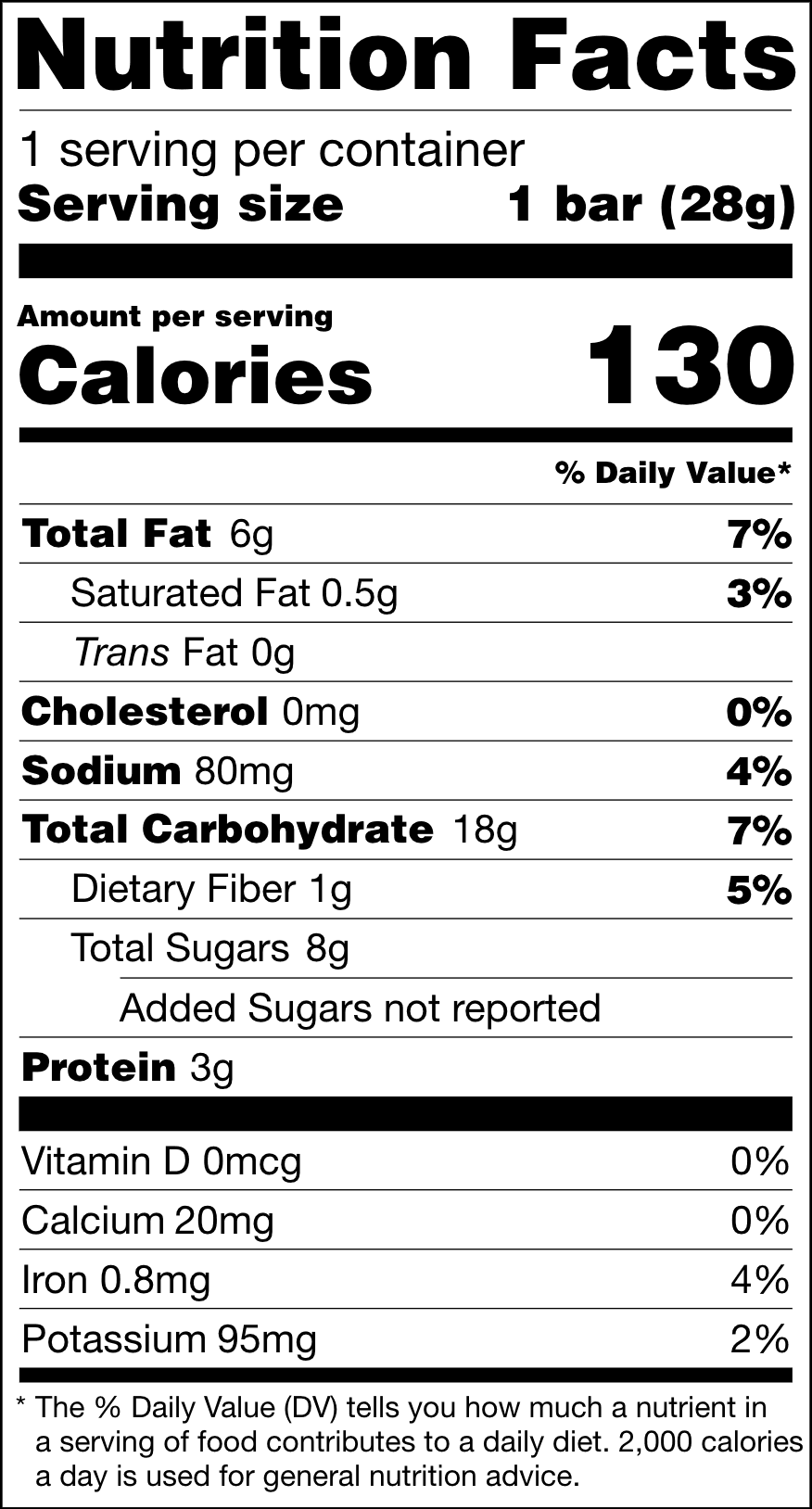
Healthy looking is not a regulated claim, but healthy is
A granola package can look wholesome without making a regulated nutrient claim. The word "healthy," however, has a specific FDA definition when it is used as a nutrient content claim.
FDA finalized an updated definition of "healthy" in December 2024. The claim remains voluntary, but a product using it must meet the applicable criteria. Those criteria require qualifying amounts of foods from recommended food groups and impose limits on saturated fat, sodium and Added Sugars. The full rule is covered in the healthy claim requirements guide.
Companies can use the updated criteria now, and FDA states that products using the claim must follow the updated definition by February 25, 2028.
This matters for granola because a product can contain oats, nuts and seeds while still carrying enough sweetener or saturated fat to fail the criteria.
Other nutrition claims are regulated too.
Under 21 CFR 101.54, "good source" generally means the food provides 10 to 19 percent of the applicable Daily Value per RACC. "High," "rich in" or "excellent source of" generally requires 20 percent or more. These rules apply to claims such as "good source of fiber" or "high in protein," subject to the additional requirements in the regulation. The claim validator tests a formulation against these thresholds.
Protein claims require extra care. A standard adult Nutrition Facts label can normally omit protein %DV, but 21 CFR 101.9 requires protein %DV when a protein claim is made. The percentage is based on protein corrected for quality using the protein digestibility-corrected amino acid score, or PDCAAS.
That distinction matters for a protein bar nutrition label because the grams of protein alone do not automatically determine the allowable %DV claim.
Avoid implying that a granola or energy bar causes weight loss unless you independently meet the rules for the specific claim being made.
The next common issue is determining how much of the sweetener in your bar counts as Added Sugars.
Added sugars on a granola bar nutrition facts label
Many ingredients used to bind or sweeten granola count toward Added Sugars even when consumers perceive them as less processed than table sugar.
FDA includes sugars added during processing, sugars from syrups and sugars from honey within the definition of Added Sugars. The Daily Value for Added Sugars is 50 g for adults and children age 4 and older.
That means honey, maple syrup, brown rice syrup, cane sugar and similar caloric sweeteners generally contribute to the Added Sugars declaration.
Dates require more care. Whole or chopped dried fruit without added sugar generally retains its naturally occurring sugars rather than creating Added Sugars merely because the fruit has been dried. FDA guidance specifically states that unsweetened dried fruit is not considered to contain Added Sugars. If sugar is added to that fruit, the added amount must be declared.
A date paste or other processed fruit ingredient can require formulation-specific review depending on how it is produced and used. Ask your supplier how theirs is made before you decide how to declare it.
This creates an important distinction in a granola formulation. The sugar naturally present in raisins or unsweetened dried cranberries belongs in Total Sugars. Honey added to bind the clusters belongs in Added Sugars.
A bar containing 10 g of Added Sugars provides 20% DV because the Daily Value is 50 g. FDA uses 20% DV or more as a general guide for identifying a high source of a nutrient on the Nutrition Facts label.
A product can therefore contain oats, nuts and fruit while still showing a substantial Added Sugars percentage.
Use the actual recipe, not the marketing positioning, to determine what appears on the panel.
Getting values for a nutrition label for granola bar products
Formulation-based nutrition analysis works well for most granola and snack bars because the recipe is built from measurable ingredient quantities.
Start with exact weights for oats, nuts, seeds, protein ingredients, oils, syrups, dried fruit, chocolate and other inclusions in recipe nutrition analysis. Use supplier specifications whenever possible, especially for protein powders, chocolate, nut butters and compound ingredients.
For baked granola, finished yield matters.
Baking removes moisture. If a 10 kg raw granola mixture weighs 9 kg after baking and cooling, the calories, fat, carbohydrate and minerals are now distributed across 9 kg of finished product. Calculating the panel from the pre-bake weight would understate the nutrients per gram. The net weight and yield calculator works this adjustment out.
Bars also need consistent finished weights. If the declared serving is one 40 g bar but your production routinely ranges from 35 g to 48 g, the nutrient amount per unit can vary materially.
Inclusions create another source of variation. One section of a batch may receive more almonds, chocolate chips or dried fruit than another. Thorough mixing and consistent portioning help keep the declared granola nutrition facts label representative of the product.
Protein bars need reliable specifications for every protein source because the total grams and the protein-quality calculation used for claims are separate issues.
Database analysis is usually practical when the recipe and process are standardized. Laboratory testing can be useful when baking losses, coating pickup or inclusion distribution are difficult to control.
After the nutrient data is settled, review every ingredient for allergens.
Allergens in granola and bars
Granola and snack bars commonly contain several major food allergens, so every ingredient and inclusion should be reviewed before packaging is finalized.
Peanuts and tree nuts are common in granola, energy bars and nut-based bars. Almonds, cashews, walnuts, pecans and other tree nuts need the appropriate allergen identification.
Soy can appear in soy protein, soy crisps or soy lecithin. Milk can occur in whey protein, milk chocolate, yogurt coatings and dairy-based protein blends.
Wheat can appear in crisped grains, cookie inclusions and some cereal ingredients. Egg may appear in certain binders or protein ingredients. Sesame is increasingly common in seed-heavy bars and is one of the nine major food allergens. The allergen detector flags allergen sources hiding in compound ingredients.
The ingredient statement must identify applicable allergens. A separate Contains statement can also be used according to the federal allergen-labeling rules.
Cross-contact advisories such as "may contain peanuts" are voluntary. They do not replace the required declaration of an allergen that is intentionally present as an ingredient.
Oats need additional attention if you make a gluten-free claim. Oats themselves are not wheat, but conventional supply chains can introduce wheat, barley or rye through agricultural and processing cross-contact.
Under 21 CFR 101.91, a food labeled "gluten-free" must contain less than 20 parts per million gluten and meet the other conditions in the rule. Back the claim with testing and supplier controls for your own product. A gluten-free statement is therefore more than a design choice.
Once your formula, claims and allergen information are verified, you can create the final panel.
Create your granola bar nutrition label free
You can create an FDA compliant nutrition label for granola bars with the NutritionFactLabel label generator once you have the correct serving size and nutrient values.
- Select the US FDA format.
- For a grain-based bar, enter the serving using the 40 g RACC and the appropriate number of bars or pieces.
- For loose granola, determine which ready-to-eat cereal density category applies before entering the serving.
- Enter the nutrients per serving.
- Review Total Fat, Saturated Fat, Dietary Fiber, Total Sugars, Added Sugars and Protein carefully.
- If you make a protein or fiber claim, confirm that the supporting calculations meet the applicable claim rules before adding the wording to the package.
NutritionFactLabel creates FDA compliant US labels for free. No account or credit card is required. The free version needs no account and downloads a watermarked JPG preview; paid plans export clean, print-ready files.
Finish your snack bar label requirements by checking ingredients, allergens, claims, net quantity and other required package information separately.
Granola bar nutrition label FAQ
What is the serving size for a granola bar?
The FDA RACC for grain-based bars, including granola bars, breakfast bars and rice cereal bars, is 40 g. The label converts that reference amount into an appropriate number of bars or pieces. Individually packaged bars below 200 percent of the RACC are generally treated as one serving under the applicable single-serving rules.
Is honey in granola counted as Added Sugars?
Yes. Honey added to granola counts toward Added Sugars under the FDA definition. Maple syrup, brown rice syrup and similar added caloric sweeteners also generally count. Sugars naturally present in unsweetened dried fruit are part of Total Sugars but do not automatically become Added Sugars.
Can I call my granola bar healthy?
Yes, but only if the product meets the FDA criteria for the voluntary "healthy" nutrient content claim. The updated rule requires qualifying amounts of recommended food groups and limits saturated fat, sodium and Added Sugars. Products using the claim must follow the updated definition by February 25, 2028.
Do I need to declare protein %DV on a protein bar?
Yes, if you make a protein nutrient content claim. FDA rules require protein %DV when a product makes a protein claim, and that percentage uses the protein amount corrected for quality using PDCAAS. Simply dividing the grams of protein by the 50 g Daily Value is not sufficient.
What are the label requirements for granola bars?
A granola bar needs the product name, net weight, a Nutrition Facts panel, ingredients with sub-ingredients for chocolate chips, coatings and protein blends, major allergens, and the business name and address. Multipacks need full labeling on the outer box. Individually wrapped bars inside can leave out the nutrition panel if each one says "This Unit Not Labeled For Retail Sale" (21 CFR 101.9(j)(15)); bars sold on their own need their own label.
Pressing your first production run? Build your bar panel now in the free NutritionFactLabel label generator, no account needed.
Need a nutrition label for your own product? Make it with our free nutrition facts label generator