FDA Serving Size Requirements for Nutrition Labels
A serving size is a reference amount, not a recommendation. How the RACC in 21 CFR 101.12 sets your printed serving, and when a package needs a dual column panel.
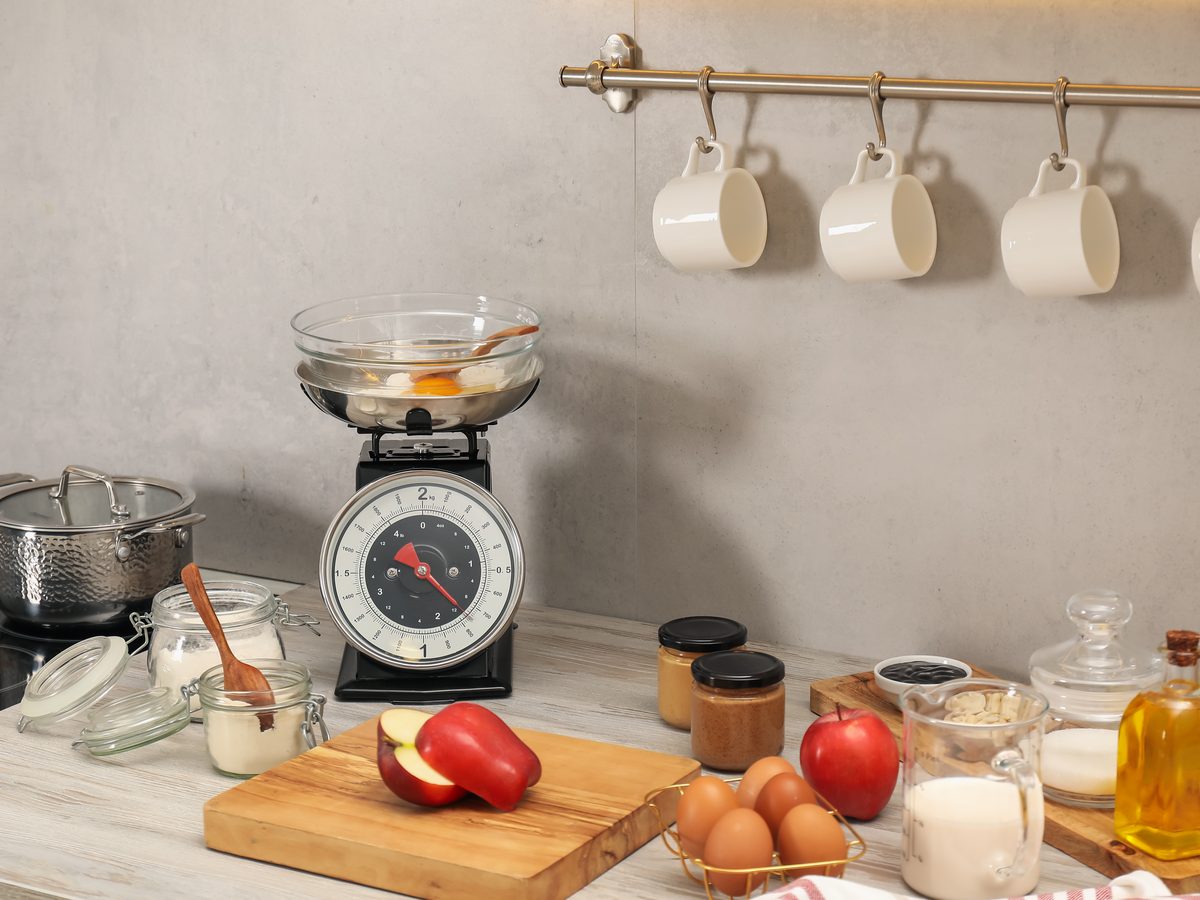
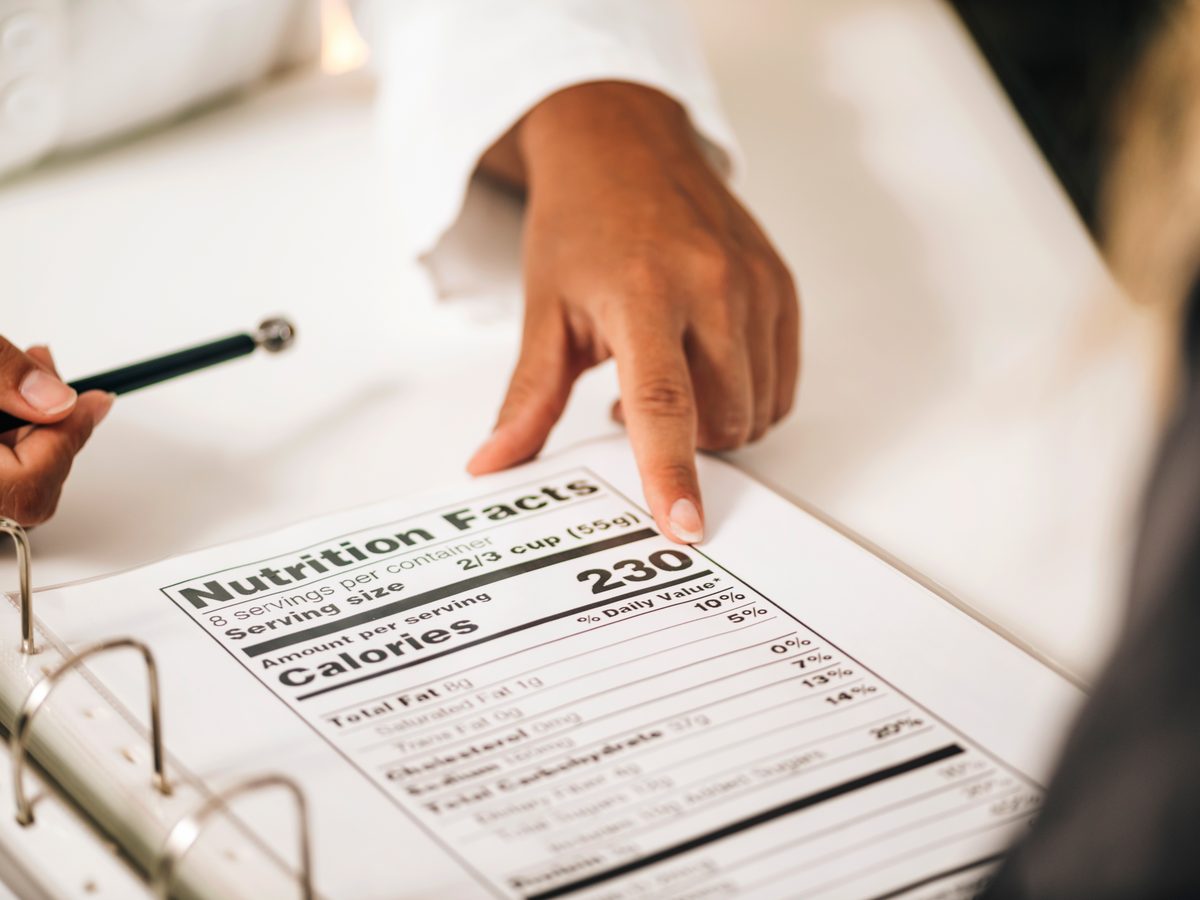
The serving size at the top of a Nutrition Facts panel is the most consequential number on the label, because every other number is derived from it. It is also the number small food companies most often get wrong, because they treat it as a judgment call about a sensible portion rather than a regulated calculation. This article covers how FDA serving size requirements work under 21 CFR 101.12 and 21 CFR 101.9(b), how a reference amount becomes the printed serving size, how container size changes the answer, and what a wrong serving size costs you.
This is the pillar page for nutrition label serving size requirements. For the step-by-step procedure on a single product, see how to determine serving size. For the consumer-facing distinction that this article only touches on, see serving size vs portion size. The full reference amount tables are searchable in the FDA RACC lookup.
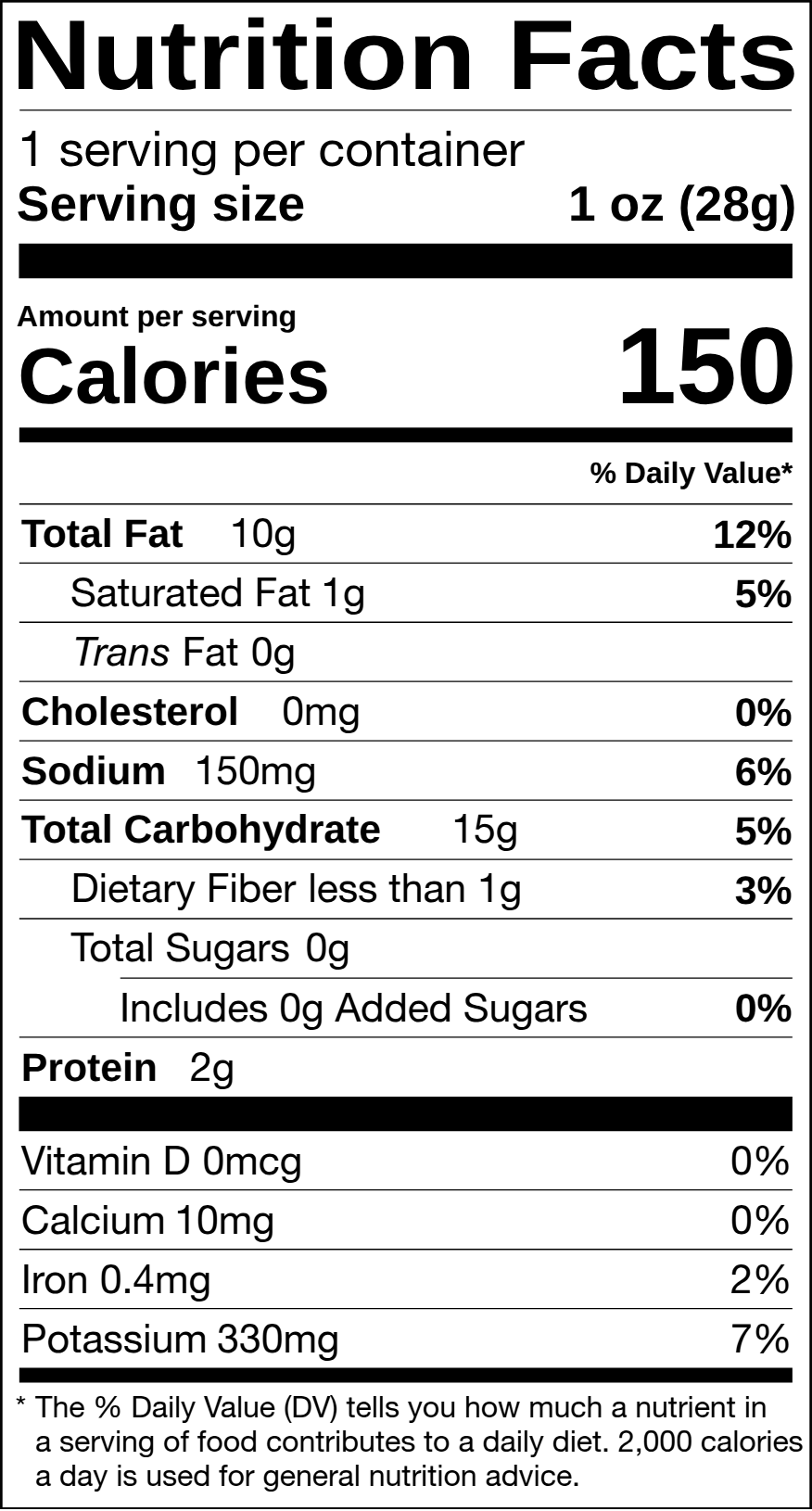
A serving size is not a recommendation about how much to eat
Almost every serving size mistake traces back to this misunderstanding. FDA states it plainly: "The serving size is not a recommendation of how much to eat or drink." The Nutrition Labeling and Education Act of 1990 requires the serving size to reflect the amount people customarily consume per eating occasion, not the amount a nutritionist would advise and not the amount you would like your customer to eat.
The practical consequence: you cannot shrink a serving size to improve a calorie number or inflate one to improve a protein number. The reference amount is set by category in 21 CFR 101.12(b), built from national food consumption survey data using the mean, median and mode of the amount eaten per occasion. The amounts cover the edible portion only and are assigned by the major intended use of the food, which is why milk is treated as a beverage rather than a recipe ingredient.
The Daily Values printed beside the nutrient amounts are a different kind of number: dietary reference values for a 2,000 calorie diet. The serving size describes behaviour, the Daily Values set a target, and confusing the two produces a label that misrepresents the product.
How FDA serving size requirements turn a RACC into the serving size you print
Two regulations do two jobs. 21 CFR 101.12 sets the Reference Amount Customarily Consumed per eating occasion, the RACC, for every category: Table 1 for infants and children 1 through 3, Table 2 for the general population aged 4 and up. 21 CFR 101.9(b) turns that reference amount into the two-part serving size statement on the Nutrition Facts label.
The printed serving size is always a household measure followed by the metric equivalent in parentheses: grams for solids, milliliters for liquids, per 101.9(b)(7). You use the household measure closest to the RACC, and 101.9(b)(5) restricts which units you may use and in what increments.
| Household unit | Permitted increments | Metric equivalent |
|---|---|---|
| Cup | 1/4 cup or 1/3 cup increments | 1 cup = 240 mL |
| Tablespoon | 1, 1 1/3, 1 1/2, 1 2/3, 2 or 3 | 1 tbsp = 15 mL |
| Teaspoon | 1/8, 1/4, 1/2, 3/4, 1 or 2 | 1 tsp = 5 mL |
| Piece, slice, fraction, tray, jar | Used when no cup, tbsp or tsp measure fits (for example 1/8 pizza) | Weight in grams |
| Ounce | Only with a visual unit reference, and only when nothing else applies | 1 oz = 28 g |
| Fluid ounce | Permitted for beverages | 1 fl oz = 30 mL |
Those equivalences are label conventions, and you are expected to use them: a 16 fluid ounce bottle is 480 mL on a Nutrition Facts panel. Converting a household measure into a gram weight for a real product is its own small project, covered in serving size grams conversion.
Selected RACCs, so you can see the shape of the system
A handful of real reference amounts explains the system better than any summary.
| Category (21 CFR 101.12(b), Table 2) | RACC |
|---|---|
| Carbonated and noncarbonated beverages, wine coolers, water | 360 mL (12 fl oz) |
| Flavored or sweetened coffee or tea | 360 mL prepared |
| Yogurt | 170 g |
| Ice cream, frozen yogurt, sherbet, frozen novelties | 2/3 cup, including coatings and wafers |
| Cookies; snack crackers | 30 g |
| Non-snack crackers, melba toast, ice cream cones | 15 g |
| Breads and rolls | 50 g |
| Biscuits, croissants, tortillas, English muffins, scones | 55 g |
| Bagels, toaster pastries, muffins | 110 g |
| Pies, cobblers, pastries | 125 g |
| Hot cereal | 1 cup prepared, or 40 g plain dry, or 55 g sweetened dry |
Ready-to-eat breakfast cereal is tiered by density, so a puffed cereal and a dense granola do not share a reference amount. The lightest tier is 15 g. Check the current RACC table in 21 CFR 101.12 for your category before building a label on the heavier tiers, because the boundaries are stated in grams per cup and are easy to misread. The RACC lookup tool finds the category that matches your product.
Package size rules, the part that actually trips people up
Knowing the RACC is half the job. Container size decides whether the reference amount becomes the serving size, whether the whole package becomes the serving, or whether you owe the reader two columns. The thresholds are in 101.9(b)(6) and 101.9(b)(12).
| Container contains | What the panel must show |
|---|---|
| Less than 200% of the RACC, packaged and sold individually | Single serving. The serving size is the entire container and every nutrient value covers the whole package |
| More than 150% but less than 200% of the RACC | Still a single serving, but you may voluntarily add a column on the left showing amounts for the household measure closest to the RACC |
| At least 200% and up to and including 300% of the RACC | Dual column is mandatory: one column per serving derived from the RACC, one column per container or per package |
| More than 300% of the RACC | Ordinary multi-serving labeling. Per-serving column only; a second column is optional under 101.9(e) |
Work an example. A soft drink has a RACC of 360 mL. A 20 fluid ounce bottle is 600 mL by label convention, about 167% of the reference amount. That is under 200%, so the bottle is one serving and the panel reports the calories and sugars in all 20 ounces. Being above 150%, it may also carry an optional column for 12 fluid ounces. Move to a 24 fluid ounce bottle, 720 mL, and you sit at exactly 200% of the RACC, inside the mandatory dual-column band.
Discrete units follow parallel thresholds in 101.9(b)(2)(i). A unit at 50% or less of the RACC: the serving is the number of whole units closest to the reference amount. More than 50% but less than 67%: declare either one or two units. From 67% to less than 200%: one unit. From 200% to 300%: the serving approximates the RACC and a per-unit column is required.
Several product types are carved out of the mandatory dual-column requirement: the tabular and linear small-package formats, raw fruits, vegetables and seafood under the voluntary labeling program, products already carrying an "as prepared" or "combined with" column, two-age-group panels, popcorn with a per-cup-popped column, and varied-weight products. Industry commentary also describes an option under 101.9(b)(6) to declare certain packages between 150% and 200% of a large reference amount as either one or two servings. Confirm the current text of 101.9(b)(6) in the eCFR before relying on it, because the general rule remains that anything under 200% of the RACC is a single serving.
What the 2016 serving size rule changed and why
FDA published the serving size rule on 27 May 2016 at 81 FR 34000, alongside the Nutrition Facts modernization rule at 81 FR 33742. Both took effect 26 July 2016. After an extension announced 3 May 2018, compliance settled at 1 January 2020 for firms with $10 million or more in annual food sales and 1 January 2021 for smaller firms.
The 1993 reference amounts had drifted away from how people actually eat. FDA revisited them using NHANES 2003 to 2008 consumption data, revising a category where the median amount consumed had moved by roughly 25% or more against the 1993 value. The direction of travel was not uniformly upward.
| Category | Old RACC | Current RACC |
|---|---|---|
| Ice cream | 1/2 cup | 2/3 cup (bulk and novelties are now separate categories) |
| Carbonated and noncarbonated beverages | 8 fl oz | 12 fl oz (360 mL) |
| Yogurt | 225 g | 170 g |
| Bagels and muffins | 55 g | 110 g |
Yogurt fell because people eat single-serve cups, not the half-pound bowls the old amount assumed. Bagels doubled because a modern bakery bagel is twice the size of the 1993 reference item. The same rule defined single-serving containers and created the mandatory dual-column requirement, which is why the 20 ounce soda became a one-serving product on paper.
Products that do not obviously fit a listed category
Novel products are where the system feels least helpful. Reference amounts are assigned by major intended use, so the question is not what your product is made of but how a customer will eat it. A cauliflower pizza crust is judged as a crust, not a vegetable.
A workable procedure: list every category in 101.12(b) sharing your product's physical form, eating occasion and typical amount consumed; pick the closest match and write down why; then check whether the candidates actually produce different serving sizes, because if they do not the decision is low risk. If two give very different answers, keep the analysis in your label file. FDA's December 2019 final guidance on serving sizes, reference amounts and dual-column labeling covers several recurring hard cases. It is nonbinding, but it shows how FDA reads its own rule.
Rounding the gram weight, the household measure and the servings per container
Three separate rounding conventions apply, and they are frequently conflated.
The metric quantity in parentheses rounds to the nearest whole gram or milliliter, except below 5 g, where 0.5 g increments are used, which is why a sweetener packet can legitimately read 2.5 g. The household measure rounds to the nearest permitted increment for its unit, not to a convenient one, so 0.4 cup becomes 1/3 cup or 1/2 cup, never 0.4 cup.
Servings per container has its own rule in 101.9(b)(8). Round to the nearest whole number, except when the container holds between 2 and 5 servings, where you round to the nearest 0.5 and present the figure with "about" in front of it. A single-serving container does not have to state servings per container at all.
A worked example ties them together. Cookies have a 30 g RACC, and suppose your cookie weighs 32 g. One unit is about 107% of the reference amount, inside the 67% to less than 200% band, so the serving is 1 cookie (32 g). A sleeve of 10 weighs 320 g, giving 10 servings per container with no "about." A twin pack weighing 64 g is about 213% of the RACC and lands in the mandatory dual-column band. Rounding of the nutrient numbers themselves is a separate matter, covered in FDA rounding rules explained.
Why a wrong serving size makes every number on the panel wrong
The serving size is the denominator for the entire panel. Get it wrong and the calories, every nutrient amount, every %DV and the servings-per-container statement are all wrong. Nutrient content claims fail with it, because most claim definitions are tested against the RACC rather than your declared serving: a product that looks like it qualifies as low sodium at 140 mg or less may not qualify once the correct reference amount is applied.
The regulatory exposure is real. A food bearing false or misleading labeling, or lacking required nutrition labeling, is misbranded under section 403 of the Federal Food, Drug, and Cosmetic Act (21 U.S.C. 343), and introducing a misbranded food into interstate commerce is a prohibited act under section 301 (21 U.S.C. 331). FDA works through inspections and label reviews under Compliance Program 7321.005, revised 24 June 2025, and can escalate to warning letters, import detention and refusal, seizure, injunction or criminal referral. Under 21 U.S.C. 333(a), a first misbranding violation carries up to 1 year of imprisonment and a fine of up to $1,000; with intent to defraud or mislead, or after a prior conviction, up to 3 years and $10,000, with substantially higher fines available against organizations under 18 U.S.C. 3571. Misbranding at the first tier is a strict-liability misdemeanor, so no intent is required.
The commercial exposure usually arrives first: a relabeling project, destroyed packaging inventory, and possibly a retailer chargeback. An hour with 101.12 is cheaper than reprinting a run of film, and running the finished panel through the FDA label checklist before it goes to the printer is cheaper still.
Frequently asked questions
Can I choose a smaller serving size so my calorie number looks better?
No. The serving size is derived from the reference amount FDA already assigned to your category in 21 CFR 101.12(b), and 101.9(b) tells you how to convert it. Where the rules do give you a choice, such as a discrete unit between 50% and 67% of the RACC, it is a choice between two specified options, not an open field.
Does the gram weight have to match the household measure exactly?
The gram weight must be the actual weight of the household measure you declared, for your product. Two granolas can both declare 1/2 cup and carry different gram weights because their densities differ. What you cannot do is pick a household measure for its appearance and attach a gram weight taken from a different amount.
My package holds 250% of the RACC. Do I really have to print two columns?
Yes, unless you fall into a listed exception. A product packaged and sold individually holding at least 200% and up to 300% of the reference amount must show a per-serving column and a per-container column under 101.9(b)(12)(i). The exceptions cover small-package formats, voluntarily labeled raw produce and seafood, "as prepared" panels, two-age-group panels, popcorn, and varied-weight products.
What serving size do I use for a cake, pie or pizza?
For large units customarily divided before eating, the serving is the fraction of the whole closest to the RACC, written as a fraction such as 1/8 pizza with the gram weight in parentheses. Pies, cobblers and pastries carry a 125 g reference amount, so a pie is divided into the number of slices that puts a slice nearest that weight.
Are reference amounts different for baby and toddler foods?
Yes. 21 CFR 101.12(b) has two tables: Table 1 for infants and children 1 through 3 years of age, Table 2 for the general population aged 4 and up. Products for the younger group use Table 1 and the special label formats in 101.9(j)(5). Never carry a Table 2 amount over to a toddler product.
Our Nutrition Facts label generator applies the RACC thresholds, the household measure increments and the dual-column trigger while you type, so a 210%-of-RACC package produces a two-column panel on its own. Start from a nutrition label template if you prefer a known-good layout, and read nutrition facts label requirements for everything that sits below the serving size line.