Energy Drink Nutrition Label: FDA Rules and Requirements
Nutrition Facts or Supplement Facts for an energy drink, the 12 fl oz serving size, caffeine and zero-sugar rules, with Monster Energy as a worked example.
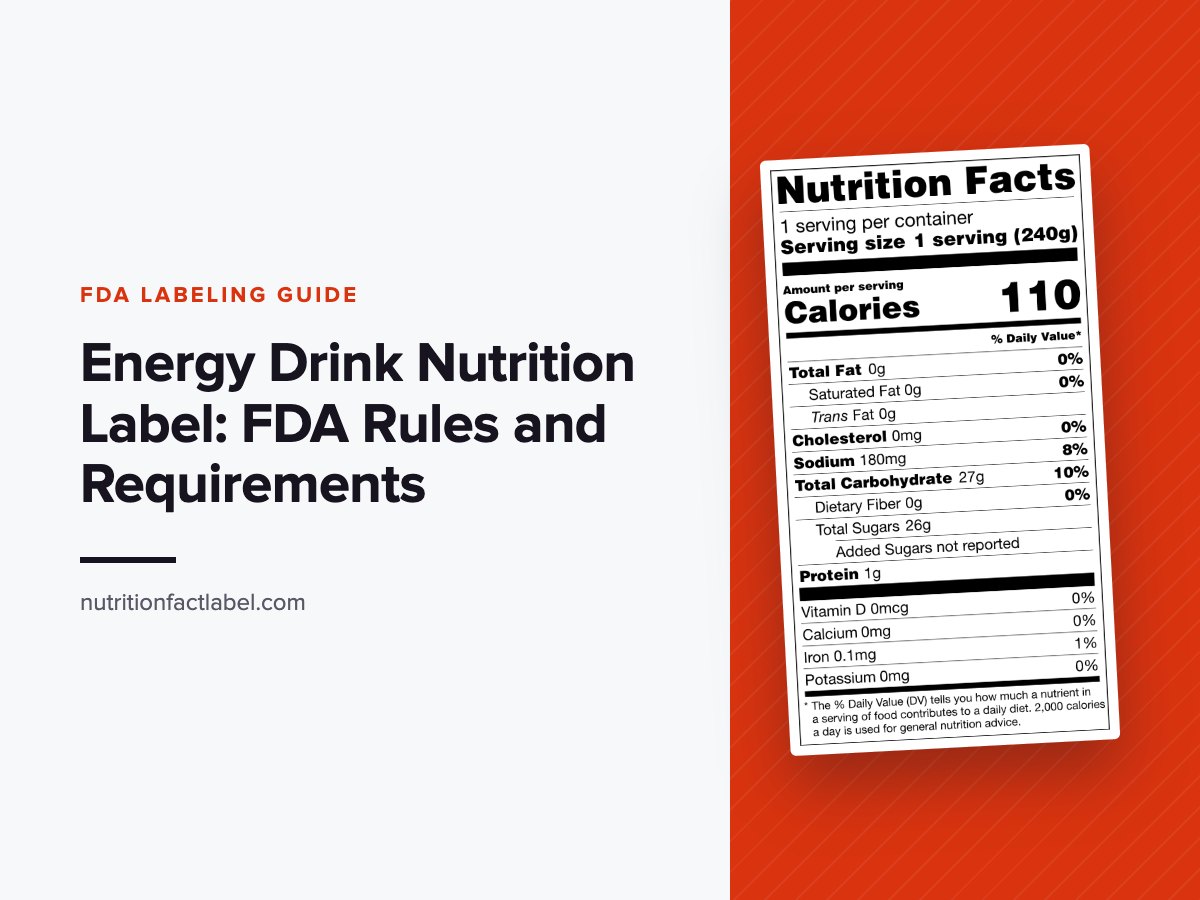
An energy drink nutrition label generally uses the FDA beverage RACC of 360 mL, or 12 fl oz, and a Nutrition Facts panel under 21 CFR 101.9 when the product is sold as a conventional beverage. If the same type of liquid product is marketed as a dietary supplement, it uses a Supplement Facts panel under 21 CFR 101.36 instead, making product classification the single most important labeling decision.
This guide is for small beverage brands developing caffeinated energy drinks, functional beverages or liquid energy supplements. It explains classification, caffeine, serving size, zero-sugar claims, fortification and the steps for building the correct panel.
Nutrition Facts or Supplement Facts for an energy drink
An energy product uses Nutrition Facts or Supplement Facts based on what the product legally is, not simply which panel the manufacturer prefers.
FDA addressed this distinction directly in its January 2014 guidance, Distinguishing Liquid Dietary Supplements from Beverages. The guidance explains that classification depends on the total circumstances surrounding the product, including its name, packaging, serving size, recommended conditions of use, marketing and how consumers are likely to understand the product.
A 12 fl oz carbonated can marketed alongside sodas as a refreshing drink and intended to be consumed like an ordinary beverage strongly resembles a conventional food.
A small liquid product marketed as a measured supplement serving, presented with dietary supplement terminology and intended to supplement the diet can support a different classification.
The label should follow that classification.
Conventional energy beverages use a Nutrition Facts panel under 21 CFR 101.9.
Dietary supplements use Supplement Facts under 21 CFR 101.36. Supplement Facts can list dietary ingredients beyond the conventional nutrients, including ingredients that do not have established Daily Values.
Do not classify a drink as a supplement simply because you want to list ingredients such as taurine, guarana, ginseng or amino acids in a Supplement Facts box.
FDA also considers whether ingredients are lawful for their intended use in the chosen product category. An ingredient used in a dietary supplement does not automatically have the same regulatory status for addition to a conventional beverage.
Claims differ too.
Dietary supplements can make qualifying structure-function claims under the DSHEA framework when the manufacturer has substantiation, submits the required notification and uses the required disclaimer under 21 CFR 101.93.
Conventional foods can also use structure-function claims, but FDA states that those claims focus on effects derived from nutritive value. Conventional foods do not use the DSHEA disclaimer simply because a structure-function statement appears on the label.
A product should therefore be classified before you design the panel, claims or ingredient presentation.
For most conventional energy drinks, caffeine becomes the next labeling question.
Caffeine labeling requirements for energy drinks
Caffeine quantity is not a required nutrient on the standard Nutrition Facts panel, but added caffeine must be declared in the ingredient list.
FDA states that packaged foods must list caffeine in the ingredient statement when caffeine is added as a stand-alone ingredient. When caffeine occurs naturally within another ingredient, such as coffee, tea, chocolate or another botanical, the source ingredient is declared instead.
Energy drinks can contain caffeine from several sources at the same time, such as added anhydrous caffeine, guarana extract, green tea extract, coffee extract and yerba mate.
If you voluntarily state "200 mg caffeine per can," the declared amount should reflect the total caffeine contribution from all relevant sources, not just the purified caffeine added directly.
Voluntary quantitative caffeine labeling is common, and FDA notes that many packaged foods, beverages and supplements provide the amount voluntarily. The statement must still be truthful and not misleading.
FDA has cited 400 mg of caffeine per day for most healthy adults as an amount not generally associated with negative effects. Individual sensitivity can vary substantially based on body weight, medications, medical conditions and other factors.
Do not turn that figure into a universal safe dose for every consumer.
There is no general federal Nutrition Facts rule requiring every conventional caffeinated beverage to carry a standardized warning such as "not recommended for children or pregnant women" solely because caffeine is present. State rules and other ingredients can add requirements, so check the states where you sell.
Many brands still use voluntary advisory wording.
If you do, make sure the statement is clear and consistent with the caffeine quantity and intended consumer.
Highly concentrated caffeine creates a different risk profile from an ordinary ready-to-drink beverage, so a product delivering unusually large quantities deserves additional regulatory and safety review.
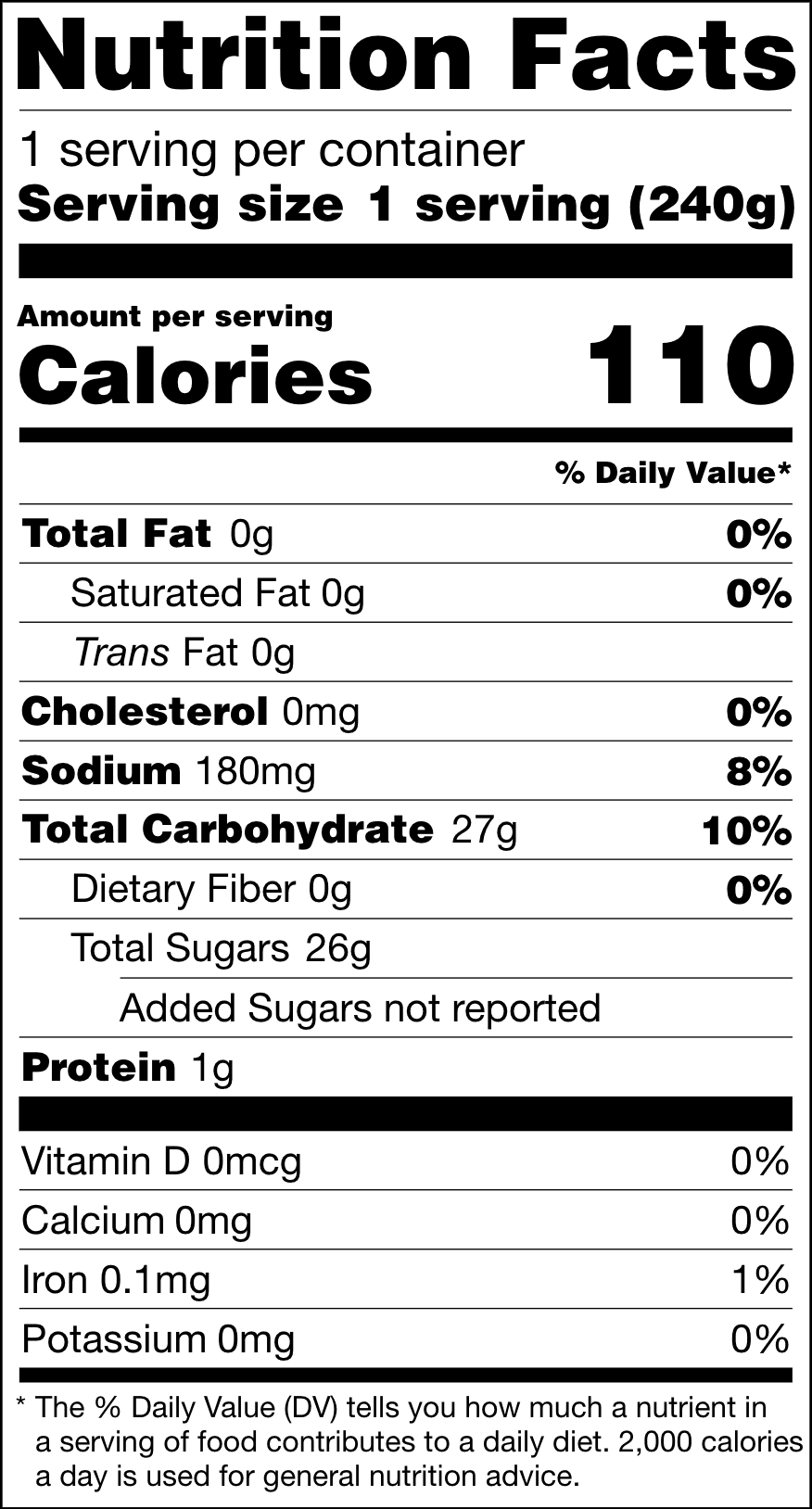
For a worked example, USDA's record for Monster Energy lists 33 mg of caffeine and 10.93 g of sugars per 100 g, and Monster Low Carb 30 mg of caffeine with about 1.4 g of sugars. Those are database values for comparison; your own label comes from your own formula.
Once caffeine is established, determine the correct serving presentation.
Energy drink nutrition label serving size
The FDA RACC for carbonated and noncarbonated beverages is 360 mL, or 12 fl oz under 21 CFR 101.12.
The RACC does not mean every energy drink must declare exactly 12 fl oz as the serving.
Package-size rules in 21 CFR 101.9 determine whether the entire can is treated as one serving.
An 8.4 fl oz can contains about 70 percent of the 12 fl oz RACC. Because it is packaged as an individual beverage and contains less than 200 percent of the RACC, it will generally be labeled as one serving under the single-serving container rules.
A 16 fl oz can contains about 133 percent of the RACC.
It is also generally treated as one serving because the package contains less than 200 percent of the applicable RACC.
That means the Nutrition Facts panel should ordinarily show the calories, caffeine-related ingredient formulation and nutrients for the whole 16 fl oz can, rather than pretending the consumer will drink only 12 fl oz.
Larger cans can cross into the dual-column range.
Under 21 CFR 101.9, an individually packaged food containing at least 200 percent and up to and including 300 percent of the RACC generally requires nutrition information both per serving and per entire package, unless an applicable exception applies.
For a 12 fl oz beverage RACC, a 24 fl oz package sits at about 200 percent of the reference amount and needs careful review under the dual-column rules.
Multi-packs are different from multi-serving containers.
A carton containing four individually labeled 12 fl oz cans still contains four separate single-serving packages. The outer package can have its own labeling considerations, but you do not treat the four-pack as one giant beverage serving.
The energy drink serving size should therefore reflect both the 360 mL RACC and the actual package consumers drink from.
Once the serving is set, sugars and sweeteners become straightforward to calculate.
Sugars and sweeteners on an energy drink nutrition facts label
Traditional energy drinks can contain substantial Added Sugars because sugar, glucose syrup, fructose or other caloric sweeteners are deliberately added to the beverage.
Those sugars contribute to both Total Sugars and Added Sugars under 21 CFR 101.9.
A 16 fl oz can can therefore show a much larger Added Sugars value than a 12 fl oz reference serving simply because the entire can is one labeled serving.
Zero-sugar formulations work differently.
Common high-intensity sweeteners include sucralose and acesulfame potassium, often called Ace-K. These ingredients do not become Added Sugars simply because they provide sweetness.
They still need to appear in the ingredient statement by their appropriate common or usual names.
Some products also use erythritol or other sugar alcohols.
Sugar alcohols contribute to Total Carbohydrate according to the applicable calculation rules and can require a separate sugar-alcohol declaration when particular sugar or sugar-alcohol claims are made.
"Zero sugar," "sugar free," "no sugar" and similar terms are regulated claims.
Under 21 CFR 101.60, the food generally must contain less than 0.5 g of sugars per RACC and per labeled serving. The regulation also includes ingredient and calorie-related conditions for using those terms.
A drink cannot be called "zero sugar" merely because you removed cane sugar if another ingredient still contributes enough sugar to exceed the threshold.
Juice can create this problem.
An energy drink containing fruit juice may contain naturally occurring sugar even if no table sugar is added. That does not necessarily make the sugar Added Sugars, but it can prevent a "zero sugar" claim if Total Sugars reach the regulatory threshold.
"No sugar added" is a separate claim with separate conditions in 21 CFR 101.60.
Calculate the finished beverage first, then evaluate the marketing claim.
Functional ingredients and vitamins need the same discipline.
Vitamins, juice and other functional ingredients
Energy drinks often contain B vitamins, acids, preservatives and functional ingredients, but adding more ingredients does not automatically make the product more compliant or more nutritious.
For conventional foods, Vitamin D, Calcium, Iron and Potassium are part of the core vitamin and mineral declarations in the current Nutrition Facts framework.
Other vitamins and minerals generally become mandatory declarations when they are added as nutrient supplements or when a claim is made about them. 21 CFR 101.9 specifically requires added vitamins and minerals to be declared under those conditions.
That means an energy drink fortified with niacin, Vitamin B6 or Vitamin B12 usually needs those nutrients included appropriately in the Nutrition Facts panel.
Fortification also has policy limits.
FDA's fortification policy in 21 CFR 104.20 says the agency does not encourage indiscriminate nutrient addition and specifically states that it does not consider fortification appropriate for snack foods such as candies and carbonated beverages.
This provision is often called the "jelly bean rule" in industry discussions because it reflects FDA's concern about adding vitamins to nutritionally poor foods to create a misleading appearance of healthfulness.
For an energy drink, review the purpose and regulatory basis for added vitamins rather than assuming any amount of B-vitamin fortification is automatically appropriate.
Juice brings another labeling requirement.
If the beverage purports to contain fruit or vegetable juice through its name, pictures, claims or other representations, 21 CFR 101.30 generally requires a percentage juice declaration.
A drink labeled "Energy Drink with 10% Orange Juice" is different from a product that uses a minor amount of juice strictly as flavor and qualifies for the flavoring exception in 21 CFR 101.30(c).
Citric acid, malic acid, preservatives, flavors and colors also need to appear in proper ingredient-list order.
Ingredients are generally listed in descending order of predominance by weight under 21 CFR 101.4.
For compounds such as botanical extracts, flavor systems or vitamin premixes, obtain complete supplier documentation rather than relying only on the marketing name of the ingredient.
That is especially important for caffeine because guarana, tea extracts and similar ingredients can add caffeine beyond the purified caffeine in the formula.
Once the category, serving size and formulation are settled, you can create the panel.
FDA energy drink regulations and label requirements
FDA energy drink regulations depend first on whether the product is a conventional beverage or a dietary supplement.
A conventional beverage uses Nutrition Facts under 21 CFR 101.9, while a dietary supplement uses Supplement Facts under 21 CFR 101.36. FDA considers the product name, packaging, serving size, recommended conditions of use, marketing and how consumers are likely to understand the product when distinguishing the two.
For a conventional beverage, the energy drink label requirements include the appropriate serving presentation based on the 360 mL, or 12 fl oz, beverage RACC and the actual package size.
Added caffeine must appear in the ingredient statement. A voluntary quantitative caffeine statement should account for all relevant caffeine sources.
Added vitamins, juice representations, sugar claims and functional ingredients can create additional requirements. Ingredients used in a conventional beverage also need to be lawful for their intended food use.
Classify the product and review the complete formulation before finalizing the can artwork.
Create your nutrition label for energy drink products free
You can build a US nutrition label for energy drink products with NutritionFactLabel when your product is a conventional beverage; for a liquid supplement, use the Supplement Facts label generator instead.
- Select the US FDA format.
- Use the 360 mL, or 12 fl oz, beverage RACC as the serving-size reference, then apply the package-size rules to determine whether your actual can is one serving or needs dual-column information.
- Enter Calories, Total Carbohydrate, Total Sugars, Added Sugars, sodium and the required vitamins and minerals.
- If you add B vitamins or make claims about them, include those nutrients as required.
- If you voluntarily provide a quantitative caffeine statement elsewhere, make sure the number represents all caffeine sources.
Caffeine itself does not belong as a standard required nutrient line in Nutrition Facts.
Building a label is free with no account or credit card, and downloading a watermarked preview needs only a free account. The tool applies the FDA format and rounding rules, and you remain responsible for the values and claims you enter.
Use this workflow for conventional beverages. A product classified as a dietary supplement requires a Supplement Facts panel instead.
Energy drink nutrition label FAQ
What is the serving size for an energy drink?
The FDA RACC for carbonated and noncarbonated beverages is 360 mL, or 12 fl oz. Package size then determines the labeled serving, so an 8.4 fl oz or 16 fl oz individual can will generally be treated as one serving, while larger packages can trigger dual-column rules.
Do I need Nutrition Facts or Supplement Facts?
Use Nutrition Facts if the product is a conventional beverage and Supplement Facts if it is legally marketed as a dietary supplement. FDA considers factors such as product name, packaging, serving size, recommended use and marketing when distinguishing liquid supplements from beverages.
Do I have to declare caffeine content?
No federal rule generally requires the caffeine quantity to appear as a Nutrition Facts nutrient. Added caffeine must appear in the ingredient statement, and any voluntary milligram statement should be truthful and include the total caffeine from all relevant sources, including added caffeine and caffeinated botanicals.
Can I call my drink zero sugar?
Yes, if it meets the conditions in 21 CFR 101.60. A "zero sugar" or "sugar free" product generally must contain less than 0.5 g of sugars per RACC and per labeled serving, along with the regulation's other ingredient and calorie-related conditions.
What are the label requirements for energy drinks?
First decide whether the drink is a conventional beverage with a Nutrition Facts panel or a dietary supplement with a Supplement Facts panel. Either way the can needs a statement of identity, net contents, ingredients, any major allergens, and the business name and address. Caffeine content is not a required nutrient declaration, but many brands disclose it voluntarily.
Do energy drinks need FDA approval?
No. FDA does not approve energy drinks or their labels before they are sold. Ingredients in a conventional beverage must be generally recognized as safe or permitted food additives, and a supplement brand must notify FDA before using a new dietary ingredient, one not marketed in the US before October 15, 1994, unless an exception applies. The brand is responsible for a truthful, compliant label, and FDA can act after the product is on the market.
Canning your first formula? Build the panel in the free NutritionFactLabel label generator: build and preview free, download with a free account.
Need a nutrition label for your own product? Make it with our free nutrition facts label generator
Sources
- Guidance for Industry: Distinguishing Liquid Dietary Supplements from Beverages (Jan 2014) (FDA)
- Spilling the Beans: How Much Caffeine Is Too Much? (FDA)
- 21 CFR 101.12 Reference amounts customarily consumed (eCFR) (eCFR)
- 21 CFR 101.9 Nutrition labeling of food (eCFR) (eCFR)
- 21 CFR 101.60 Nutrient content claims for calorie content (eCFR) (eCFR)
- 21 CFR Part 104 Nutritional quality guidelines / fortification policy (eCFR) (eCFR)