Salsa Nutrition Label: FDA Rules and Serving Size
Create a salsa nutrition label using the FDA 2 tablespoon RACC. Learn serving size, ingredients, nutrition calculations and acidified-food rules.
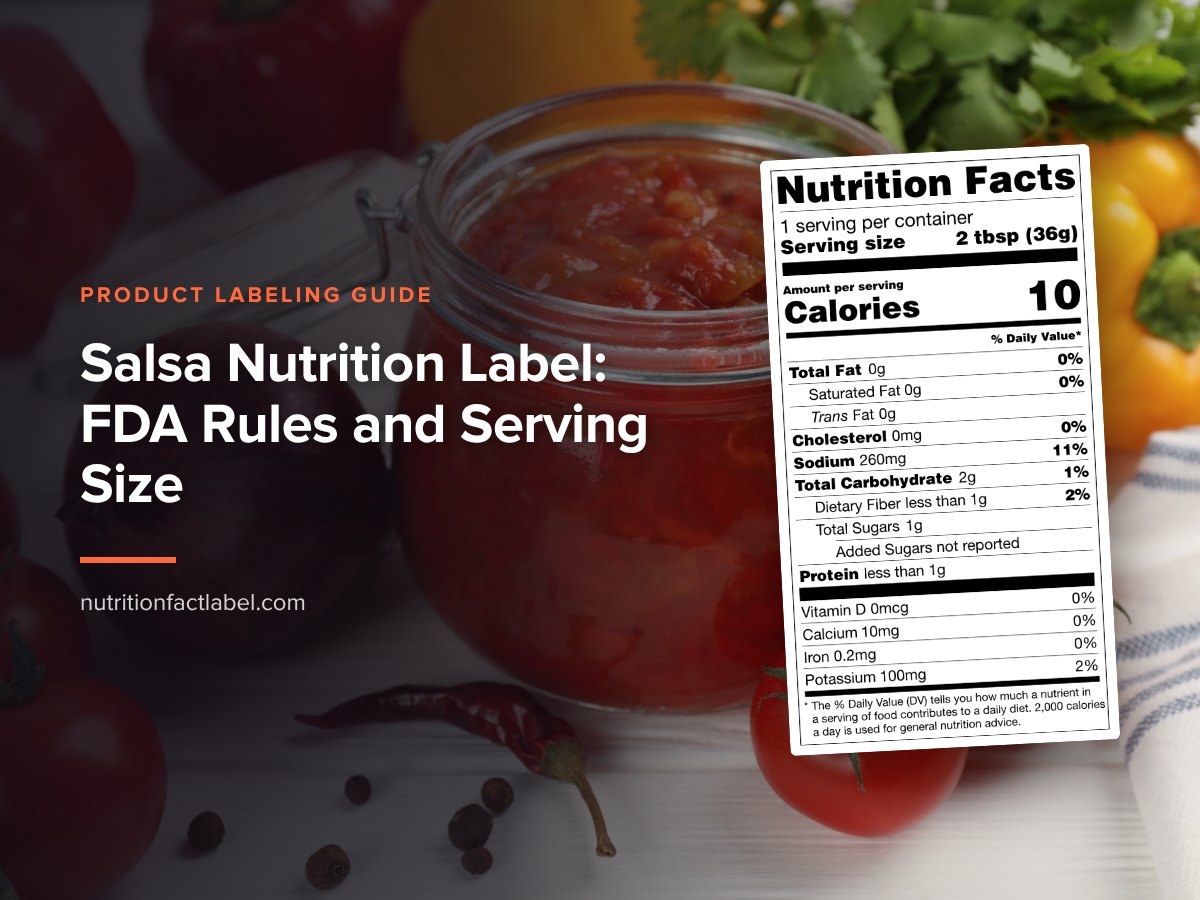
A salsa nutrition label generally uses a serving size of 2 tablespoons because FDA regulations place salsa in the sauces, dips, gravies and condiments category with a RACC of 2 tablespoons. The finished Nutrition Facts panel must then follow the formatting and nutrient declaration requirements in 21 CFR 101.9.
This guide is for salsa makers moving from farmers markets and small batches into packaged retail. It covers serving size, nutrition calculations, ingredients, acidified-food requirements and the practical steps for preparing a compliant jar label.
Salsa nutrition label requirements at a glance
A packaged retail salsa generally needs five core labeling elements in addition to any food-safety requirements that apply to the manufacturing process.
- Statement of identity: The principal display panel identifies the product using an appropriate common or usual name, such as "Salsa," "Tomato Salsa" or another accurate description.
- Net quantity: The principal display panel states how much salsa is in the container using the applicable US customary and metric units.
- Nutrition Facts label: A covered product displays serving information, calories, required nutrients and applicable %DV values according to 21 CFR 101.9.
- Ingredient statement: The label lists ingredients in descending order of predominance by weight using their common or usual names.
- Business information: The package identifies the manufacturer, packer or distributor and provides the required place-of-business information.
Some qualifying small businesses or low-volume products can use a small business nutrition labeling exemption under 21 CFR 101.9(j). The exemption has conditions, and making certain nutrient or health claims can affect eligibility.
These are the basic salsa label requirements, but getting the serving size right comes before calculating the panel.

Salsa serving size and RACC
The FDA RACC for salsa is 2 tablespoons because salsa appears in the sauces, dips, gravies and condiments category under 21 CFR 101.12.
The regulation lists salsa with barbecue sauce, tartar sauce, dipping sauces and other dips. The reference amount is 2 tablespoons, and the label statement can be expressed as 2 tablespoons with the corresponding gram weight, or 2 tablespoons (30 mL) for an appropriate liquid measure.
The regulation does not assign salsa a universal 30 g weight, so you should determine the actual gram weight of 2 tablespoons of your product rather than assuming 30 g. The RACC lookup tool confirms the category.
Consider a 16 oz jar.
Sixteen ounces by weight is about 454 g. If 2 tablespoons of your finished salsa weighs 30 g, that jar would contain about 15.1 servings. If your salsa weighs 32 g per 2 tablespoons, it would contain about 14.2 servings.
Your final servings-per-container declaration must follow the applicable FDA rounding rules rather than displaying the raw calculation.
This is why weighing an actual serving matters.
Salsa often shows relatively few calories per serving because tomatoes, peppers and onions contain substantial water and the serving is small. Sodium can still be meaningful because added salt remains concentrated within that same 2-tablespoon serving.
Your salsa serving size therefore affects every nutrient value on the panel, especially sodium. Review the serving size rules before finalizing the declaration.
Once the serving quantity is established, calculate the nutrition from the actual finished recipe.
Getting salsa nutrient values
Database-based recipe analysis works well for many salsa recipes when you know the exact ingredient weights and finished batch yield.
A basic formula containing tomatoes, peppers, onions, garlic, vinegar, citrus juice, herbs and salt can usually be calculated from reliable ingredient data in recipe nutrition analysis.
Enter ingredients by weight rather than relying on approximate cups or spoon measurements when preparing commercial nutrition information.
Watch the sodium
Sodium is usually the nutrient to watch most closely.
Tomatoes and fresh vegetables contain relatively little sodium naturally, but salt can quickly increase the amount declared on a salsa Nutrition Facts label. Commercial tomato products, seasoning blends and prepared ingredients can contribute additional sodium, so use supplier specifications where possible.
Calculate from the finished yield
Processing also changes the numbers.
A cooked salsa that starts with 20 kg of ingredients might weigh substantially less after simmering because water evaporates. Calories, sodium, carbohydrate and other nutrients are then distributed across a smaller finished mass.
Calculate nutrition using the finished yield rather than the raw starting weight.
Fresh pico de gallo generally loses less moisture, so its nutrient concentration may differ from a cooked or reduced salsa made from similar ingredients.
Draining also matters. If you drain canned tomatoes, peppers or beans before adding them, your formulation should reflect the quantity actually entering the finished product. Do not calculate nutrients from the full undrained container if the packing liquid is discarded.
Consistent recipes and finished yields make database analysis more dependable. Products with highly variable reduction, draining or processing may benefit from laboratory confirmation.
After the nutrition values are established, use the same formulation to build the ingredient declaration.
Ingredient statement and allergens for salsa
A salsa ingredient statement lists ingredients in descending order of predominance by weight as they are used in the formulation.
Tomatoes often appear first because they make up the largest portion of a traditional salsa, but they do not automatically belong first. If another ingredient weighs more in your actual formulation, that ingredient comes first.
Vinegar and citrus juice follow the same rule. Do not move vinegar lower in the list simply because it functions mainly as an acidifier.
Ingredient order reflects predominance by weight, not the ingredient's purpose. The ingredient formatter builds the statement in the required order.
Compound ingredients and seasonings
Compound ingredients may require their sub-ingredients to appear as well.
For example, a prepared tomato sauce, seasoning blend or bottled lime preparation can contain multiple components that need to be accounted for.
FDA rules can permit certain qualifying seasonings to be declared collectively as "spices," while other ingredients require their specific common or usual names. Check each seasoning against 21 CFR 101.22 before grouping it: some, such as paprika and turmeric, also add colour and need to be named. Flavoring ingredients also have separate declaration rules.
Traditional salsa rarely contains a major food allergen, but unusual recipes can. Check cheese-based salsa, seasoning blends, Worcestershire sauce, soy-containing sauces, nut ingredients and any other prepared components against their supplier specifications.
Do not assume that a familiar-looking product is allergen-free.
With ingredients finalized, shelf-stable jarred salsa requires another compliance review that is separate from the nutrition panel.
Acidified food rules for jarred salsa
Many commercially produced shelf-stable jarred salsas qualify as acidified foods, and those products have processing requirements that are separate from nutrition labeling.
FDA defines an acidified food as a low-acid food to which acid or acid foods are added, with a finished equilibrium pH of 4.6 or below and water activity above 0.85.
Whether your exact salsa meets that legal definition depends on its formulation and process. The same framework applies to shelf-stable hot sauce.
Commercial processors of covered shelf-stable acidified foods must register their processing establishments and file scheduled processes with FDA for applicable products and container sizes.
FDA also requires the scheduled process to be established by a qualified person with appropriate expertise.
Salsa is not a theoretical example. FDA enforcement records specifically document shelf-stable salsa processors being cited for failing to file required scheduled processes.
A process authority typically evaluates the formulation, acidification method, heat treatment, equilibrium pH and other critical factors, then establishes the scheduled process. Your state or process authority may use slightly different terms for this.
Refrigerated salsa is different
Refrigerated fresh salsa follows a different regulatory path and should not automatically be treated as an acidified shelf-stable product.
For canned salsa labeling, getting the Nutrition Facts panel right does not replace these food-safety obligations. Both parts of compliance matter.
Once the process and formulation are settled, you can fit the required information onto the jar.
Label formats for salsa jars
Most standard salsa jars can use a vertical Nutrition Facts panel when the back or side label provides enough available space.
A typical 12 oz or 16 oz jar often has enough room for a standard panel alongside the ingredient statement, allergen information, manufacturer details and barcode. The exact layout depends on the container dimensions and the amount of space available to bear labeling.
Smaller containers can qualify for alternate FDA formats. A tabular nutrition label arranges nutrition information horizontally and can help when a qualifying package cannot accommodate the regular vertical presentation under the applicable small-package rules.
Do not shrink the standard panel simply to preserve more space for branding.
For wraparound labels, reserve the Nutrition Facts area before developing the rest of the artwork. Place the panel, ingredient statement and required business information first, then use the remaining area for branding, product story and marketing claims.
That approach avoids discovering at final artwork stage that the mandatory information no longer fits.
With the layout planned, you can generate the actual panel.
How to sell salsa for packaged retail
If you are working out how to sell salsa beyond farmers markets or small local batches, review both the product label and the manufacturing process before expanding into retail.
Packaged salsa generally needs the core label elements described above unless a specific exemption applies. Shelf-stable salsa can also fall under acidified-food requirements, including establishment registration and scheduled-process filing for covered commercial processors.
Refrigerated fresh salsa follows a different regulatory path and should not automatically be treated as shelf-stable acidified food.
A small business or low-volume product may qualify for a nutrition-labeling exemption, but making certain nutrient or health claims can affect eligibility.
Standardize your commercial recipe, finished yield, processing method and sales format before creating final retail artwork.
Create your salsa nutrition label free
You can create an FDA compliant Nutrition Facts panel for salsa with the NutritionFactLabel label generator once you have your finished nutrient values and serving information.
- Select the US FDA label format.
- Enter a serving of 2 tablespoons.
- Add the corresponding gram weight measured from your finished salsa.
- Enter the nutrient values for one serving.
- Pay particular attention to sodium, Total Carbohydrate, Total Sugars, Added Sugars and any nutrients contributed by unusual ingredients.
- Review the servings per container.
- Select the panel format appropriate for your jar.
NutritionFactLabel creates FDA compliant US labels for free. You do not need an account or credit card. The free version does not add a watermark and lets you export the completed panel as a JPG.
If you are producing homemade salsa for retail, generate the nutrition panel only after standardizing the commercial recipe and finished yield.
Salsa nutrition label FAQ
What is the serving size for salsa?
The FDA RACC for salsa is 2 tablespoons. Salsa appears with dips and certain sauces in 21 CFR 101.12, which assigns that category a 2-tablespoon reference amount. Your label should also show the corresponding metric quantity, which should reflect the actual weight of your finished salsa.
Does homemade salsa need a nutrition label to be sold?
Not always. Packaged salsa sold at retail generally requires nutrition labeling unless an applicable exemption applies. Small businesses and low-volume products can qualify for certain exemptions, while state cottage-food rules may also affect local sales. Moving into wholesale or broader retail can change which requirements apply.
Can I sell salsa without FDA approval?
Yes, because the FDA does not pre-approve ordinary salsa products or approve their labels before sale. However, applicable regulations still must be followed. Commercial shelf-stable acidified salsa can require establishment registration, a scheduled process filing, pH control and other acidified-food procedures under 21 CFR Parts 108 and 114.
Do I need a lab test for my salsa label?
No, laboratory testing is not automatically required for every salsa Nutrition Facts label. Database analysis can work when ingredient data, quantities and finished yield are reliable. Laboratory testing may be useful when cooking, draining or variable ingredients make the final nutrition difficult to calculate consistently from the formulation alone.
What are the label requirements for salsa?
A jar of salsa needs a truthful name, the net quantity, a Nutrition Facts panel unless exempt, ingredients in descending order by weight, any major allergens, and the business name and address. Shelf-stable jarred salsa is usually an acidified food, so the processor files a scheduled process under 21 CFR Part 114, and fresh refrigerated salsa needs a "Keep Refrigerated" statement.
Is there an FDA standard for salsa?
No federal standard of identity exists for salsa, so the name only has to be truthful and not misleading. Heat descriptors such as mild, medium and hot are not regulated terms, while the word "fresh" is limited by 21 CFR 101.95 for foods that have been heated or preserved.
Jarring your first commercial batch? Build your salsa panel now in the free NutritionFactLabel label generator, no account needed.
Need a nutrition label for your own product? Make it with our free nutrition facts label generator