Baked Goods Nutrition Label: FDA Rules and Serving Size
Create a baked goods nutrition label using the correct FDA RACC, finished baked yield, allergen declarations and packaging format requirements.
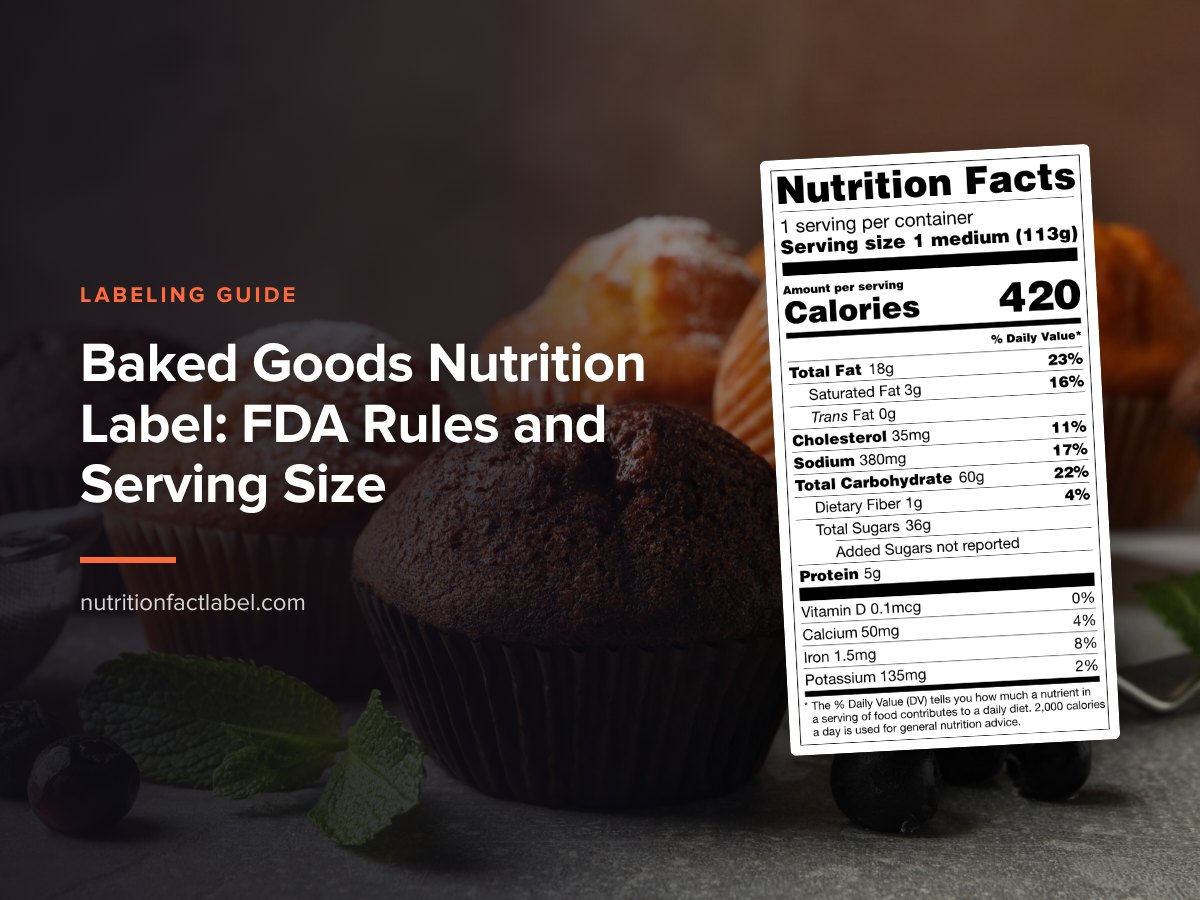
A baked goods nutrition label starts with the FDA RACC for the specific bakery category, such as 30 g for cookies and 50 g for most breads, then follows the Nutrition Facts formatting requirements in 21 CFR 101.9. Muffins, cakes, brownies and other bakery products can use different reference amounts, so you must classify your product before choosing a serving size.
This guide is for home bakers moving into wholesale, small bakeries packaging products for retail, and food founders selling cookies, breads, cakes or similar products outside their own shop.
Baked goods labeling requirements: Which products need a nutrition label?
Packaged baked goods sold through retail channels generally require nutrition labeling unless a specific FDA exemption applies.
Packaged wholesale products normally need a Nutrition Facts label when you produce cookies, bread, muffins or cakes and sell them through grocery stores, specialty retailers or other businesses. The package must also meet the other applicable food labeling requirements.
Products prepared and sold inside your own bakery can receive different treatment. 21 CFR 101.9(j) includes exemptions for certain ready-to-eat foods prepared primarily at a retail establishment and sold only from that establishment, provided the food does not carry nutrition claims or other nutrition information.
Small businesses may also qualify for a small business nutrition labeling exemption under separate provisions of 21 CFR 101.9(j). Eligibility can depend on sales, product volume, employee numbers and other conditions.
A nutrient content claim can change that situation. If you call a cookie "low fat," "high fiber" or make another regulated nutrient content claim, nutrition labeling requirements can apply even when the product might otherwise qualify for an exemption.
How to sell baked goods from home and understand labeling rules
Cottage food laws are separate from FDA nutrition labeling requirements. States determine which foods home producers may make and where they may sell them.
A state cottage food exemption does not automatically create an FDA nutrition-labeling exemption for products entering broader retail or interstate commerce. If you are moving from home sales into wholesale or packaged retail, confirm which rules apply before omitting a Nutrition Facts panel.
Once you know your product needs a panel, determine the correct serving size for that specific bakery category.
Serving sizes for cookies, bread, muffins and cakes
FDA bakery serving sizes start with the Reference Amount Customarily Consumed, or RACC, assigned to each product category.
For common baked goods:
- Cookies use a 30 g RACC.
- Bread and rolls, excluding sweet quick breads, use a 50 g RACC.
- Bagels, toaster pastries and muffins other than English muffins use a 110 g RACC.
- Brownies use a 40 g RACC.
- Coffee cakes, doughnuts, Danish pastries, sweet rolls and sweet quick breads use a 55 g RACC.
- Cake RACCs vary by style, with lightweight, mediumweight and heavyweight cakes using different reference amounts.
The RACC lookup tool finds the reference amount for your exact category.
The RACC is not always printed directly as the serving size. FDA serving size rules require you to convert the reference amount into a household measure appropriate for the specific product.
For discrete products such as cookies, the serving is set by how one unit compares with the RACC, which is 30 g for cookies (21 CFR 101.12(b)). Under 21 CFR 101.9(b)(2)(i), if one unit is 50% or less of the RACC, the serving is the number of whole units closest to the RACC; if it is 67% to less than 200%, the serving is one unit. A 15 g cookie therefore gives a serving of two cookies, while a 40 g cookie is one cookie per serving.
Large discrete units need more attention. The RACC for muffins is 110 g, so a 110 g muffin is one serving. A muffin packaged and sold individually that holds less than 200% of the RACC must be labeled as a single serving, the whole muffin (21 CFR 101.9(b)(6)); from 200% to 300% of the RACC the label needs two columns, per serving and per package (21 CFR 101.9(b)(12)(i)).
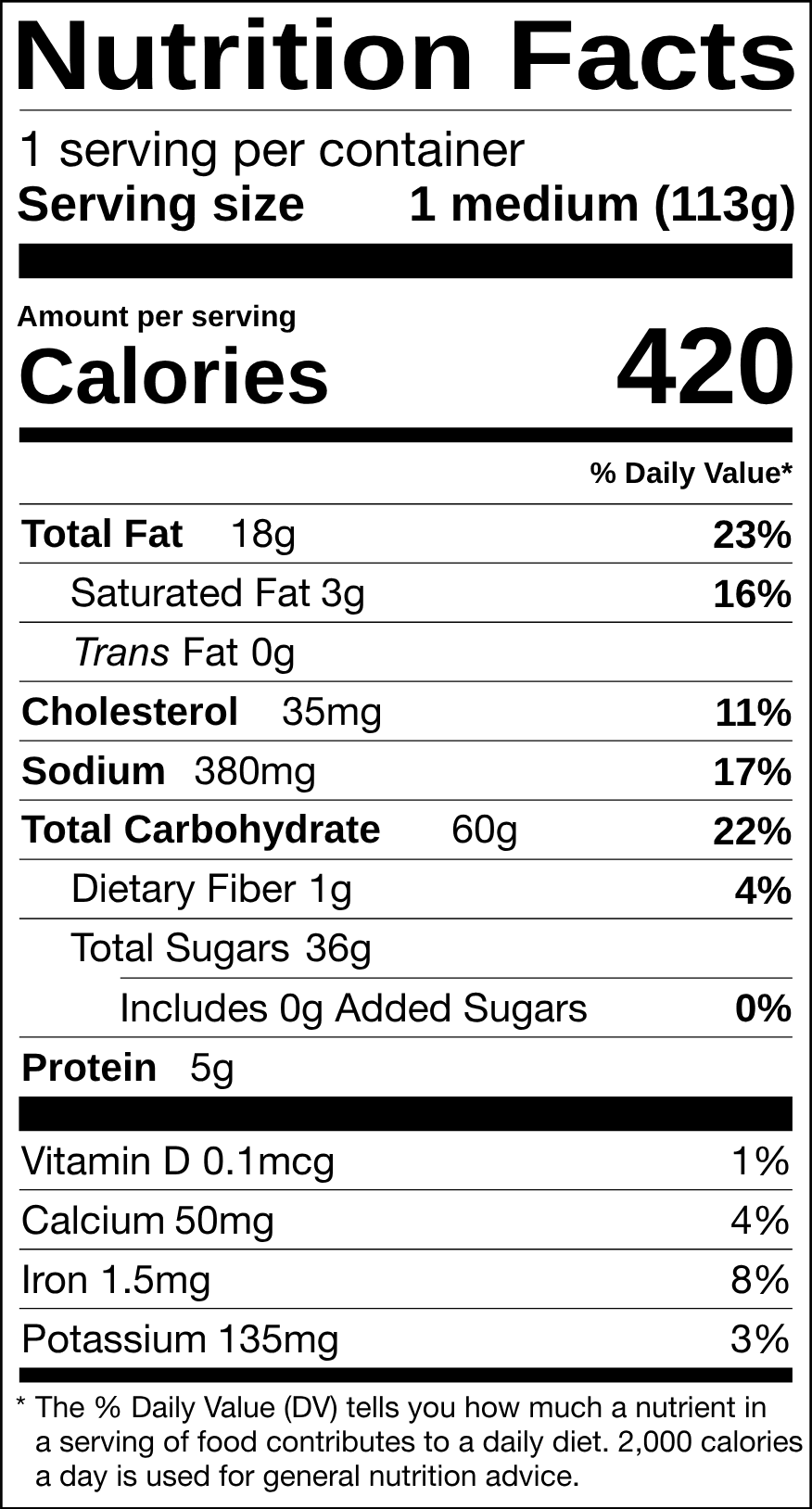
Cakes and other variable-weight products often use fractional slices or another visual unit of measure. Bread can use slices with gram weight, while unsliced bread may use an ounce-based visual measure under the applicable category instructions.
Accurate serving sizes depend on the finished product weight, which also becomes important when calculating its nutrients.
Getting nutrient values for baked goods
Database-based recipe analysis works well for many baked goods when you know the ingredient weights and the final weight of the baked batch.
Start with the full recipe. Enter flour, sugar, fats, eggs, milk, chocolate, nuts, leavening agents and other ingredients into recipe nutrition analysis using reliable nutrition data. Supplier specifications are useful for commercial ingredients that differ from generic database entries.
The important number is the finished yield, not just the raw batter or dough weight.
Baking removes water. A cookie dough batch weighing 5 kg before baking might weigh substantially less after baking. If you calculate nutrition per gram using the original dough weight, you can understate the concentration of calories, carbohydrate, fat, sodium and other nutrients in the finished cookies.
The net weight and yield calculator works out the moisture-loss adjustment from your batch weights.
Weigh the full batch after baking and cooling under your normal production process. Use that finished weight when converting the recipe into nutrition per serving.
Frostings, fillings and inclusions
Frostings, fillings and inclusions can require separate calculations. If the same buttercream, ganache or fruit filling is used across several products, building it as a sub-recipe can improve consistency. You can then add the correct amount of that sub-recipe to each finished product.
Products with highly variable moisture loss, frying absorption, fermentation or inconsistent finished yields need more care. Laboratory analysis can be useful when your process makes database-based calculations difficult to support reliably.
For most standardized bakery recipes, consistent batch weights and accurate ingredient data are the foundation of reliable nutrition facts for bread, cookies, muffins and cakes.
The next step is checking the part of bakery labeling that can create a much more immediate consumer safety risk.
Allergens in baked goods, the highest risk part of the label
Baked goods commonly contain several major food allergens, so allergen review should be a separate step rather than an afterthought.
Wheat appears in most conventional flour-based bakery products. Milk can come from butter, milk powder, cream, whey or chocolate ingredients. Egg is common in cakes, cookies and enriched breads. Soy can appear in lecithin, shortenings or other formulated ingredients.
Tree nuts and peanuts are common in cookies, brownies, cakes and fillings. Sesame is particularly relevant to breads, buns and bakery toppings: it became the ninth major food allergen under the FASTER Act, and must be declared on labels since January 1, 2023. Fish and crustacean shellfish are less common in sweet bakery products but remain major allergens when used.
FDA describes recalls for undeclared food allergens as a leading cause of all food product recalls, and bakeries are especially exposed because several allergen-containing recipes often share the same equipment and production area.
The ingredient statement must identify allergenic ingredients using the required common or usual names. If you use a "Contains" statement instead of naming the allergen source within the ingredient list, it must name every major allergen source in the food and appear immediately after or next to the ingredient list, in type no smaller than the ingredient list (FD&C Act section 403(w), added by FALCPA).
The allergen detector flags allergen sources hiding in compound ingredients such as chocolate chips or margarine.
Statements such as "may contain peanuts" or "made in a facility that processes tree nuts" are voluntary cross-contact advisories. They do not replace the required declaration of an allergen that is actually an ingredient in the product.
Once ingredients and allergens are correct, select a Nutrition Facts layout that fits the package without shrinking required information improperly.
Label formats for bakery packaging
Bakery packaging can use different Nutrition Facts formats depending on available label space and the relationship between package size and serving size.
A standard vertical panel usually works well on cookie boxes, bread bags with large back panels, cake cartons and other packages with sufficient space.
A tabular nutrition label can be useful on qualifying narrow packages or wrappers where the standard vertical panel cannot fit under the FDA small-package formatting provisions. The tabular format rearranges the same required nutrition information horizontally rather than eliminating it.
Some products can require dual-column labeling. FDA rules generally apply dual-column requirements to certain packages containing at least 200 percent and up to 300 percent of the applicable RACC when the product could reasonably be consumed in one sitting, subject to specific exceptions.
For example, an individually packaged loaf cake or large bakery item is not automatically several servings: compare its weight with the RACC for its category (55 g, 80 g or 125 g for light, medium and heavy cakes) and apply the single-serving and dual-column rules above.
Choose the regulatory format before finalizing the package design, then reserve enough space for the finished panel.
Create your baked goods nutrition label free
You can create an FDA compliant Nutrition Facts panel for baked goods with the NutritionFactLabel label generator once your recipe, serving size and finished yield are ready.
- Select the US FDA label format.
- Enter the serving size based on the applicable bakery RACC and your finished unit weight.
- Enter the nutrition values for one serving.
- Review calories, Total Fat, Saturated Fat, sodium, Total Carbohydrate, Dietary Fiber, Total Sugars, Added Sugars, Protein and required vitamins and minerals.
- Select the label format that fits your package and applicable FDA requirements.
NutritionFactLabel creates FDA compliant US labels for free. You do not need to create an account or enter a credit card. The free label can be downloaded as a watermarked JPG preview; paid plans export clean files.
Add the finished panel to your packaging only after checking the ingredient statement, allergens and other baked goods label requirements separately.
Baked goods nutrition label FAQ
Do home bakers need a nutrition label?
Not always. A home baker may qualify for an FDA exemption or operate under a state cottage food law, depending on where and how the product is sold. Once products move into wholesale or broader packaged retail, different requirements can apply. A bakery labeling exemption should be confirmed before you omit nutrition information.
What is the serving size for cookies?
The FDA RACC for cookies is 30 g. You convert that reference amount into an appropriate household measure, usually a number of cookies plus the gram weight. The correct count depends on the weight of each finished cookie and the FDA rules for discrete units.
How do I get nutrition facts for my baked goods?
You can calculate nutrition facts from your recipe using reliable ingredient data and the finished baked yield. Weigh the product after baking because moisture loss changes nutrient concentration per gram. Laboratory analysis can also be used when processing, variable yields or unusual ingredients make recipe-based calculations unreliable.
Do I need to list allergens on baked goods?
Yes, when your baked goods contain a major food allergen, the applicable allergen source must be declared correctly. Common bakery allergens include wheat, milk, egg, soy, peanuts, tree nuts and sesame. Voluntary cross-contact statements such as "may contain" do not replace required allergen declarations for ingredients actually used in the recipe.
What are the labeling requirements for baked goods?
Packaged baked goods sold at retail need the product name, the net weight, a Nutrition Facts panel unless the small business or another exemption applies, the ingredient list in descending order by weight with sub-ingredients for flours, chips and fillings, the major allergens, and the business name and address. Wheat, milk, egg, soy, tree nuts, peanuts and sesame are the allergens bakers declare most often.
What are cottage bakery label requirements?
Cottage food bakers follow their state's label rules rather than a single federal format. Many states require the product name, ingredients, allergens, net quantity, the maker's name and address, and a statement that the food was made in a home kitchen that is not inspected by the health department, but the exact wording and items differ, so check your state on our cottage food labeling by state page. A Nutrition Facts panel is usually not required unless you make a nutrient content or health claim.
Going wholesale? Build your bakery panel now in the free NutritionFactLabel label generator, no account needed.
Need a nutrition label for your own product? Make it with our free nutrition facts label generator