FDA Nutrition Label Changes: 2026 to 2028
What is final and dated, what is only proposed, and what does not exist at all. The front-of-package box is still a proposal; the healthy claim deadline is 25 Feb 2028.

This page tracks the FDA food labeling changes 2026 has delivered so far and every one a United States manufacturer still has to plan around before 2028, separating what is final and dated from what is only proposed. That distinction is the whole story right now: a few items are binding law with hard deadlines, one high-profile item is a proposal that may never be finalised as written, and several widely reported "changes" are not labeling rules at all.
This is the hub for a set of deeper articles. For the mechanics of the label itself rather than the calendar, start with the Nutrition Facts label requirements guide; for deadline planning in detail, the 2028 compliance guide. Everything below is current as of 15 September 2026.
FDA food labeling changes 2026 at a glance: final, proposed, in development, or not real
Read the status column before the date column. A projected date on a proposed rule is not a deadline, and several dates in trade press are projections, not FDA commitments.
| Change | Status | Dates that matter |
|---|---|---|
| Nutrition Facts format, added sugars, updated Daily Values, updated serving sizes | FINAL and already required | 2016 rules; compliance passed 1 Jan 2020 (firms with $10 million or more in annual food sales) and 1 Jan 2021 (smaller firms) |
| Sesame as the ninth major allergen | FINAL (statute, FASTER Act) | In force since 1 Jan 2023 |
| Updated "healthy" nutrient content claim | FINAL rule, voluntary claim | Published 27 Dec 2024; effective 28 Apr 2025 after a delay; compliance 25 Feb 2028 |
| FD&C Red No. 3 revocation | FINAL | Foods and dietary supplements must stop using it by 15 Jan 2027; ingested drugs by 18 Jan 2028 |
| Uniform compliance date for labeling rules published 1 Jan 2025 through 31 Dec 2026 | FINAL | 1 Jan 2028, for any such rule that does not set its own date |
| Front-of-package "Nutrition Info" box | PROPOSED, not binding | Proposed 16 Jan 2025; comments closed 15 Jul 2025; under reassessment since March 2026; no final rule exists; the proposed 3-year and 4-year compliance clocks have not started |
| "Low added sugars" nutrient content claim | PROPOSED RULE PENDING, nothing published | Unified Agenda projects a proposed rule in Dec 2026 |
| Federal ultra-processed food definition | IN DEVELOPMENT, not a labeling rule | Request for information Jul 2025; whitepaper sent to OMB 3 Aug 2026 and announced 10 Aug 2026; criteria not public |
| Voluntary "healthy" symbol; draft Q&A guidance on the healthy claim | NOT ISSUED | Symbol still exploratory; the draft "Questions and Answers Regarding Use of the 'Healthy' Claim" guidance was added to the 2026 agenda on 29 Jun 2026 and has not been issued |
| Federal definition of "natural" | DOES NOT EXIST | Informal FDA policy only; no rulemaking pending |
| Mandatory ultra-processed food warning | DOES NOT EXIST | No proposal, no rule |
| Food Labeling Modernization Act of 2026 | INTRODUCED ONLY, not law | H.R. 8385 introduced 20 Apr 2026; Senate companion 29 Jul 2026 |
Why so much of this is uncertain
The reason is worth stating plainly rather than guessing at. FDA Commissioner Marty Makary resigned on 12 May 2026, and Kyle Diamantas, previously Deputy Commissioner for Human Foods, became Acting Commissioner. In March 2026, Makary said publicly that current leadership "did not like the front-of-package plan that we inherited," and Diamantas told Bloomberg Law that "everything is on the table" and that meaningful changes could require re-proposing the rule for a second notice-and-comment round.
So the front-of-package proposal has been under reassessment since March 2026 while remaining on the priority list. The 2026 Unified Regulatory Agenda listed it again as a final rule anticipated for the remainder of 2026, but an earlier projected date of May 2026 passed with nothing published. Treat every FOP timeline you read, including ours, as arithmetic rather than schedule.
Front-of-package: proposed, not required
This proposal is what most coverage of a new FDA food label for 2026 is actually describing. FDA published "Food Labeling: Front-of-Package Nutrition Information" in the Federal Register on 16 January 2025 at 90 FR 5426, under Docket No. FDA-2024-N-2910. It would create a new 21 CFR 101.6 requiring a black-and-white "Nutrition Info" box in the upper third of the principal display panel, showing three nutrients only, in this order: saturated fat, sodium, added sugars. Each gets its %DV and an interpretive word.
| Band | %DV per serving | Saturated fat | Sodium | Added sugars |
|---|---|---|---|---|
| Low | 5% or less | 1 g or less | 115 mg or less | 2.5 g or less |
| Med | 6% to 19% | above Low, below High | above Low, below High | above Low, below High |
| High | 20% or more | 4 g or more | 460 mg or more | 10 g or more |
The gram and milligram figures derive from the adult Daily Values of 20 g saturated fat, 2,300 mg sodium and 50 g added sugars; the proposal defines the bands only in %DV. Calories are not in the box. If finalised, compliance would fall 3 years after the effective date for businesses at or above $10 million in annual food sales and 4 years for smaller ones. Those clocks have not started, and no packaged food sold in the United States is required to carry a front-of-package box today. The full proposal is covered in the front-of-package guide; the design, placement, exemption and intermediate-package rules are in the front-of-package label requirements.
The "healthy" claim: final, and the one real 2028 deadline
This is the change most manufacturers underestimate. The updated definition of "healthy" was published at 89 FR 106064 on 27 December 2024, took effect 28 April 2025 after a delay, and carries a compliance date of 25 February 2028 that the delay did not move. The claim stays voluntary, but any product bearing "healthy" or a derivative such as "healthful" or "healthier" in a nutritional context must meet the new criteria by then.
The new test is structural, not cosmetic. A food must contain a minimum food group equivalent, for example 1/2 cup-eq of vegetables or 3/4 oz-eq of whole grain, and then stay under limits on added sugars, sodium and saturated fat. For most individual foods that means 230 mg sodium (10% DV), 1 g added sugars (2% DV) and 1 g or 2 g saturated fat depending on category. The 1994 rule capped total fat and cholesterol and asked for 10% DV of a nutrient to encourage; the 2024 rule drops both fat tests and roughly halves the sodium ceiling.
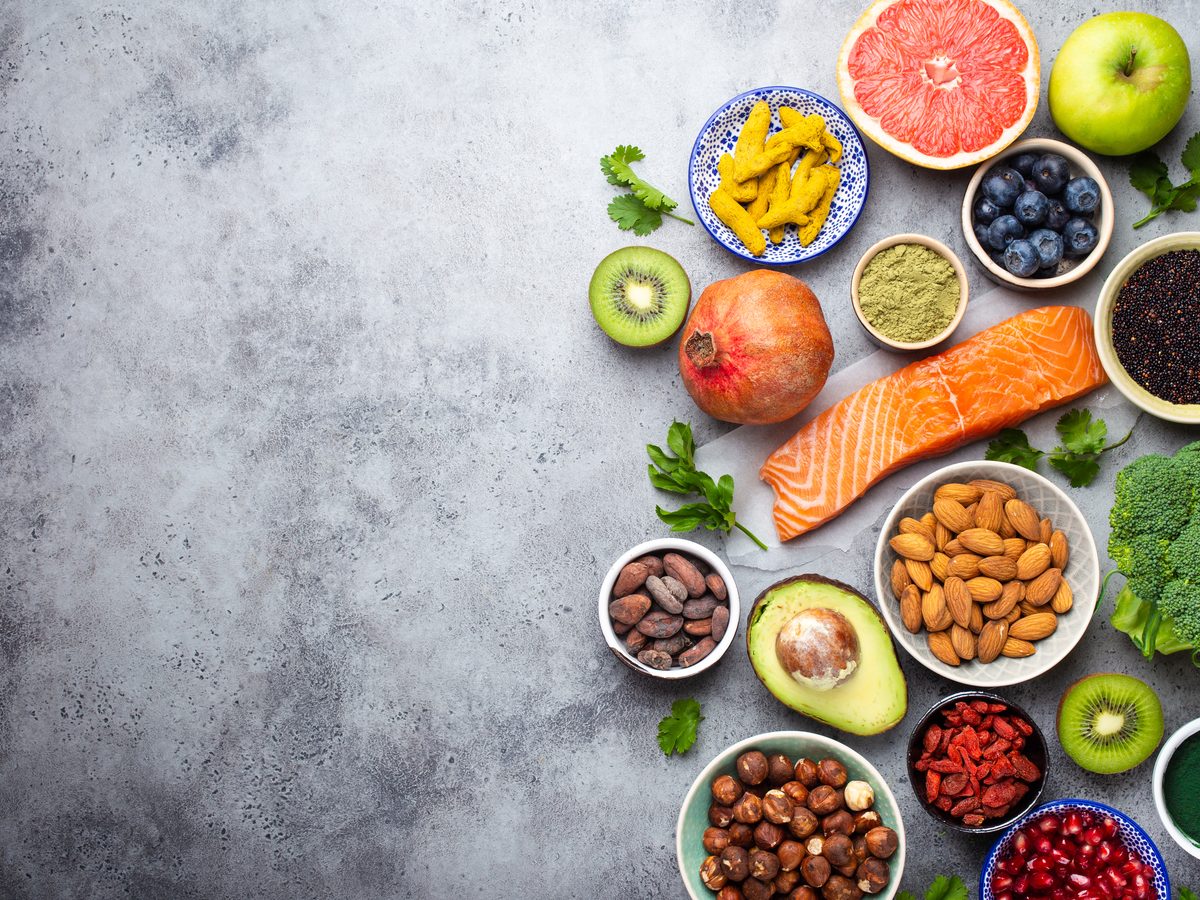
So salmon, nuts, olive oil, avocados and plain water now qualify, while sweetened yogurt, sweetened cereal and fortified white bread generally do not. Recordkeeping is part of the rule: keep written verification of food group equivalent content for at least 2 years unless it is evident from the label. The category tables are in the healthy claim guide.
Added sugars: settled, with a claim rule still to come
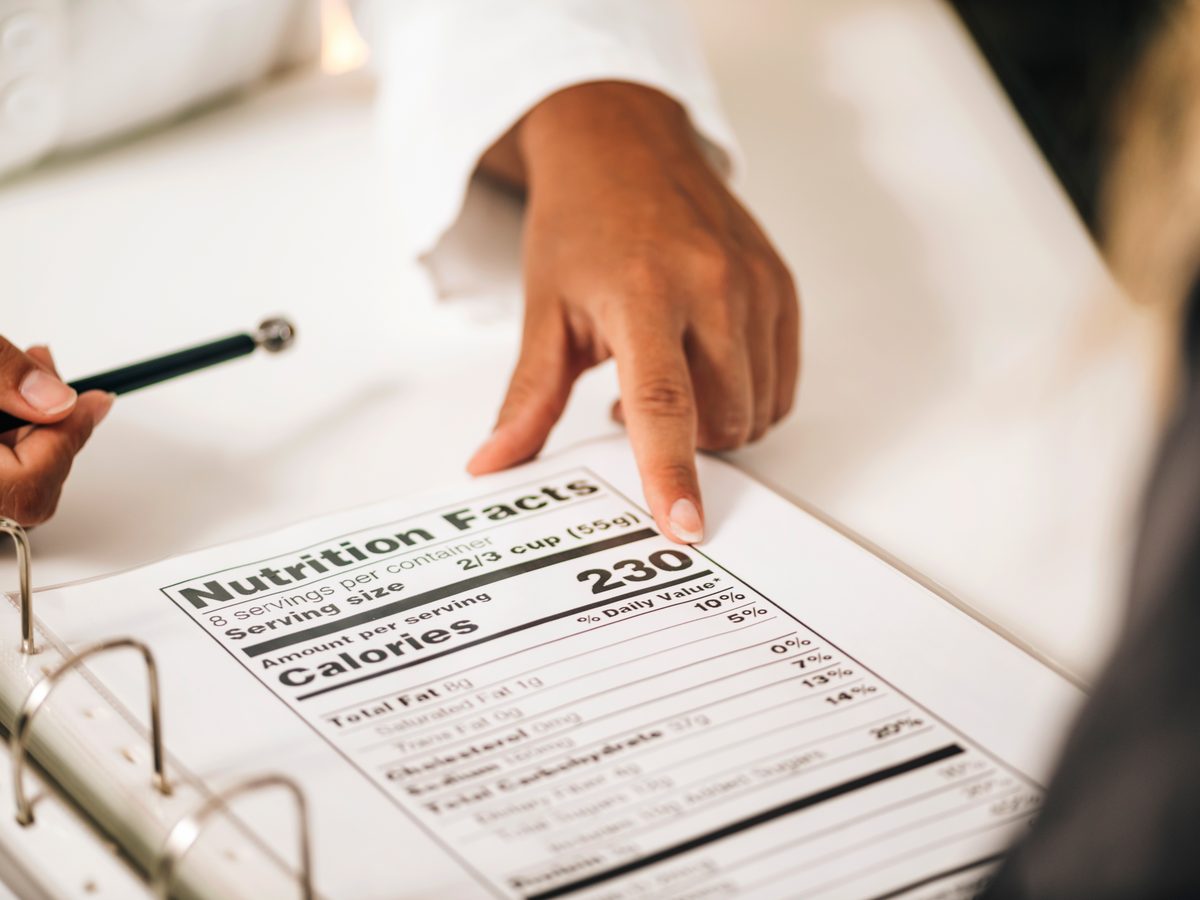
Added sugars are not a 2026 change. The line has been mandatory under 21 CFR 101.9(c)(6)(iii) since 1 January 2020 for larger firms and 1 January 2021 for smaller ones, formatted as "Includes Xg Added Sugars" indented under Total Sugars, against a Daily Value of 50 g. If your label does not carry it, you are not late to a new rule, you are six years out of compliance with an old one.
What is genuinely open is claims. There is no "low added sugars" or "reduced added sugars" definition today. FDA's Unified Agenda entry RIN 0910-AJ20 projects a proposed rule in December 2026 creating a voluntary low added sugar claim. Nothing is published, so any product making such a claim now does so without a defined standard. See the added sugars guide for the definition, the juice concentrate exclusions and the honey and maple syrup enforcement discretion.
Sodium: voluntary targets, binding claims
Two things get confused here. FDA's sodium reduction targets are voluntary guidance. Phase I was finalised in October 2021, aiming to move average intake from about 3,400 mg to 3,000 mg per day across 163 food subcategories. Phase II, aiming at about 2,750 mg, was issued as draft guidance on 15 August 2024 and is still draft. No product is out of compliance for missing a target.
Sodium nutrient content claims are the opposite: fully binding under 21 CFR 101.61. "Low sodium" means 140 mg or less per RACC, "very low sodium" 35 mg or less, "sodium free" less than 5 mg. The front-of-package proposal would tighten "low sodium" to 115 mg per RACC to align it with the 5% DV band, but that is proposed only, and 140 mg remains the number to formulate against. Details are in the sodium guide.
Daily Values and serving sizes: unchanged, despite the Dietary Guidelines
The 2025-2030 Dietary Guidelines for Americans were released on 7 January 2026 with several new numbers, including no more than 10 g of added sugars per meal and avoiding added sugars for children until age 10. They are a guidance document, not a labeling rule. The Daily Values in 21 CFR 101.9 are unchanged: 2,000 calories, 78 g total fat, 20 g saturated fat, 2,300 mg sodium, 275 g total carbohydrate, 28 g fiber, 50 g added sugars, 20 mcg vitamin D, 1,300 mg calcium, 18 mg iron, 4,700 mg potassium. Any change would require rulemaking, and none has been proposed. The full tables, including the separate values for infants and for children 1 through 3, are in the Daily Values guide.
Serving sizes are equally settled. The 2016 rule at 81 FR 34000 updated RACCs where consumption data had shifted, raising ice cream from 1/2 cup to 2/3 cup and beverages from 8 fl oz to 12 fl oz, cutting yogurt from 225 g to 170 g and doubling bagels and muffins from 55 g to 110 g. It also set the container rules that still trip people up: under 200% of the RACC in an individually sold package is one serving, 200% to 300% requires dual columns. See the serving size guide and the RACC lookup tool.
The dated deadlines between now and 2028
| Date | What happens | Status |
|---|---|---|
| 15 Jan 2027 | FD&C Red No. 3 may no longer be used in foods or dietary supplements | FINAL |
| 1 Jan 2028 | Uniform compliance date for food labeling rules published from 1 Jan 2025 through 31 Dec 2026 that do not set their own date | FINAL |
| 18 Jan 2028 | FD&C Red No. 3 out of ingested drugs | FINAL |
| 25 Feb 2028 | Any product bearing "healthy" must meet the 2024 definition | FINAL |
That is the complete federal list. States have added their own dates, and one of them, Texas SB 25, is partly blocked by a preliminary injunction. The year-by-year breakdown, including the state layer, is in the 2027 changes article.
What to actually do between now and 2028
A workable sequence, in priority order:
- Confirm your current label already meets the 2016 rules. Added sugars line present, vitamin D and potassium in actual amounts and %DV, Calories from Fat removed, updated DVs applied, correct RACC, dual column where the package is 200% to 300% of it. This is the most common real defect, and it is not a future change.
- Inventory every "healthy" and derivative claim across your portfolio, including websites and secondary packaging. For each one, run the food group equivalent test and the added sugars, sodium and saturated fat limits for its category. Products that fail need reformulation or claim removal well before 25 February 2028, because reformulation drives artwork, which drives print runs.
- Set up the recordkeeping the healthy rule requires before you need it: recipes, formulations, database analyses or batch records substantiating food group equivalent content, kept at least 2 years after the food enters commerce.
- Check formulas for FD&C Red No. 3 now and plan artwork for 15 January 2027. Replacing a colour changes the ingredient statement, so treat it as a label project, not just a procurement one.
- Model the front-of-package box without printing it. Calculate the Low, Med and High result for saturated fat, sodium and added sugars on your top sellers; the %DV calculator does the arithmetic. It tells you which products would carry a "High" if a rule is ever finalised, and gives you a reformulation queue that is useful either way.
- Do not redesign packaging for anything in the proposed or in-development buckets. The design could change, the rule could be re-proposed, and the earliest compliance date under the proposal's own clocks would be years after a final rule that does not yet exist.
Run the finished label through the FDA label checklist before print, and the claim validator on anything that reads as a nutrient content claim.
Frequently asked questions
Is the Nutrition Facts label changing in 2026?
No. The panel itself is not changing in 2026. Its format, nutrient list, Daily Values and serving sizes come from the 2016 rules, whose compliance dates were 1 January 2020 and 1 January 2021. The nutrition label changes 2026 headlines refer to are either the front-of-package proposal, which is not final, or the "healthy" claim rule, which is final but voluntary until 25 February 2028 and only affects products making the claim.
Do I have to add a front-of-package box to my product?
Not now, and not on any date FDA has announced. The proposal published 16 January 2025 has not been finalised, comments closed 15 July 2025, and leadership signalled in March 2026 that substantial changes were possible, potentially requiring re-proposal. If a final rule ever issues, compliance would be 3 years later for businesses at or above $10 million in annual food sales and 4 years for smaller businesses.
Will there be an ultra-processed food warning label?
There is no proposed or final rule requiring one. What exists is a definition effort: FDA and USDA issued a request for information in July 2025, and a document titled "Proposed Definition of Ultra-Processed Food" was sent to OMB for review on 3 August 2026 and announced on 10 August 2026. It is described as a definition and research tool, not a labeling requirement, and its criteria were not public as of 15 September 2026. Any labeling use would require separate rulemaking.
Can I call my product "natural"?
There is still no federal definition of "natural" for food. FDA's longstanding informal policy is that nothing artificial or synthetic, including any added colour, has been included that would not normally be expected in the food. FDA requested comment in 2015 and 2016, the comment period closed in May 2016, and no rule has been proposed since. Nothing on the 2026 agenda changes this.
Did the new Dietary Guidelines change the Daily Values on my label?
No. The 2025-2030 Dietary Guidelines for Americans, released 7 January 2026, are dietary guidance. The Daily Values used for %DV calculations are set in 21 CFR 101.9 and are unchanged. FDA has said it will assess whether the "healthy" criteria need aligning with the new guidelines, but has proposed nothing. Do not restate %DV against Dietary Guidelines numbers.
Whether you are auditing a portfolio against the 25 February 2028 healthy deadline or just need a panel that meets the rules already in force, build it in the nutrition label generator, which applies current Daily Values, RACC-based serving sizes and 21 CFR 101.9 rounding automatically. Bookmark this page: it is updated as each item moves from proposed to final.