FDA Healthy Claim Added Sugar Limits
The newest criterion, and the tightest: 1 g of added sugars for most individual foods, 2.5 g for dairy, 5 g for grains. Why sweetened yogurt and cereal no longer qualify.
The FDA healthy claim added sugar limit is the newest of the three nutrient criteria in the updated definition of "healthy," and it is the only one with no ancestor at all: the 1994 definition capped fat, saturated fat, cholesterol and sodium, and said nothing whatsoever about sugar. The new ceiling is 2% of the Daily Value, currently 1 g, for most individual food categories, with wider allowances for dairy and grain products. This article covers the full per-category table, why 1 g is far tighter than it sounds, how the added sugars definition in 21 CFR 101.9(c)(6)(iii) decides which sugars count, and what records you have to keep.
It is written for a manufacturer working out whether a sweetened product can carry the word by the compliance date. The food group equivalent minimums and the other two nutrient limits are covered in the full requirements article, and the mechanics of the added sugars line on the panel itself are covered in the added sugars labeling article.
The FDA healthy claim added sugar limit, category by category
The rule is final. It was published at 89 FR 106064 on 27 December 2024, amending 21 CFR 101.65(d), and its effective date moved from 25 February 2025 to 28 April 2025 under the 2025 regulatory freeze. The compliance date is 25 February 2028. The claim is voluntary: nothing requires you to say "healthy," but any product bearing the word in a nutritional context has to meet 101.65(d) by that date.
The regulation states each limit as a percentage of the Daily Value. The added sugars Daily Reference Value in 21 CFR 101.9(c)(9) is 50 g for adults and children 4 and older, so the gram figures below are derived from that. Individual foods are tested per reference amount, or per 50 g when the RACC is 50 g or less or 3 tablespoons or less. Mixed products are tested per RACC, and main dishes and meals per labeled serving.
| Category under 101.65(d) | Added sugars limit | In grams |
|---|---|---|
| Vegetable product | 2% DV | 1 g |
| Fruit product | 2% DV | 1 g |
| Grain product | 10% DV | 5 g |
| Dairy product | 5% DV | 2.5 g |
| Game meats | 2% DV | 1 g |
| Seafood | 2% DV | 1 g |
| Egg | 2% DV | 1 g |
| Beans, peas, lentils | 2% DV | 1 g |
| Nuts, seeds, soy products | 2% DV | 1 g |
| 100% oil | 0% DV | None permitted |
| Oil-based spread | 0% DV | None permitted |
| Oil-based dressing | 2% DV | 1 g |
| Mixed product | 10% DV | 5 g |
| Main dish | 15% DV | 7.5 g |
| Meal product | 20% DV | 10 g |
Two allowances are worth noticing. Dairy gets 2.5 g rather than 1 g, and grain products get 5 g, five times the general individual-food limit. Everything else in the individual-food tables is held to 1 g or to nothing at all.
How tight 1 g really is
A gram of sugar is about a quarter of a teaspoon. In a formula it is close to nothing. It is not enough to round out the acidity of a tomato sauce, sweeten a fruit filling, balance the salt in a cracker, or carry a flavor system that was designed around a sugar carrier. Most sweetened products are not near 1 g; they are several multiples away from it, and the gap cannot be closed by trimming.
The per-50 g basis makes it tighter still. If your RACC is 50 g or less, or 3 tablespoons or less, the criterion is applied per 50 g rather than per reference amount. A 30 g snack with 0.8 g of added sugars looks compliant on the label and is not: scaled to 50 g it carries 1.33 g, which fails. The effective ceiling for a small-RACC product is 0.02 g of added sugars per gram of food.
Rounding will not save a borderline formula either. Added sugars are declared to the nearest gram, may be shown as "less than 1 gram" below 1 g, and may be declared as 0 g below 0.5 g. The %DV is calculated by dividing the declared or the actual amount by 50 g and expressing it to the nearest whole percent, so 12 g of added sugars shows as 24% DV. A formula at 1.4 g declares 1 g on the panel while sitting above the criterion in fact. Treat the limit as a formulation number backed by analysis, not as a rounding outcome.
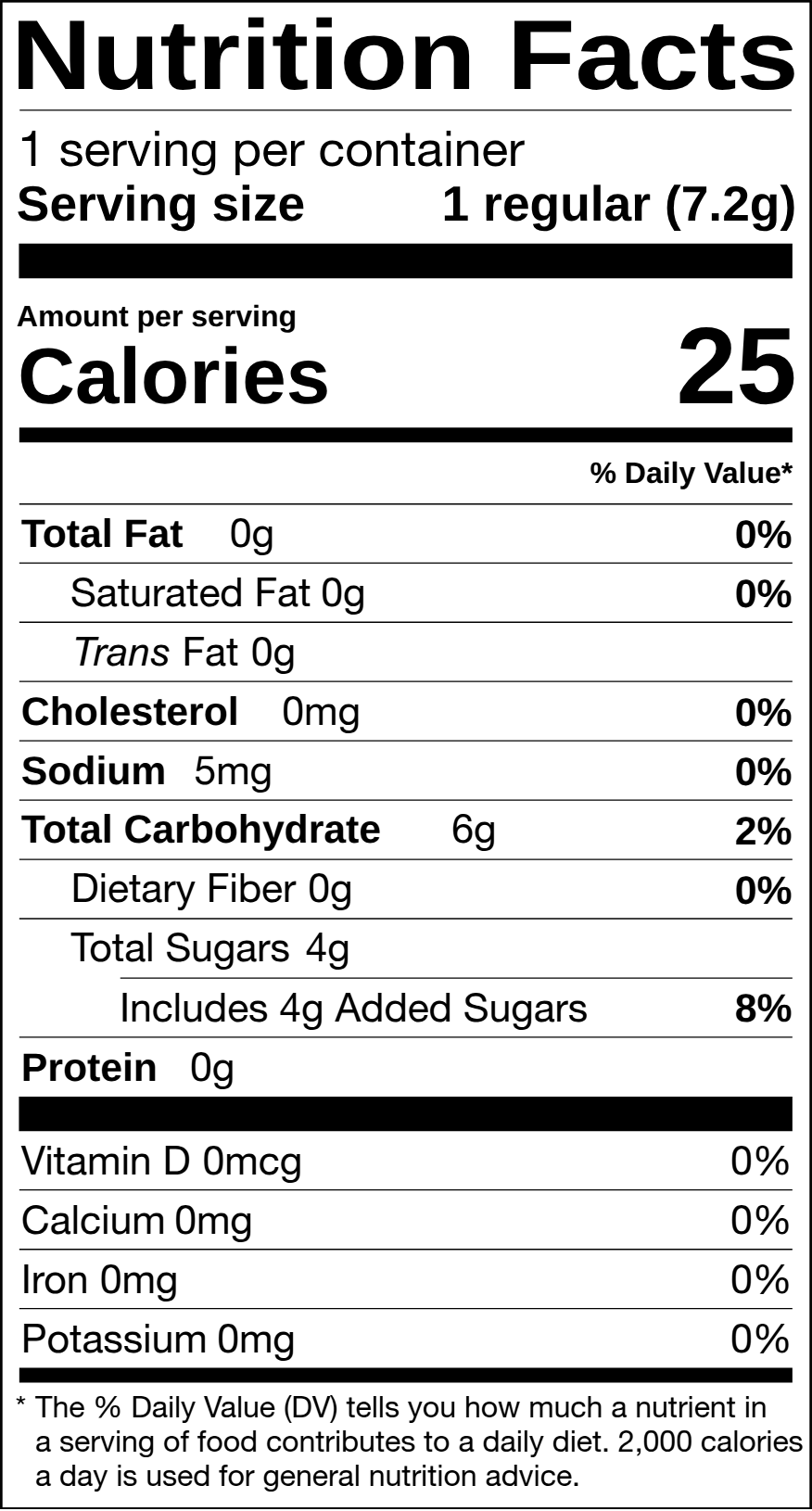
There is one genuinely useful interaction with the panel. Under 101.9(c)(6)(iii), the added sugars line may be omitted entirely if the product contains less than 1 g of added sugars per serving and no claims are made about sweeteners, sugars, added sugars or sugar alcohols, with the footnote "Not a significant source of added sugars" in its place. A product built to clear the "healthy" criterion in the 1 g categories is frequently in exactly that position.
Which sugars count, and which do not
The added sugars healthy claim criterion borrows its meaning from the definition in 21 CFR 101.9(c)(6)(iii), the same definition that governs the Nutrition Facts panel. That is the most important structural fact in this article, because it means naturally occurring sugars are outside the test entirely. The definition covers sugars "added during the processing of foods, or ... packaged as such," including sugars from syrups and honey and sugars from concentrated fruit or vegetable juices in excess of what the same volume of 100 percent juice of that type would contribute, with specific carve-outs written into the text.
| Counts as added sugars | Does not count |
|---|---|
| Sucrose, dextrose, glucose, fructose, high fructose corn syrup, corn syrup, invert sugar | Lactose naturally present in milk |
| Brown sugar, cane sugar, evaporated cane juice, coconut sugar, molasses | Sugars naturally present in whole fruit and vegetables |
| Malt syrup, rice syrup, agave | Sugars in 100% fruit or vegetable juice |
| Honey and maple syrup used as ingredients, or packaged as such | Juice concentrate reconstituted to 100% juice, or used for total juice percentage or Brix standardization |
| Juice concentrate used as a sweetener beyond what 100% juice of that type would give | Juice concentrate forming the fruit component of jams, jellies, preserves and fruit spreads under the relevant standards of identity |
| Sugar packaged on its own, because it is packaged as such | Sugar alcohols and non-nutritive sweeteners, which are not sugars |
The practical effect is that fruit, milk and 100% juice can carry a large amount of sugar into a formula without touching the criterion, while a spoonful of cane sugar can break it. That is the single mechanic behind most of the pass and fail outcomes below.
Worked cases: yogurt, cereal and bread
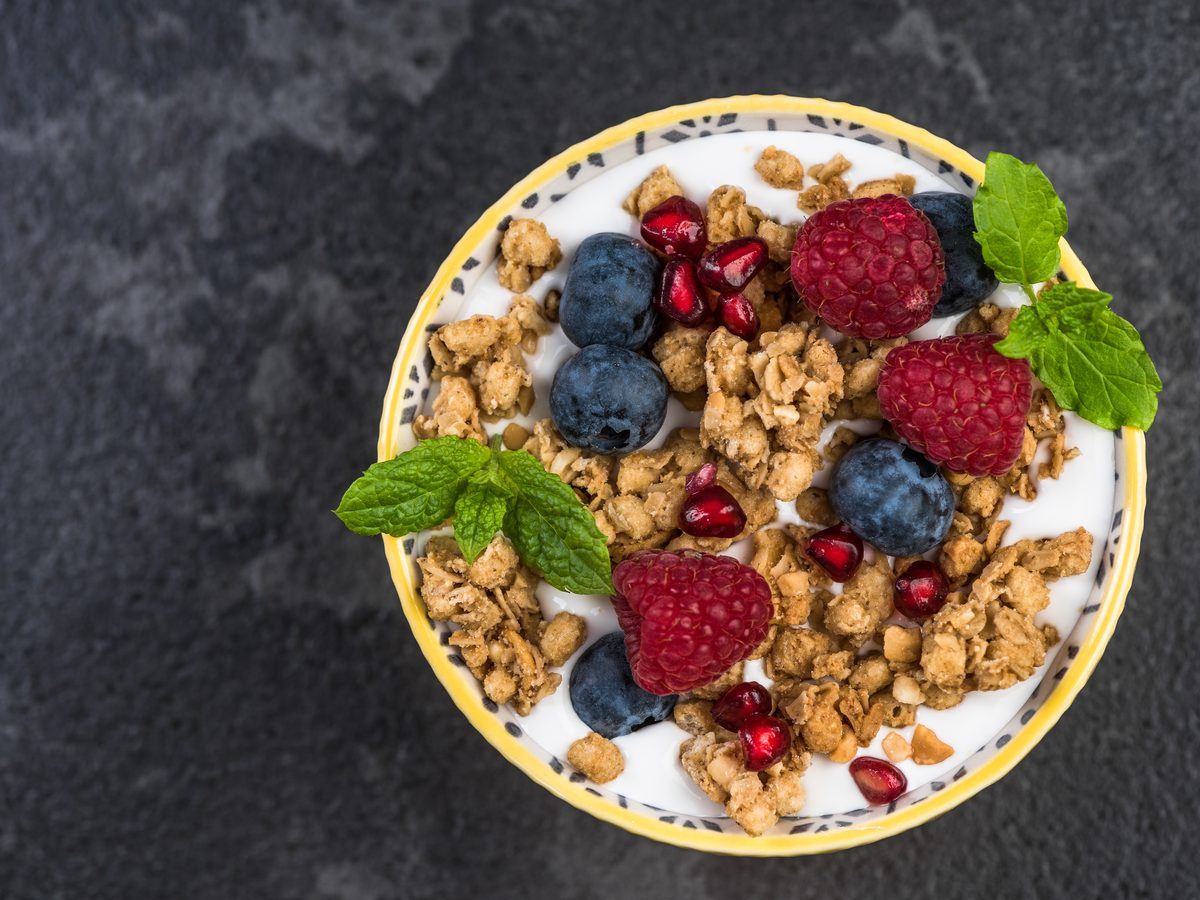
Take a fruit-and-yogurt product first. A low-fat plain yogurt base carrying 2/3 cup equivalent of dairy, with real fruit folded through it and no sweetener, has lactose from the milk and fructose and glucose from the fruit. None of it is added sugars. Total sugars on the panel may be substantial, and added sugars is zero, so the product sits comfortably inside the 2.5 g added sugars dairy limit and can pass on this criterion. Sweeten the same base with 8 g of cane sugar per 170 g serving and it fails by more than three times over. Nothing else about the product changed. That is why FDA lists highly sweetened yogurt among the foods that no longer qualify, alongside highly sweetened cereal and fortified white bread.
Cereal is harder than it looks. A ready-to-eat cereal is a grain product, so it gets the 5 g allowance, which sounds generous. But cereal reference amounts sit below 50 g, so the criterion is applied per 50 g, and a typical presweetened cereal is well beyond 5 g on that basis. Cereals that clear it are the lightly sweetened and unsweetened ones. The grain category also carries its own food group requirement: 3/4 oz equivalent of whole grain, which is what disqualifies fortified white bread regardless of its sugar content.
Bread is where the 5 g allowance genuinely helps. Breads and rolls have a 50 g reference amount, so the test is per 50 g, and most yeast-raised breads use sugar at levels well inside 5 g per 50 g, since the sugar is there for fermentation and crust color rather than sweetness. A whole grain bread delivering 3/4 oz equivalent of whole grain per 50 g with a modest dough sugar is a realistic candidate for the claim. A brioche-style enriched bread is not.
The tier above helps too. A mixed product gets 5 g, a main dish 7.5 g and a meal 10 g, but each tier has to earn its place: one total food group equivalent from at least two groups for a mixed product, two equivalents from at least two groups for a main dish, and three equivalents from at least three groups for a meal, with main dishes and meals also meeting the definitions in 101.13(m) and 101.13(l).
It is also worth remembering the automatic qualifier route in 101.65(d)(3)(i). A food made only of vegetables, fruit, whole grains, fat-free or low-fat dairy, or lean meat, seafood, eggs, beans, peas, lentils, nuts or seeds, with nothing added but water, qualifies with no nutrient testing at all, in fresh, frozen, canned or dried form. Canned fruit in juice with nothing else added is the classic case. Add syrup and you leave that route and face the 1 g fruit limit.
The recordkeeping consequence
The added sugars criterion creates a documentation burden that the sodium and saturated fat criteria do not, because added sugars is not an analytically measurable quantity. A laboratory can measure total sugars in a finished product. It cannot tell you which of those grams were added, so the number rests on your formulation records.
Two obligations stack here. Under 101.65(d)(4), you must keep written records verifying food group equivalent content, including recipes, formulations, database analyses and batch records, for at least two years after the food enters interstate commerce, unless the equivalent is evident from the label or the food is an automatic qualifier, and those records must be available to FDA on request during an inspection. Separately, 101.9(c)(6)(iii) requires records supporting the declared added sugars amount where a food contains a mixture of naturally occurring and added sugars, or where added sugars undergo fermentation or non-enzymatic browning, under 101.9(g)(10) and (11).
A fruit-and-yogurt product, a fruit-sweetened bar or any fermented product with sugar in the formula sits in both buckets at once. Keep the fruit or juice specification, the sugar balance across the formula, and the calculation that gets you to the declared figure, in one file with the food group equivalent evidence. FDA's general food labeling compliance program, revised June 2025, instructs investigators on the "healthy" criteria including the added sugars limit.
There is no "low added sugars" claim to fall back on
If your product cannot reach 1 g, the obvious next thought is a lesser sugar claim. There is not one. No "low added sugars" or "reduced added sugars" nutrient content claim definition currently exists. FDA's Unified Agenda carries an entry, RIN 0910-AJ20, "Nutrient Content Claims for Added Sugars," at the proposed rule stage, which would update claim provisions and create a voluntary "low added sugar" claim, with a projected proposed rule date of December 2026. Nothing has been published. A projected date on the Unified Agenda is a plan, not a rule, and projected dates on that agenda have slipped before.
Two other reference points are guidance rather than requirements, and are easy to confuse with the criterion. The 2025-2030 Dietary Guidelines for Americans, released 7 January 2026, advise no more than 10 g of added sugars per meal and give snack figures of 5 g per 3/4 oz grain snack and 2.5 g per 2/3 cup dairy snack, which mirror the grain and dairy limits in the rule. And the proposed front-of-package "Nutrition Info" box, published 16 January 2025 at 90 FR 5426, would place added sugars in a "Low" band at 5% DV or less, which is 2.5 g. That rule is proposed, has not been finalized, and no packaged food is required to carry the box.
To see whether a specific formula clears the added sugars limit for its category, and which of the three nutrient criteria is actually the binding one, run it through our claim validator, then build the finished panel in our nutrition label generator.
Frequently asked questions
Does fruit juice concentrate let me sweeten a product without counting it?
Only up to a point, and the definition is specific about where that point is. Sugars from concentrated fruit or vegetable juice count as added sugars to the extent they exceed what the same volume of 100 percent juice of the same type would contribute. Concentrate reconstituted to 100% juice, concentrate used for the total juice percentage declaration or for Brix standardization, and concentrate used as the fruit component of jams, jellies, preserves and fruit spreads are carved out. Using concentrate as a sweetener is not a workaround.
What about sugar alcohols, allulose and high-intensity sweeteners?
Sugar alcohols and non-nutritive sweeteners are not sugars, so they do not count toward the added sugars figure or toward this criterion. That makes sweetener substitution the most direct route to compliance for a product that has to taste sweet. It is a formulation decision with its own consequences for ingredient statement, tolerance and mouthfeel, and it does not change any of the other criteria the product still has to meet.
Why is the difference between total sugars and added sugars so important here?
Because the criterion is written against added sugars alone. A product can declare a high total sugars figure and zero added sugars and still qualify, which is what makes plain fruit, milk and 100% juice products viable candidates. Our article on total sugars versus added sugars works through how the two lines relate on the panel.
Can I use the word now, before February 2028?
Yes. The rule is final and in effect, and manufacturers may use the updated criteria voluntarily now. The 25 February 2028 date is when compliance becomes mandatory for any product bearing the word. If you are reformulating anyway, aligning to the new criteria early avoids a second artwork cycle.