FDA Healthy Claim Requirements by Food Category
Look up your product category and read off all four numbers: the food group equivalent minimum plus the added sugars, sodium and saturated fat limits from 101.65(d).
FDA's updated definition of "healthy" turns a marketing word into a four-number test: a minimum amount of a qualifying food group, plus ceilings on added sugars, sodium and saturated fat. Which four numbers apply to your product depends entirely on the category it falls into, and those categories are set out in 21 CFR 101.65(d), not in any summary page. This article is a lookup table of healthy claim requirements by food category: find the row that describes your product, read off the numbers, and check your specification sheet against them. It is written for formulators and label reviewers who have already decided they want the claim.
If you are still working out whether the claim is worth making at all, the background sits in our overview of FDA healthy claim requirements, which covers what changed from the 1994 definition. The yes-or-no walkthrough for a single product is at can my food be labeled healthy, and the products that skip the arithmetic entirely are listed at foods that automatically qualify as healthy. This page does not repeat that reasoning. It is the tables.
Status: final rule, voluntary claim, 25 February 2028
The rule "Food Labeling: Nutrient Content Claims; Definition of Term 'Healthy'" was published at 89 FR 106064 on 27 December 2024 under docket FDA-2016-D-2335. Its effective date as published was 25 February 2025, then delayed to 28 April 2025 by a Federal Register notice issued under the January 2025 regulatory freeze. The compliance date was not moved: it is 25 February 2028.
The claim is voluntary and always has been; nothing obliges you to put "healthy" on anything. But from 25 February 2028 any product that does carry the word in a nutritional context has to meet the criteria below. You may adopt them today, and if you are redesigning artwork anyway, doing so now is cheaper than a second revision later. The covered terms under 101.65(d)(3) are healthy, health, healthful, healthfully, healthfulness, healthier, healthiest, healthily and healthiness.
Step one: work out which table applies to you
There are four routes through the rule. Work down this list and stop at the first match.
- Is the product made only from qualifying whole foods with nothing added but water, or is it water, plain tea or plain coffee under 5 calories? Then it is an automatic qualifier and there is no arithmetic at all.
- Is it a single food that fits one of the twelve individual categories below? Then use the individual foods table, applied per RACC or per 50 g depending on the size of the RACC.
- Does it combine food groups without being a main dish or meal, for example a soup, a bar or a yoghurt with fruit? Then it is a mixed product, tested per RACC.
- Is it a main dish under 21 CFR 101.13(m) or a meal under 101.13(l)? Then use those rows, tested per labelled serving.
The distinction between an individual food and a mixed product is the one people get wrong most often. A plain canned bean is an individual food. A bean and vegetable chilli is a mixed product, because it draws food group equivalents from more than one group.
Food group equivalents: what counts as one FGE
Every criterion below is expressed in food group equivalents, or FGE. The rule defines one FGE for each of the FDA healthy claim food groups in Table 1 at 101.65(d)(2), and gives worked examples. These are the units you convert your recipe into.
| Food group | One food group equivalent | Examples given in the rule |
|---|---|---|
| Vegetable | 1/2 cup equivalent | 1/2 cup cooked green beans; 1 cup raw spinach |
| Fruit | 1/2 cup equivalent | 1/2 cup strawberries; 1/2 cup 100% orange juice; 1/4 cup raisins |
| Grains | 3/4 oz equivalent whole grain | 1 slice bread; 1/2 cup cooked brown rice |
| Dairy | 2/3 cup equivalent | 2/3 cup fat-free milk; 1 oz nonfat cheese |
| Protein foods: game meat | 1 1/2 oz equivalent | 1 1/2 oz venison |
| Protein foods: seafood | 1 oz equivalent | 1 oz tuna |
| Protein foods: egg | 1 oz equivalent | 1 large egg |
| Protein foods: beans, peas, lentils | 1 oz equivalent | 1/4 cup black beans |
| Protein foods: nuts, seeds, soy products | 1 oz equivalent | 1/2 oz walnuts |
The dairy figure moved during rulemaking. FDA proposed 3/4 cup equivalent and finalised 2/3 cup equivalent, which is why older summaries still quote the larger number. One ounce of natural cheese, or 2/3 ounce of processed cheese, also counts as one 2/3 cup equivalent of dairy.
Foods that qualify automatically
Some products never touch the nutrient limits. Under 101.65(d)(3)(i) and (vi), if the food is built only from the ingredients below with nothing added except water, it qualifies as it stands.
| Automatic qualifier | Condition |
|---|---|
| Vegetables, fruit, whole grains | Fresh, frozen, canned or dried forms all count, provided nothing but water is added |
| Fat-free or low-fat dairy | No added ingredients other than water |
| Lean meat, seafood, eggs, beans, peas, lentils, nuts, seeds | No added ingredients other than water |
| A mixed product made only of the items above | One or more of those foods and nothing else except water |
| Water, tea and coffee | Less than 5 calories per RACC and per labelled serving |
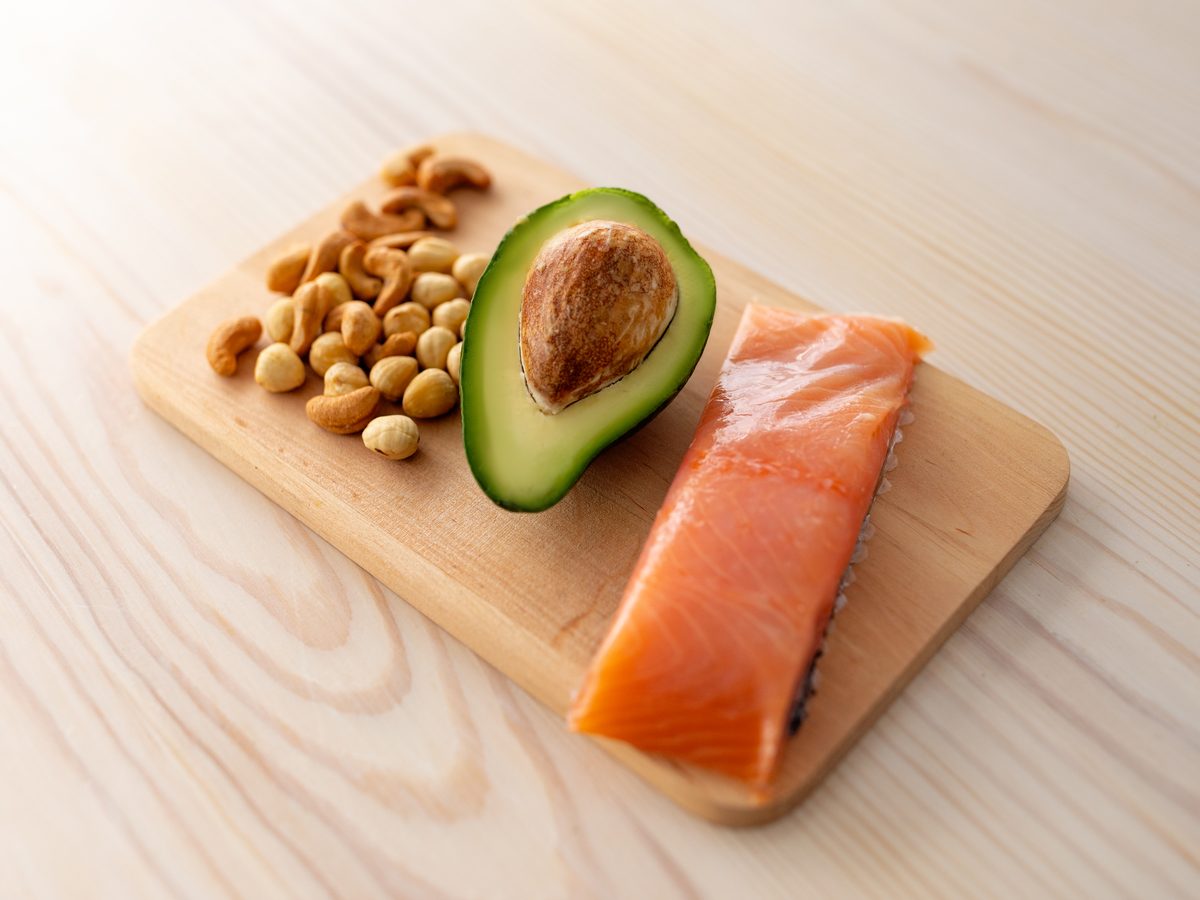
FDA's own examples of foods that newly qualify under the 2024 rule include water, avocados, nuts and seeds, higher-fat fish such as salmon, olive oil, certain peanut butters and certain canned fruits and vegetables. Its examples of foods that no longer qualify are fortified white bread, highly sweetened yoghurt and highly sweetened cereal. The added ingredient that most often destroys automatic qualification is salt.
Healthy claim requirements by food category: the twelve individual foods
This is the table most people come here for. It is 101.65(d)(3)(ii), Tables 2 and 3. The regulation states each limit as a percentage of the Daily Value; the gram and milligram figures in brackets are those percentages applied to the adult Daily Values of 50 g added sugars, 2,300 mg sodium and 20 g saturated fat, which is how FDA's own preamble expresses them.
| Category | Must contain at least | Added sugars max | Sodium max | Saturated fat max |
|---|---|---|---|---|
| Vegetable product | 1/2 cup-eq vegetable | 2% DV (1 g) | 10% DV (230 mg) | 5% DV (1 g) |
| Fruit product | 1/2 cup-eq fruit | 2% DV (1 g) | 10% DV (230 mg) | 5% DV (1 g) |
| Grain product | 3/4 oz-eq whole grain | 10% DV (5 g) | 10% DV (230 mg) | 5% DV (1 g) |
| Dairy product | 2/3 cup-eq dairy | 5% DV (2.5 g) | 10% DV (230 mg) | 10% DV (2 g) |
| Game meats | 1 1/2 oz-eq | 2% DV (1 g) | 10% DV (230 mg) | 10% DV (2 g) |
| Seafood | 1 oz-eq | 2% DV (1 g) | 10% DV (230 mg) | 5% DV (1 g), excluding saturated fat inherent in seafood |
| Egg | 1 oz-eq | 2% DV (1 g) | 10% DV (230 mg) | 10% DV (2 g) |
| Beans, peas, lentils | 1 oz-eq | 2% DV (1 g) | 10% DV (230 mg) | 5% DV (1 g) |
| Nuts, seeds, soy products | 1 oz-eq | 2% DV (1 g) | 10% DV (230 mg) | 5% DV (1 g), excluding saturated fat inherent in nuts, seeds and soybeans |
| 100% oil | Not applicable | 0% DV | 0% DV | 20% of total fat |
| Oil-based spread (fats solely from oil) | Not applicable | 0% DV | 10% DV (230 mg) | 20% of total fat |
| Oil-based dressing (at least 30% oil, oils meeting the oil criteria) | Not applicable | 2% DV (1 g) | 10% DV (230 mg) | 20% of total fat |
Three features are worth pulling out. The sodium ceiling is 230 mg for every category except 100% oil, which must contain no sodium at all. Added sugars is where the categories really separate: 5 g for a grain product, 2.5 g for a dairy product, 1 g for almost everything else. And the three oil rows do not use a percentage of the Daily Value for saturated fat at all. They cap saturated fat at 20% of the total fat in the product, which is a ratio test rather than an absolute one, and it is the reason olive oil qualifies while coconut oil does not.
The two inherent-fat exclusions matter more than they look. For seafood, and for nuts, seeds and soybeans, the saturated fat that is naturally present in the food itself is left out of the calculation. Only saturated fat you add counts. That is how salmon and walnuts clear a 1 g ceiling that they would otherwise fail on their own composition. Add butter or a coconut oil coating and that added saturated fat does count.
Per RACC, or per 50 g
The individual foods table is applied on one of two bases, and picking the wrong one will give you a wrong answer in either direction. If the RACC for your product is greater than 50 g, or greater than 3 tablespoons, the criteria apply per RACC. If the RACC is 50 g or less, or 3 tablespoons or less, the criteria apply per 50 g of product.
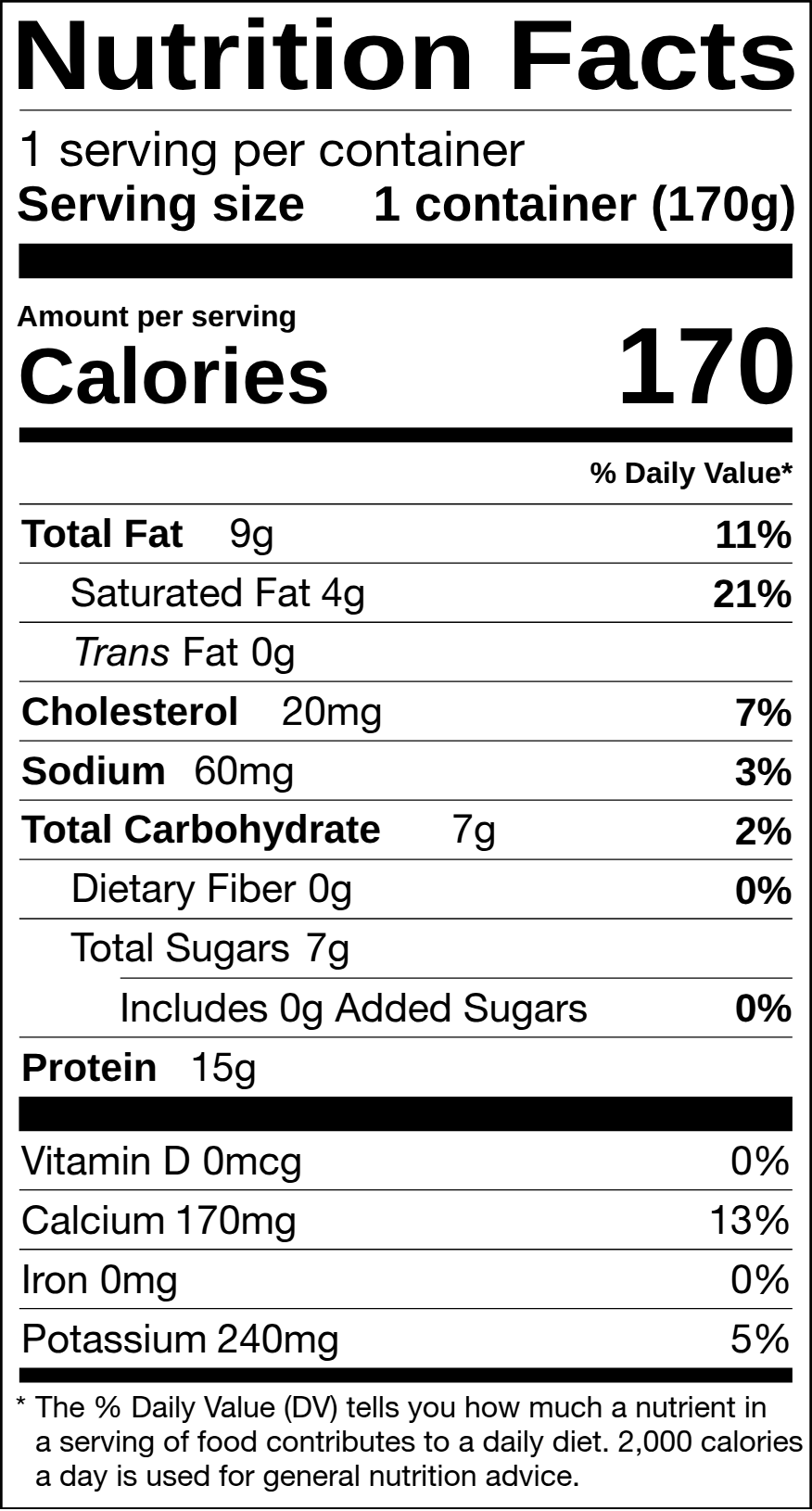
Work an example. Cookies have a 30 g RACC and snack crackers have a 30 g RACC, both under the threshold, so a cracker is tested per 50 g rather than per 30 g serving. In practice that means multiplying the per-serving figures on your Nutrition Facts panel by 1.67 before you compare them to the 230 mg sodium ceiling. A cracker declaring 150 mg sodium per 30 g serving carries 250 mg per 50 g and fails, even though the panel number sits comfortably under 230. Breads and rolls, at 50 g, sit on the boundary and are also tested per 50 g; bagels and muffins, at 110 g, are tested per RACC. If you are unsure of your reference amount, our RACC lookup gives the current 21 CFR 101.12 values.
Mixed products, main dishes and meals
These three rows come from 101.65(d)(3)(iii) to (v). The saturated fat maximum in every row excludes saturated fat inherent in seafood, nuts, seeds and soy products, the same carve-out as the individual foods table.
| Type | Must contain | Added sugars max | Sodium max | Saturated fat max |
|---|---|---|---|---|
| Mixed product, per RACC | 1 total FGE, with at least 1/4 FGE from each of at least 2 food groups | 10% DV (5 g) | 15% DV (345 mg) | 10% DV (2 g) |
| Main dish, per labelled serving, as defined in 101.13(m) | 2 total FGE, with at least 1/2 FGE from each of at least 2 food groups | 15% DV (7.5 g) | 20% DV (460 mg) | 15% DV (3 g) |
| Meal product, per labelled serving, as defined in 101.13(l) | 3 total FGE, with at least 1/2 FGE from each of at least 3 food groups | 20% DV (10 g) | 30% DV (690 mg) | 20% DV (4 g) |
Note the change of basis. Mixed products are tested per RACC, like individual foods. Main dishes and meals are tested per labelled serving, which is the amount you actually declare on the panel. For a frozen entree sold as one serving, that is the whole tray. A meal is judged as the portion a person eats, not against a reference amount. Whether you are a main dish or a meal is not a judgement call either: both terms are defined in 101.13(m) and 101.13(l), so confirm the definition before assuming the more generous meal row applies.
Where FDA's consumer page and the CFR tables disagree
FDA's consumer-facing page on the use of the term "healthy" summarises the limits as 2.5 g added sugars, 230 mg sodium and 2 g saturated fat for individual foods; 5 g, 345 mg and 2 g for mixed products; and 10 g, 690 mg and 4 g for meals. Compare that with the tables above and two things do not line up.
The consumer page quotes 2.5 g added sugars for individual foods, which is the dairy figure. Most individual categories are held to 2% DV, or 1 g, and grain products are allowed 10% DV, or 5 g. The consumer page also quotes 2 g saturated fat for individual foods, which is the dairy, game meat and egg figure. Vegetable, fruit, grain, seafood, bean and nut products are held to 5% DV, or 1 g. And the consumer summary has no main dish row at all.
Use the CFR tables. The consumer page is a plain-language summary written for shoppers, and the regulation at 101.65(d) is what an FDA investigator will read your specification against. If you are checking a single product against the criteria, our claim validator runs the CFR figures rather than the summary figures.
Frequently asked questions
My product is a granola bar with oats, almonds and dried cranberries. Which row applies?
A mixed product, in almost every case. It draws food group equivalents from grains, nuts and fruit, so it is tested against 1 total FGE with at least 1/4 FGE from at least two of those groups, and against 5 g added sugars, 345 mg sodium and 2 g saturated fat per RACC. Added sugars is where bars usually fail, because the binding syrup counts. The saturated fat inherent in the almonds is excluded, but any added coconut oil, chocolate coating or palm fat is not.
My RACC is 30 g. Do I test per serving or per 50 g?
Per 50 g. Any product with a RACC of 50 g or less, or 3 tablespoons or less, is measured on a 50 g basis, so you scale your per-serving nutrient figures up before comparing them to the limits. This catches out crackers, cookies, chips and most snack formats, where the panel numbers look compliant and the 50 g numbers are not.
Does saturated fat from the fish or nuts in my product count against the limit?
No, provided it is inherent to the ingredient. The saturated fat naturally present in seafood, nuts, seeds and soybeans is excluded from the calculation in the seafood row, the nuts and seeds row, and in all three of the mixed product, main dish and meal rows. Saturated fat you add through oils, dairy fat or coatings is counted in full. That single exclusion is the reason the 2024 rule lets salmon, almonds and nut butters carry a claim that the 1994 total-fat-based definition denied them.
What do I have to keep on file if I make the claim?
Under 101.65(d)(4) you must keep written records verifying the food group equivalent content of the product, meaning recipes, formulations, database analyses or batch records, for at least two years after the food enters interstate commerce, and produce them to FDA on request during an inspection. You are excused only where the FGE content is evident from the label itself, such as from a simple ingredient list, or where the food is an automatic qualifier. Nutrient limits are verified against your Nutrition Facts values in the normal way.
If you are reformulating to hit one of these rows, build the panel first and check the numbers against the category limits before the artwork goes to print. Our nutrition label generator produces a compliant Nutrition Facts panel from your recipe, and the claim validator tests the result against the 101.65(d) criteria for the category you select.