Can My Food Be Labeled Healthy? An FDA Eligibility Walkthrough
A six-step decision sequence for the FDA healthy claim, with worked examples for almonds, a granola bar and a canned soup, and what to change when the answer is no.
This article answers one question for one product at a time: can my food be labeled healthy under FDA's updated definition? It is a decision walkthrough, not a rules summary. Work through the six steps in order with your formulation in front of you and you get a yes or a no on FDA healthy claim eligibility, plus the reason. The rule is final and the claim is voluntary, but any product carrying the word on or after 25 February 2028 must meet these criteria.
The healthy claim criteria themselves are set out in FDA healthy claim requirements, and they are broken out category by category in the healthy claim by food category. This piece runs your product through the test instead.
Step 1: is the word even a claim on your label?
First, does 21 CFR 101.65(d) apply to what you have written? The rule covers nine terms: "healthy," "health," "healthful," "healthfully," "healthfulness," "healthier," "healthiest," "healthily" and "healthiness." Manufacturers often assume only the bare word is regulated, then print "our healthiest recipe yet" on the front panel.
It bites only when one of those terms is used as an implied nutrient content claim, meaning it appears in a nutritional context on the label. "Made with healthy soil practices" in a back-panel farming story is about agronomy, not nutrient content, and is treated differently from "a healthy start to your day" beside a fiber and protein callout.
Brand names are the hard case. A brand containing one of the nine terms is not automatically outside the rule: used in a nutritional context, a brand name can still be treated as a claim. If your brand carries the word, this is the step to take regulatory advice on.
Step 2: does the product qualify automatically?
Some foods clear the rule with no food group test and no nutrient test at all. Under 101.65(d)(3)(i) and (vi), any individual food or mixed product made only of vegetables, fruit, whole grains, fat-free or low-fat dairy, lean meat, seafood, eggs, beans, peas, lentils, nuts or seeds, with no other added ingredients except water, qualifies automatically. Fresh, frozen, canned and dried forms all count if nothing but water is added. All water, tea and coffee under 5 calories per RACC and per labeled serving also qualify.
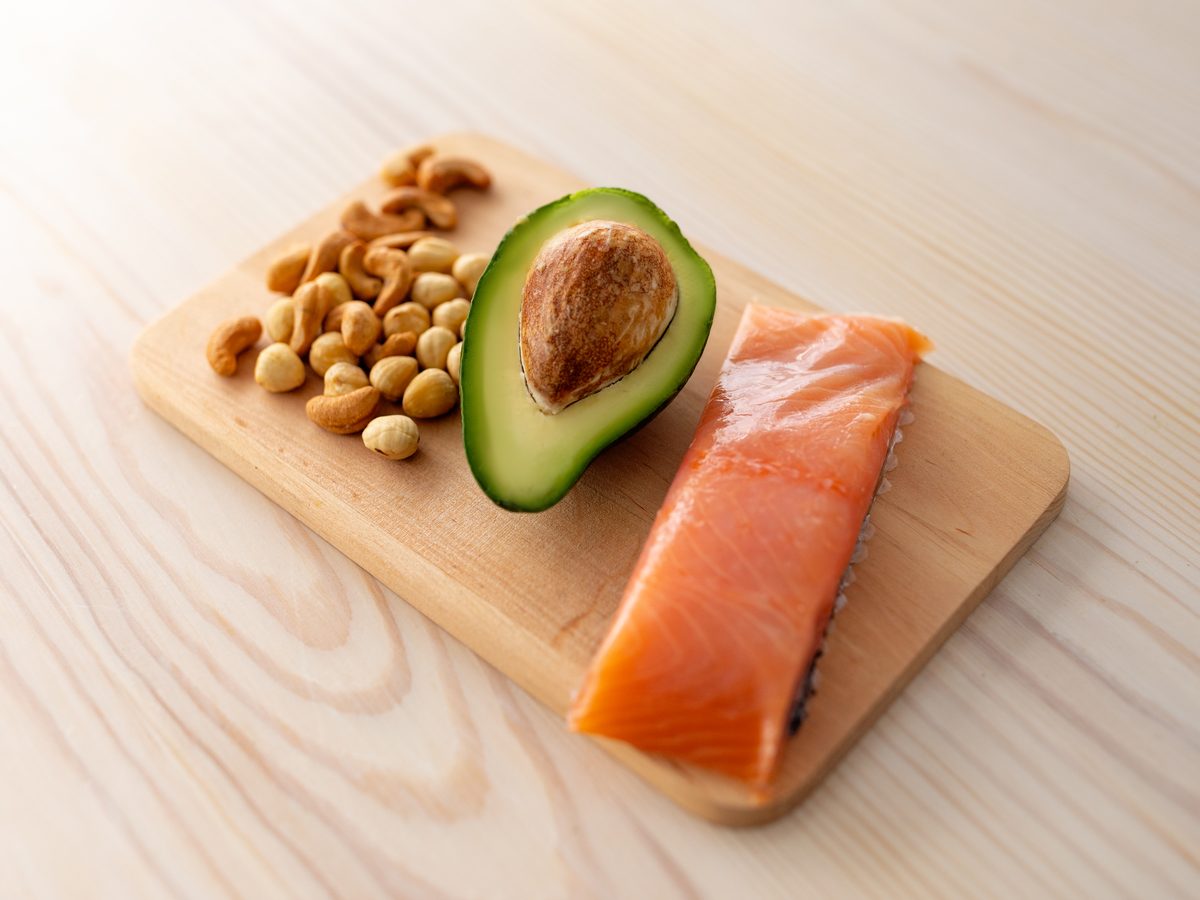
Salt is an added ingredient, and so is oil, citric acid or a firming agent; any one closes this route. FDA points to water, avocados, nuts and seeds, salmon, 100 percent olive oil and certain peanut butters as qualifying foods; the edge cases are in foods that automatically qualify as healthy. If you are here, stop: you qualify, and you escape most of the step 6 recordkeeping.
Step 3: which product type is it?
Classification decides which table applies, the minimum food group content, and whether the test runs per RACC or per labeled serving.
- Individual food. One of the categories in the individual food table below. Tested per RACC.
- Mixed product. Combines food from more than one group and is not a main dish or meal. Tested per RACC.
- Main dish. Defined by reference to 21 CFR 101.13(m). Tested per labeled serving.
- Meal product. Defined by reference to 21 CFR 101.13(l). Tested per labeled serving.
The healthy rule writes no fresh definitions of "main dish" and "meal." It points at 101.13(m) and 101.13(l), which have governed meal and main dish claims for years and set the conditions for each. Read them before assuming the more generous meal limits apply: calling something a meal on the carton does not make it one under the regulation.
For individual foods with a RACC of 50 g or less, or 3 tablespoons or less, the criteria apply per 50 g rather than per RACC. Nuts, crackers and condiments are therefore tested against a larger reference weight than the label serving, which makes sodium much harder to clear.
Step 4: does it hit the food group equivalent minimum?
The 2024 rule replaced the old nutrient-to-encourage minimum with a food group equivalent, or FGE, minimum: you must show the product contains a real amount of a recommended food group. Table 1 of 101.65(d)(2) sets one FGE for each group.
| Food group | One FGE |
|---|---|
| Vegetable | 1/2 cup equivalent |
| Fruit | 1/2 cup equivalent |
| Grains | 3/4 oz equivalent whole grain |
| Dairy | 2/3 cup equivalent |
| Game meat | 1 1/2 oz equivalent |
| Seafood | 1 oz equivalent |
| Egg | 1 oz equivalent |
| Beans, peas, lentils | 1 oz equivalent |
| Nuts, seeds, soy products | 1 oz equivalent |
An individual food needs the FGE shown for its category below. A mixed product needs 1 total FGE with at least 1/4 FGE from each of at least 2 groups; a main dish 2 total FGE with at least 1/2 from each of 2 groups; a meal 3 total FGE with at least 1/2 from each of 3 groups. The dairy FGE is 2/3 cup-eq in the final rule, not the 3/4 cup of the 2022 proposal.
Step 5: does it pass all three nutrient limits?
Three limits apply and you must pass all three: added sugars, sodium and saturated fat. The regulation states them as percentages of the Daily Value; the grams and milligrams below apply those percentages to the adult DVs of 50 g added sugars, 2,300 mg sodium and 20 g saturated fat. Our %DV calculator converts the other way if your spec is in grams.
| Individual food | At least | Added sugars | Sodium | Saturated fat |
|---|---|---|---|---|
| Vegetable | 1/2 cup-eq | 2% DV (1 g) | 10% DV (230 mg) | 5% DV (1 g) |
| Fruit | 1/2 cup-eq | 2% DV (1 g) | 10% DV (230 mg) | 5% DV (1 g) |
| Grain | 3/4 oz-eq whole grain | 10% DV (5 g) | 10% DV (230 mg) | 5% DV (1 g) |
| Dairy | 2/3 cup-eq | 5% DV (2.5 g) | 10% DV (230 mg) | 10% DV (2 g) |
| Game meat | 1 1/2 oz-eq | 2% DV (1 g) | 10% DV (230 mg) | 10% DV (2 g) |
| Seafood | 1 oz-eq | 2% DV (1 g) | 10% DV (230 mg) | 5% DV (1 g), inherent excluded |
| Egg | 1 oz-eq | 2% DV (1 g) | 10% DV (230 mg) | 10% DV (2 g) |
| Beans, peas, lentils | 1 oz-eq | 2% DV (1 g) | 10% DV (230 mg) | 5% DV (1 g) |
| Nuts, seeds, soy | 1 oz-eq | 2% DV (1 g) | 10% DV (230 mg) | 5% DV (1 g), inherent excluded |
| 100% oil | n/a | 0% DV | 0% DV | 20% of total fat |
| Oil-based spread | oil only | 0% DV | 10% DV (230 mg) | 20% of total fat |
| Oil-based dressing | at least 30% oil | 2% DV (1 g) | 10% DV (230 mg) | 20% of total fat |
Multi-component products use Tables 4 to 6.
| Type | Must contain | Added sugars | Sodium | Saturated fat |
|---|---|---|---|---|
| Mixed product, per RACC | 1 FGE, 1/4 from each of 2 groups | 10% DV (5 g) | 15% DV (345 mg) | 10% DV (2 g) |
| Main dish, per labeled serving | 2 FGE, 1/2 from each of 2 groups | 15% DV (7.5 g) | 20% DV (460 mg) | 15% DV (3 g) |
| Meal, per labeled serving | 3 FGE, 1/2 from each of 3 groups | 20% DV (10 g) | 30% DV (690 mg) | 20% DV (4 g) |
For all three multi-component types, saturated fat inherent in seafood, nuts, seeds and soy is excluded from the count. Watch your sources here: FDA's consumer page rounds the individual-food saturated fat limit to 2 g across the board, while the CFR tables set 5% DV (1 g) for several categories and 10% DV (2 g) for others. Use the CFR tables. A vegetable product at 1.8 g saturated fat looks compliant against the consumer page and fails against the regulation.
Step 6: can you prove it?
Under 101.65(d)(4) a manufacturer using the claim must keep written records verifying food group equivalent content: recipes, formulations, database analyses, batch records. They must be kept at least 2 years after the food enters interstate commerce and produced to FDA on request during an inspection.
Two exceptions save the paperwork: the food is an automatic qualifier, or the FGE content is evident from the label, for example from the ingredient list of a simple product. A compound formulation, a supplier blend, or an FGE figure resting on a yield calculation falls outside both. FDA's Compliance Program 7321.005, issued 24 June 2025, instructs investigators on these criteria.
Can my food be labeled healthy? Three products through the sequence
A plain dry-roasted almond pack
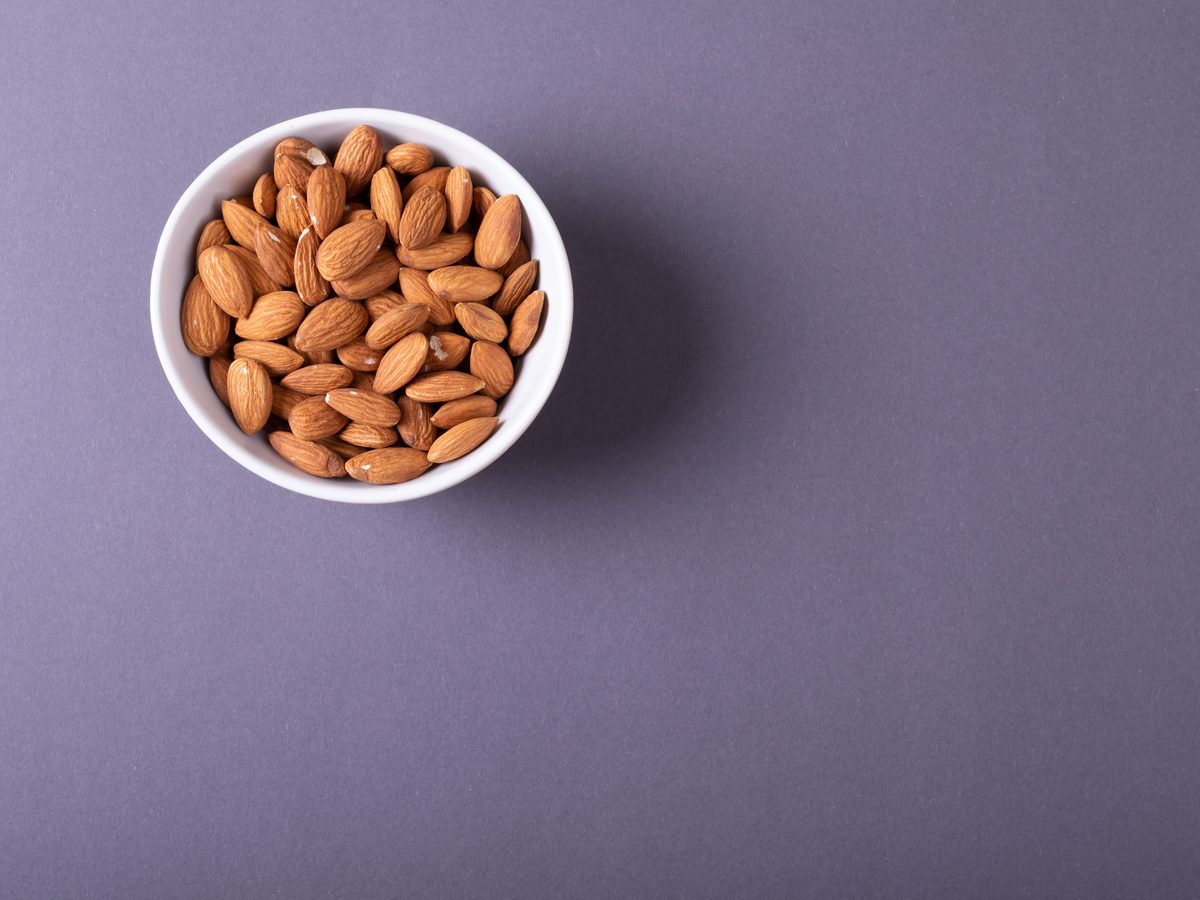
Step 1: the front panel says "a healthy snack" beside a protein callout, a claim. Step 2: the ingredient statement reads "almonds." Nuts are on the automatic list and nothing else is in the pack, so it qualifies with no further test. Stop. The saturated fat in almonds never enters the analysis and the step 6 records are not required.
Now add sea salt, or roast in sunflower oil, and the automatic route closes. You drop into the nuts, seeds and soy row: at least 1 oz-eq nuts, added sugars at most 1 g, sodium at most 230 mg, saturated fat at most 1 g but excluding the saturated fat inherent in the nuts, which here is all of it. Sodium is the only real question, and because the RACC for a nut pack is well under 50 g the limit applies per 50 g. Salt at 4 mg sodium per gram gives 200 mg per 50 g and passes; 6 mg per gram gives 300 mg per 50 g and fails.
A fruit-and-nut granola bar
Step 1: "the healthier bar" is a covered term in a nutritional context. Step 2: no, the bar has oats, raisins, almonds, honey and cane sugar. Step 3: it combines groups and is not a main dish or meal, so it is a mixed product tested per RACC. Step 4: say the oats give 3/4 FGE of whole grain and the raisins 1/4 FGE of fruit, 1 total FGE across two groups, so it clears the minimum.
Step 5 kills it. Sodium at 95 mg is about 4% DV, well under the 345 mg ceiling, and saturated fat at 1.5 g is under 2 g. Added sugars are 6 g from the honey and cane sugar, and 6 divided by 50 is 12% DV against a 10% DV limit, so the bar fails by 1 g. The raisins do not count against it: sugars in whole fruit are not added sugars; honey is. Reformulating to exactly 5 g lands on 10% DV and passes, but that is thin: added sugars are declared to the nearest gram while the %DV may be calculated from the unrounded amount, so a bar built at 5.4 g declares 5 g and is 10.8% DV in fact. Target 4 g.
A canned vegetable soup
Steps 1 and 2 go the same way: the word is a claim, and salt closes the automatic route. Step 3: mixed product, tested per RACC, unless it genuinely meets the main dish definition at 101.13(m). Step 4: say the recipe gives 3/4 FGE of vegetables from carrots, celery and tomato plus 1/4 FGE from white beans, so the 1 FGE minimum across two groups is met.
Formulation A is the standard recipe at 690 mg sodium per RACC. That is 30% DV, double the 15% DV mixed product limit of 345 mg. Formulation B is the reduced-salt build at 310 mg, about 13% DV, which passes, with no added sugars and 0.5 g saturated fat against a 2 g ceiling. Same vegetables, same FGE content, and the salt level alone decides it.
If the soup meets the main dish definition and is labeled accordingly, the test moves to the labeled serving and the sodium ceiling rises to 20% DV, or 460 mg, clearing a 400 mg build. That is not free: a main dish needs 2 total FGE with at least 1/2 from each of two groups, so a thin soup usually fails the FGE test on the way to the higher allowance.
What to do when the answer is no
- Sodium. Cut added salt, move to no-salt-added or rinsed canned inputs, and check whether a small-RACC product is being tested per 50 g. FDA's voluntary sodium reduction targets are guidance, not requirements, but their category target means are a useful benchmark.
- Added sugars. Reduce the sweeteners that meet the added sugars definition: honey, maple syrup, cane sugar, syrups and juice concentrates. Sugars naturally present in whole fruit, vegetables, milk and 100% juice do not count.
- Saturated fat. Change the fat source, and check the exclusions first: saturated fat inherent in seafood, nuts, seeds and soy is excluded, so such a product may already be closer than its panel suggests.
- Food group equivalents. Raise the actual vegetable, fruit, whole grain, dairy or protein content, or classify the product correctly. Reclassifying is not a free pass: every step up in type raises the FGE requirement along with the limits.
The last lever is the one people forget. The claim is voluntary. You can simply not use the word and describe the product accurately in other terms, which is often faster than reformulating something 1 g of added sugars over the line. Run the arithmetic first with our claim validator.
Frequently asked questions
Do I have to do this now?
No. The rule was published 27 December 2024 and is final, but the claim is voluntary and the compliance date is 25 February 2028. You may use the new criteria now. What you cannot do is keep using the word past that date on a product that does not meet the updated definition.
Is there an FDA "healthy" symbol I can put on the pack?
Not yet. No official FDA healthy symbol exists. FDA has said it is continuing to explore developing one, and a potential guidance identifying a symbol sits on its 2026 agenda, but nothing has been issued. Any symbol would be voluntary guidance, so do not design artwork around a mark that does not exist.
My product met the 1994 definition. Am I fine?
Probably not. The 1994 definition was nutrient-centric: limits on total fat, saturated fat, cholesterol and sodium, plus 10% DV of at least one nutrient to encourage. The updated rule drops the total fat and cholesterol limits, replaces the nutrient minimum with food group equivalents, adds an added sugars limit, and cuts the individual-food sodium limit from 480 mg per RACC to 230 mg. Fortified white bread, sweetened yogurt and sweetened cereal generally do not survive that; salmon, nuts and olive oil now qualify.
Does "healthier" on a comparison count?
Yes. "Healthier" and "healthiest" are among the nine covered terms, so "a healthier choice than our original" must meet the criteria in its own right. Being better than your previous formulation does not qualify you.
Once the answer is yes, the claim still has to sit on a compliant panel with correct serving sizes, rounding and %DV figures. Build the label in our Nutrition Facts label generator and keep the step 6 records alongside the artwork file so the two never drift apart.