Is Honey an Added Sugar?
A jar of pure honey declares every gram of its sugars as added sugars. Why the regulation reads that way, what the dagger footnote actually is, and what changes when honey is an ingredient in something else.
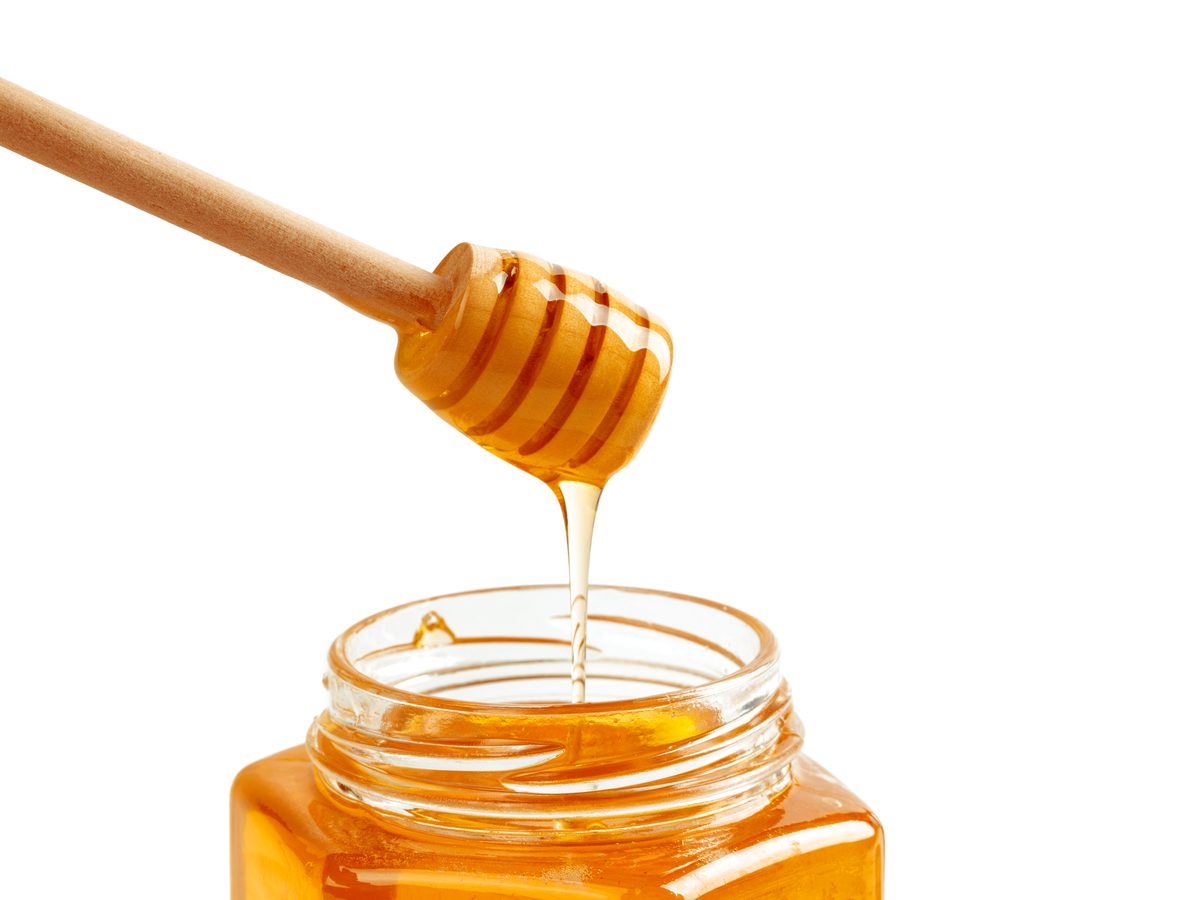
A jar containing nothing but honey has to declare every gram of its sugars as added sugars. That is the short answer to the honey added sugar nutrition label question, and it is not a fault in your labeling software. Under 21 CFR 101.9(c)(6)(iii) the added sugars line on a single-ingredient honey panel carries the same number as the total sugars line above it, and the percent Daily Value beside it is large. Beekeepers and maple producers have objected since the 2016 rule, and FDA's response was a guidance document, not a change to the regulation.
Three things get mixed together here: why the definition produces that result, what the 2019 FDA guidance actually permits on a single-ingredient package, and what happens once the same honey is one ingredient in a sauce or a glaze, where none of that relief exists.
Why a jar of pure honey declares 100 percent of its sugars as added
The whole result comes out of one sentence in 101.9(c)(6)(iii). The regulation says added sugars "are either added during the processing of foods, or are packaged as such, and include sugars (free, mono and disaccharides), sugars from syrups and honey, and sugars from concentrated fruit or vegetable juices that are in excess of what would be expected from the same volume of 100 percent fruit or vegetable juice of the same type."
Read that against a jar of honey and it is caught twice over. Honey is named in the definition as a source of added sugars, and honey sold on its own is a sugar "packaged as such," the clause that also catches a bag of table sugar and a bottle of maple syrup. Nothing was added during processing, and it does not matter: the definition is not a test of what a manufacturer did to the product.
That is the logic the seller collides with. The bee made the sugar, the beekeeper filtered and jarred it, and the panel reports 100 percent added sugars. The exclusions in the same sentence mark the boundary: lactose in milk, the sugars in whole fruit and vegetables, the sugars in 100 percent juice, and narrow carve-outs for juice concentrates used for Brix standardization under 102.33(g)(2) or the fruit component of jams and preserves. Honey is on none of those lists. It is on the inclusion list by name.
Take a honey serving analyzed at 17 g of sugars. Total sugars is 17 g, added sugars is 17 g, and dividing by the 50 g Daily Value for adults and children 4 and older in 101.9(c)(9) gives 34%. For the broader mechanics of the line and its carve-outs, see added sugars on the Nutrition Facts label.
What a honey added sugar nutrition label has to show
Strip the guidance away and look at what 101.9 requires on its own terms. The added sugars content is indented under Total Sugars and prefaced with "Includes" followed by the amount in grams and the words "Added Sugars," giving "Includes 17g Added Sugars." The amount is expressed to the nearest gram. Below 1 gram you may use "Contains less than 1 gram" or "less than 1 gram," and below 0.5 gram the content may be expressed as zero, which no honey serving will do. The general FDA rounding rules apply to the rest of the panel the same way.
The percentage comes from 101.9(d)(7)(ii). You may divide either the rounded declared amount or the unrounded analytical amount by the Daily Value, expressed to the nearest whole percent. Pick one method and use it on every product.
Which Daily Value you divide by depends on the population the food is marketed to. The 101.9(c)(9) table gives 50 g of added sugars for adults and children 4 and older, 25 g for children 1 through 3, and no value for infants through 12 months. The same 17 g serving that reads 34% on a general-market jar reads 68% on one represented as being specifically for children 1 through 3. Serving size drives the whole calculation, so settle it against the rules on FDA serving size requirements before you fix the number at the top of the panel.
The dagger footnote is guidance and enforcement discretion, not a rule change
On 18 June 2019 FDA issued final guidance titled "The Declaration of Added Sugars on Honey, Maple Syrup, Other Single-Ingredient Sugars and Syrups, and Certain Cranberry Products." Every honey seller has heard of it and most have heard of it inaccurately. Here is what it does and does not do.
What it does. For pure honey, pure maple syrup and other single-ingredient sugars and syrups, including table sugar and agave, FDA says the gram amount of added sugars need not be declared on the "Includes ... Added Sugars" line. The percent Daily Value must still be declared. FDA also permits, and encourages, a dagger symbol immediately after that percentage, pointing to a footnote telling the buyer how much sugar one serving contributes and what share of the Daily Value that is, worded along the lines of "One serving adds 17 g of sugar to your diet and represents 34% of the Daily Value for Added Sugars," with your own figures. The symbol and the footnote are both optional.
What it does not do. It does not change the definition in 101.9(c)(6)(iii), and the relief it describes is not codified anywhere in 101.9. A guidance document sets out FDA's current thinking and enforcement intentions; it does not create or confer rights and does not bind FDA or you. The agency has said it does not intend to object to a single-ingredient honey label following the guidance. That is enforcement discretion, not a rule saying honey is not an added sugar. Honey is still an added sugar. FDA exercised enforcement discretion for these products until 1 July 2021 while labels were brought into line.
The same guidance treats certain cranberry products differently. Dried cranberries and cranberry juice cocktail with sugars added for palatability, at total sugar levels comparable to products such as unsweetened grape juice, must still declare both the grams and the percent Daily Value. They may add a symbol and footnote explaining that sugars are added to improve the palatability of naturally tart cranberries. Cranberry gets an explanation, not an omission.
So a honey producer has a deliberate choice: omit the grams and run the dagger footnote, or declare the grams as well, which is also permitted. What is not available is leaving the percentage off.
Honey as an ingredient in something else: no footnote, and a records duty
Everything above applies to a package whose only ingredient is the sugar or syrup. Once honey is one ingredient among several, the guidance stops applying and the ordinary rules run in full.
Take a barbecue sauce sweetened with honey and brown sugar. One serving analyzes at 11 g total sugars: 9 g from the honey and brown sugar, 2 g occurring naturally in the tomato and onion. The panel declares Total Sugars 11g and, indented beneath it, Includes 9g Added Sugars, with 9 divided by 50 giving 18%. Both numbers are mandatory. No dagger, no footnote, no option to drop the grams, because the 2019 guidance is written for single-ingredient sugars and syrups and this is not one.
The mixture also triggers a recordkeeping duty the single-ingredient jar does not. Under 101.9(g)(10)(iv), where a mixture of naturally occurring and added sugars is present, the manufacturer must make and keep written records of the added sugars added during processing, and as packaged where packaged as a separate ingredient. The 9 g figure is one you have to substantiate against the 11 g total, and the regulation names recipes, formulations and batch records as acceptable evidence.
A second trigger catches many honey formulations. Under 101.9(g)(10)(v), where sugars are reduced by non-enzymatic browning or fermentation, you must either keep scientific data showing the added sugars remaining after that process with a narrative explaining why the data suffice, or keep records of the amount added before and during processing, in which case the declared added sugars may never exceed the total sugars. A baked honey glaze sits squarely there. Records under 101.9(g)(10) are kept at least 2 years after the food enters interstate commerce and produced to FDA on request, under 101.9(g)(11). Failing to keep or produce them renders the food misbranded.
Why "no sugar added" is not the way out
The instinct, once 34% is on the panel, is to put something reassuring on the front of the jar. The obvious candidate fails on its own terms. The conditions for "no added sugar," "without added sugar" and "no sugar added" sit in 21 CFR 101.60(c)(2) and must all be met at once.
- No sugars as defined in 101.9(c)(6)(ii), and no other ingredient containing sugars that functionally substitutes for added sugars, are added during processing or packaging.
- The product does not contain an ingredient containing added sugars such as jam, jelly or concentrated fruit juice.
- The sugars content has not been increased above the amount in the ingredients by some means such as enzymes, apart from a functionally insignificant increase that was not the intended effect.
- The food that it resembles and for which it substitutes normally contains added sugars.
- The product bears a statement that it is not "low calorie" or "calorie reduced," unless it meets those definitions, directing the buyer to the panel for further information on sugar and calorie content.
Pure honey fails the fourth condition on its face: there is no conventional sweetened honey for yours to substitute for, so the comparison the claim rests on does not exist. The fifth would make you print a disclaimer pointing the buyer back at the panel you were trying to soften. The general rules in 101.13 sit on top of this, and you can test a front-panel phrase against the definitions with the claim validator before print.
When a small honey producer may not need a panel at all
Before building a panel, check whether 101.9 applies to you at all. Two exemptions in 101.9(j) cover a large share of honey sold in the United States, and both are lost the moment nutrition information or a claim goes on the label.
The first is 101.9(j)(1)(i). Food offered for sale by a person making direct sales to consumers is exempt where that person has annual gross sales made or business done in sales to consumers of not more than $500,000, or annual gross sales of food to consumers of not more than $50,000, provided the food bears no nutrition claims or other nutrition information on the label, in labeling or in advertising. The figures use the most recent 2-year average of business activity; firms in business under 2 years use reasonable estimates. This covers most farm-stand and farmers-market honey.
The second is 101.9(j)(18), the low-volume exemption for small businesses. A product qualifies for a 12-month period if, over the preceding 12 months, the person claiming it employed fewer than an average of 100 full-time equivalent employees and fewer than 100,000 units of that product were sold in the United States. It is conditional on a notice filed with FDA before the period begins, except that a person who is not an importer with fewer than 10 full-time equivalent employees need not file for a product selling under 10,000 units a year. Again, labels, labeling and advertising must carry no nutrition information and no nutrient content or health claim. Outgrow the thresholds and you have 18 months to comply.
The trap in both is the same: a phrase that functions as nutrition information or a nutrient content claim converts an exempt product into one that needs a full panel. If your jar needs a panel, or you carry one voluntarily, build it in the nutrition label generator, which puts the whole of a honey serving on the added sugars line and calculates the percentage against the right Daily Value column.
Frequently asked questions
Is honey an added sugar even though nothing is added to it?
Yes. 21 CFR 101.9(c)(6)(iii) defines added sugars as sugars either added during processing or "packaged as such," and names sugars from syrups and honey specifically. A jar of pure honey is a sugar packaged as such, so all of its sugars are added sugars.
Can I leave the gram amount off the added sugars line on a honey jar?
FDA's final guidance of 18 June 2019 says the gram amount is not required on the "Includes ... Added Sugars" line for pure honey, pure maple syrup and other single-ingredient sugars and syrups. The percent Daily Value must still be declared. That is guidance reflecting enforcement discretion, not an amendment to 101.9.
What exactly goes in the dagger footnote?
The guidance permits a dagger symbol immediately after the added sugars percent Daily Value, leading to a footnote giving how much sugar one serving contributes and what share of the Daily Value that is, worded along the lines of "One serving adds 17 g of sugar to your diet and represents 34% of the Daily Value for Added Sugars." Substitute your own analyzed figures. Both are optional.
Does the same relief apply to honey in my granola or sauce?
No. The guidance is written for single-ingredient sugars and syrups. Once honey is one ingredient among several, the grams and the percent Daily Value are both mandatory and there is no footnote option. The honey's contribution counts as added sugars in full, combined with any other added sugars in the formula.
What records do I have to keep when a product mixes honey with naturally occurring sugars?
Under 101.9(g)(10)(iv) you must keep written records of the added sugars added during processing, and as packaged where the sugar is packaged as a separate ingredient; recipes, formulations and batch records are named as acceptable. If sugars are reduced by fermentation or non-enzymatic browning, 101.9(g)(10)(v) sets out two further options. Records are kept at least 2 years and produced to FDA on request, under 101.9(g)(11).
Can I print "no sugar added" on a jar of pure honey?
The conditions in 21 CFR 101.60(c)(2) all have to be met, and pure honey fails the one requiring that the food it resembles and substitutes for normally contains added sugars. There is no sweetened conventional honey for your product to be the unsweetened version of. The same paragraph would also require a statement telling buyers the food is not low calorie or calorie reduced and directing them to the nutrition panel.
I sell a few hundred jars a year at a market. Do I need a Nutrition Facts panel?
Possibly not. 101.9(j)(1)(i) exempts direct sales to consumers by a person with annual gross sales to consumers of not more than $500,000, or food sales to consumers of not more than $50,000, on a 2-year average. 101.9(j)(18) separately exempts low-volume products, under 100 average full-time equivalent employees and under 100,000 units, generally on a notice filed in advance. Both disappear if the label or advertising carries nutrition information or a nutrient content or health claim.