What Counts as High Sodium on a Label
20 percent of the Daily Value in one serving, which is 460 mg. Where that number comes from, what low means at the other end, and why the same figure that helps a shopper will not let a producer print anything on the pack.
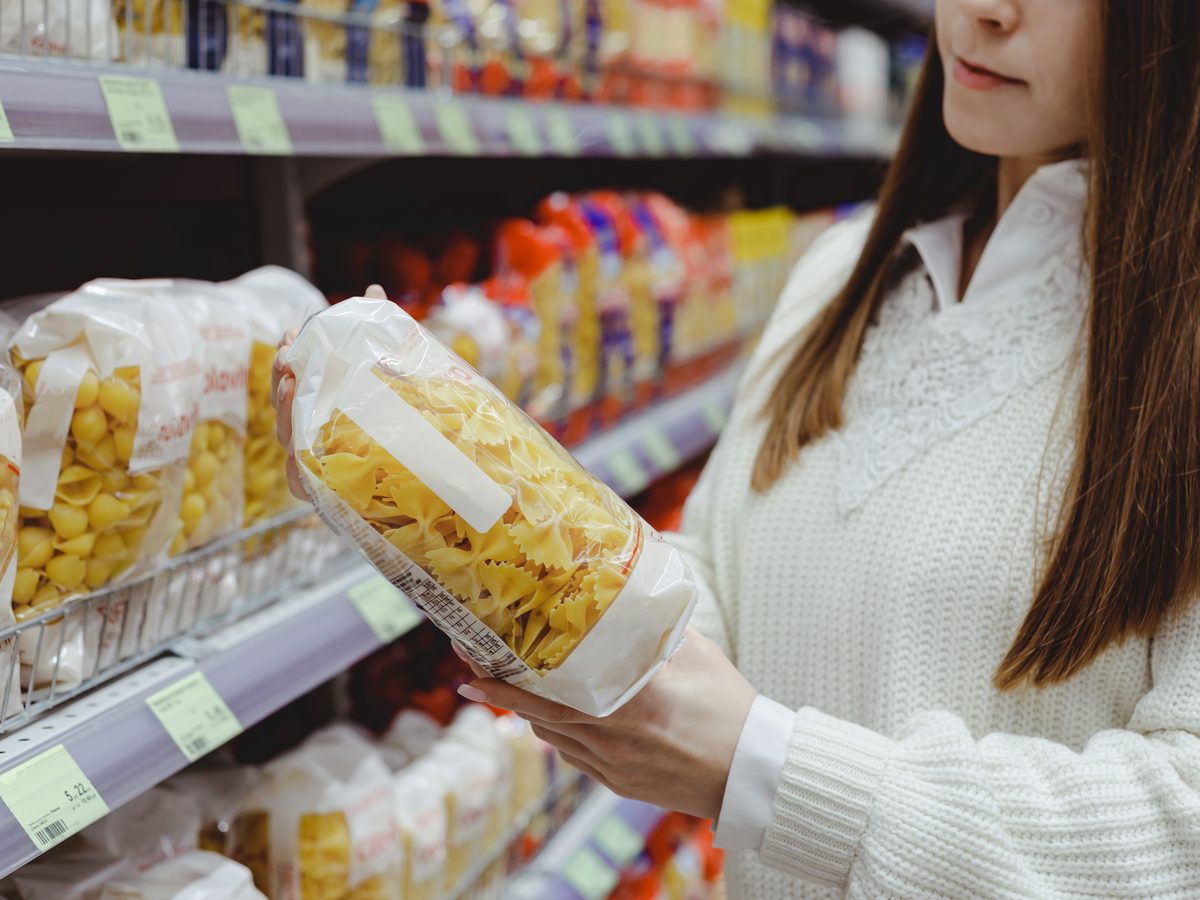
If you are standing in a shop wondering what is high sodium on a nutrition label, the short answer is 20 percent of the Daily Value in one serving, which works out to 460 mg. The sodium Daily Value for adults and children 4 and older is 2,300 mg under 21 CFR 101.9(c)(9), and 20 percent of 2,300 mg is 460 mg. Anything at or above that line, in the serving the label declares, is a lot of sodium for one food.
That is the useful half of the answer. The other half matters more if you make food rather than buy it: the 20 percent mark is FDA consumer guidance, not a legal threshold. Nothing in the regulations defines a food as "high sodium". The binding sodium number in the rules is 140 mg, and it is a completely different kind of number, measured on a different basis, for a different purpose. Mixing the two up produces bad decisions on both sides of the shelf.
What is high sodium on a nutrition label: 20 percent DV, or 460 mg per serving
FDA's consumer guidance for reading a Nutrition Facts panel is the 5 and 20 rule: 5 percent DV or less per serving is low, 20 percent DV or more is high. Sodium is one of the three nutrients the guidance tells you to get less of, alongside saturated fat and added sugars. Converting that to milligrams takes one multiplication against the 2,300 mg Daily Value in 101.9(c)(9):
- 20 percent of 2,300 mg is 460 mg. That is the "high" line.
- 5 percent of 2,300 mg is 115 mg. That is the "low" line.
- Everything between 115 mg and 460 mg is the middle, which the guidance does not name.
You do not have to do that arithmetic in the aisle, because the panel already did it. If the %DV on the sodium row reads 20 percent or more, that is a high-sodium serving; 5 percent or less is low in the everyday sense. The milligram conversions matter when you are comparing products whose serving sizes differ, or formulating and need a target rather than a reading.
One wrinkle: the declared percentage rounds to the nearest whole percent, so 20% DV appears from about 449 mg upward, not from exactly 460 mg. Sodium above 140 mg is also declared to the nearest 10 mg under 101.9(c)(4), so a product with 452 mg declares 450 mg and 20% DV. For the reference values and the arithmetic behind the percentages, the FDA Daily Value chart has them; this article stays on sodium.
The 5 percent end, and what "low" actually means to a reader
The 5 percent end is less familiar and does more work. Most packaged foods sit in the 6 to 19 percent band, contributing 140 mg here and 250 mg there, and the total is what pushes average intake in the United States to roughly 3,400 mg a day, about 50 percent above the recommended limit. More than 70 percent of that sodium comes from commercially processed, packaged and prepared foods, not the salt shaker. The 2025-2030 Dietary Guidelines for Americans, released 7 January 2026, keep the limit at less than 2,300 mg a day for ages 14 and older. So the skill that matters is not spotting the one product at 900 mg. It is noticing that four items at 13% DV each use more than half the day before you have cooked anything.
| %DV on the panel | Sodium per serving | How a reader should take it |
|---|---|---|
| 5% or less | 115 mg or less | Low. Several of these and sodium is still not the problem. |
| 6% to 19% | About 120 mg to 450 mg | Middle. Fine once, additive across a day. |
| 20% or more | About 460 mg or more | High. One serving takes a fifth of the day or more. |
Those bands are not purely informal. FDA's proposed front-of-package rule, published 16 January 2025 at 90 FR 5426, would print the same cut points on the package for saturated fat, sodium and added sugars: "Low" at 5 percent DV or less, "Med" at 6 to 19 percent, "High" at 20 percent or more. That rule is proposed, has not been finalized, and no packaged food in the United States is required to carry such a box today.
The crucial distinction: guidance is not a legal threshold
The 5 and 20 rule is FDA consumer education. It is not in 21 CFR 101.9, not in 21 CFR 101.61, not in any binding regulation. No rule defines a food as "high sodium", and none requires a warning, a disclosure or a front-panel mark because a serving crosses 460 mg. A product at 1,100 mg per serving is fully compliant so long as it declares that number accurately in the required format.
A manufacturer could not call a food "high sodium" even if it wanted to. Under 101.61(a)(1) a claim about the level of sodium may only be made using one of the terms defined in 101.61, and that section defines only the low end: sodium free, very low sodium, low sodium, reduced sodium and the salt terms. The "high" and "excellent source" claims at 20 percent DV in 101.54 exist for nutrients you are meant to get more of.
The binding sodium number is 140 mg. Under 101.61(b)(4), "low sodium" and its synonyms may be used if the food has a reference amount customarily consumed greater than 30 g or 2 tablespoons and contains 140 mg or less of sodium per reference amount. If the reference amount is 30 g or less, or 2 tablespoons or less, it must meet 140 mg per reference amount and per 50 g. For meals and main dishes, 101.61(b)(5) sets 140 mg or less per 100 g instead.
Three things make it a different kind of number from the 5 and 20 rule:
- It is measured per reference amount customarily consumed, not per labeled serving. The labeled serving derives from the RACC but is not always equal to it, so two foods with identical panels can differ on claim eligibility.
- It is a gate, not a description. Meeting 140 mg obliges nobody to say anything. It only unlocks a phrase the label may use.
- It sits at 140 mg, not 115 mg. A food at 130 mg per reference amount may legally print "low sodium" on the front while a shopper applying the 5 percent rule places it in the middle band.
FDA noticed that gap. The same January 2025 proposal would amend 101.61 to lower "low sodium" from 140 mg to 115 mg or less per reference amount, precisely because 115 mg is 5 percent of the 2,300 mg Daily Value. That change is proposed only. The binding definition today remains 140 mg.
The full set of sodium claims, and what each one really requires
| Claim | Individual foods | Meals and main dishes |
|---|---|---|
| Sodium free, no sodium, zero sodium | Less than 5 mg per RACC and per labeled serving, with no sodium-containing ingredient unless asterisked as adding a trivial amount | Less than 5 mg per labeled serving |
| Very low sodium | 35 mg or less per RACC, and per 50 g if the RACC is 30 g or less or 2 tbsp or less | 35 mg or less per 100 g |
| Low sodium, little sodium, low source of sodium | 140 mg or less per RACC, and per 50 g if the RACC is 30 g or less or 2 tbsp or less | 140 mg or less per 100 g |
| Reduced sodium, less sodium, lower sodium | At least 25 percent less per RACC than a reference food, with the reference food, percent difference and milligram comparison declared | At least 25 percent less per 100 g |
| Salt free | Only if the food is sodium free | Same |
| Unsalted, no salt added, without added salt | No salt added in processing, the food it resembles is normally salted, and if not sodium free it must state "not a sodium free food" | Same |
"Reduced sodium" is a relative claim. Under 101.61(b)(6) it means only that the product has at least 25 percent less sodium than an appropriate reference food. The regulation's own worked example is a product whose "sodium content has been lowered from 300 to 150 mg per serving". Both numbers sit in the middle band: 300 mg is 13% DV, 150 mg is 7% DV. The reduction is real, the claim is lawful, and the result is still not a low-sodium food. 101.61(b)(6)(iii) adds a limit: the claim cannot be made if the reference food already meets the definition of low sodium.
The salt row matters because 101.61(c) says outright that "salt" is not synonymous with "sodium". Salt means sodium chloride. A food can have no added salt and still carry substantial sodium from baking soda, sodium phosphates or cultured ingredients, which is why the disclosure in 101.61(c)(2)(iii) exists. "No salt added" on the front and 380 mg on the panel is not a contradiction. "Light in sodium" and "lightly salted" sit in 21 CFR 101.56 rather than 101.61.
How serving size makes a high-sodium product look moderate
Every %DV on the panel is per labeled serving, so changing the serving changes the percentage without changing the food. The rules constrain this more than people assume, but not completely.
Under 101.9(b)(6), a product packaged and sold individually containing less than 200 percent of its reference amount must be treated as a single-serving container, with the entire contents labeled as one serving. A single-serve soup cup cannot declare two servings to halve its sodium figure. Under 101.9(b)(12)(i), one containing at least 200 percent and up to 300 percent of the reference amount must carry a second column for the entire package. The purpose of that dual column is to show the number a person eating the package actually gets.
Above 300 percent of the reference amount the package is a genuine multi-serving container and only the per-serving column is required. This is where a high-sodium product reads as moderate. A container declaring four servings at 300 mg each shows 13% DV on the panel, but eaten in one sitting it delivers 1,200 mg, 52 percent of the day. Nothing on that label is wrong. The reader has to multiply.
Two habits fix it: read the servings per container line before the %DV line, and compare competing products on milligrams per 100 g rather than per serving, since serving sizes vary by category even on the same shelf. A %DV calculator beats mental arithmetic across a basket or a product line.
What a producer should take from all this
Track two sodium numbers for every product, not one. Milligrams per labeled serving drives the %DV on the panel and therefore how a shopper reads the product. Milligrams per reference amount customarily consumed decides claim eligibility under 101.61. For many products the two are the same figure. For small single-serve packages, for meals and main dishes measured per 100 g, and wherever the labeled serving was rounded away from the reference amount, they are not. These are the lines that matter:
- 460 mg per labeled serving. At or above this the panel shows 20% DV or more and a reader who knows the rule treats the product as high sodium. The consequence is commercial, not legal.
- 140 mg per reference amount. The binding ceiling for a "low sodium" claim under 101.61(b)(4).
- 115 mg per reference amount. Not a requirement. It is 5 percent of the Daily Value, the level the January 2025 proposal would move the "low sodium" claim to, and the level at which a reader applying the 5 percent rule agrees with your front panel. Building to 115 mg instead of 140 mg buys headroom if that proposal is finalized and costs nothing if it is not.
- 35 mg and 5 mg per reference amount. Very low sodium and sodium free.
Two failure modes are worth naming. A bare "reduced sodium" flash on the front is not a compliant claim: 101.61(b)(6)(ii) requires the reference food and the percent difference in immediate proximity to the most prominent claim, plus a milligram comparison next to that claim or the nutrition label. And "no salt added" used as a health signal on a product still carrying several hundred milligrams of sodium triggers the mandatory "not a sodium free food" statement, which reads badly when a customer finds the panel.
Beyond claims, FDA's voluntary sodium reduction targets set category-level goals in milligrams per 100 g, Phase I finalized in October 2021 and Phase II still in draft since August 2024, and they are worth checking against your own category before you fix a formulation target: see FDA sodium reduction targets for the numbers and their status. Once the formulation is settled, build the panel from the recipe in our nutrition label generator, which applies the 101.9(c)(4) sodium rounding and the whole-percent %DV rounding so the sodium row you print is the one an FDA reviewer would calculate.
Frequently asked questions
Is 400 mg of sodium per serving a lot?
It is in the middle band, near the top. 400 mg against the 2,300 mg Daily Value is 17 percent, so the panel reads 17% DV, just below the 20 percent mark FDA's guidance calls high. Two servings put you above a third of the day, so check the servings per container before deciding.
Why does a package say "low sodium" when the panel shows 6% DV?
Because they are different systems. 21 CFR 101.61(b)(4) permits "low sodium" at 140 mg or less per reference amount customarily consumed, while the panel reaches 5 percent only at 115 mg or less. A food between 115 mg and 140 mg qualifies for the claim and still shows 6% DV. Both are correct.
Does FDA require a warning on high-sodium foods?
No. There is no mandatory high-sodium warning, disclosure or symbol in United States food labeling. The proposed front-of-package "Nutrition Info" box published 16 January 2025 would require the word "High" next to sodium at 20 percent DV or more, but it has not been finalized and nothing is required today.
Is "no salt added" the same as low sodium?
No. 21 CFR 101.61(c) states that salt is not synonymous with sodium. "No salt added" means no sodium chloride was added during processing and that the food it resembles is normally salted. It can still contain sodium from other ingredients, and if it is not sodium free the label must carry "not a sodium free food" or "not for control of sodium in the diet".
How do I compare two products with different serving sizes?
Convert both to sodium per 100 g and compare those. Comparing %DV across different serving sizes tells you which single serving is heavier, not which food is saltier. Both are fair questions, but the panel answers only the first one directly.
Can I get my product under 20% DV just by declaring a smaller serving?
Generally not. The labeled serving derives from the reference amount customarily consumed for the category, not from choice. 101.9(b)(6) forces an individually packaged product under 200 percent of its reference amount to declare the whole contents as one serving, and 101.9(b)(12)(i) forces a second whole-package column between 200 and 300 percent. Serving size is a compliance output, not a marketing lever.
Does the 2,300 mg Daily Value apply to children?
Not to all of them. 101.9(c)(9) sets sodium at 2,300 mg for adults and children 4 and older and 1,500 mg for children 1 through 3, so a toddler product calculates against the smaller figure. Infant labels through 12 months show no sodium %DV at all under 101.9(j)(5).