RTD drinks, mixers, energy, functional: all beverage rules covered
Beverages have their own RACC ladder (§ 101.12 Table 2) and different rounding conventions. Sugar declaration triggers different warnings in different markets.
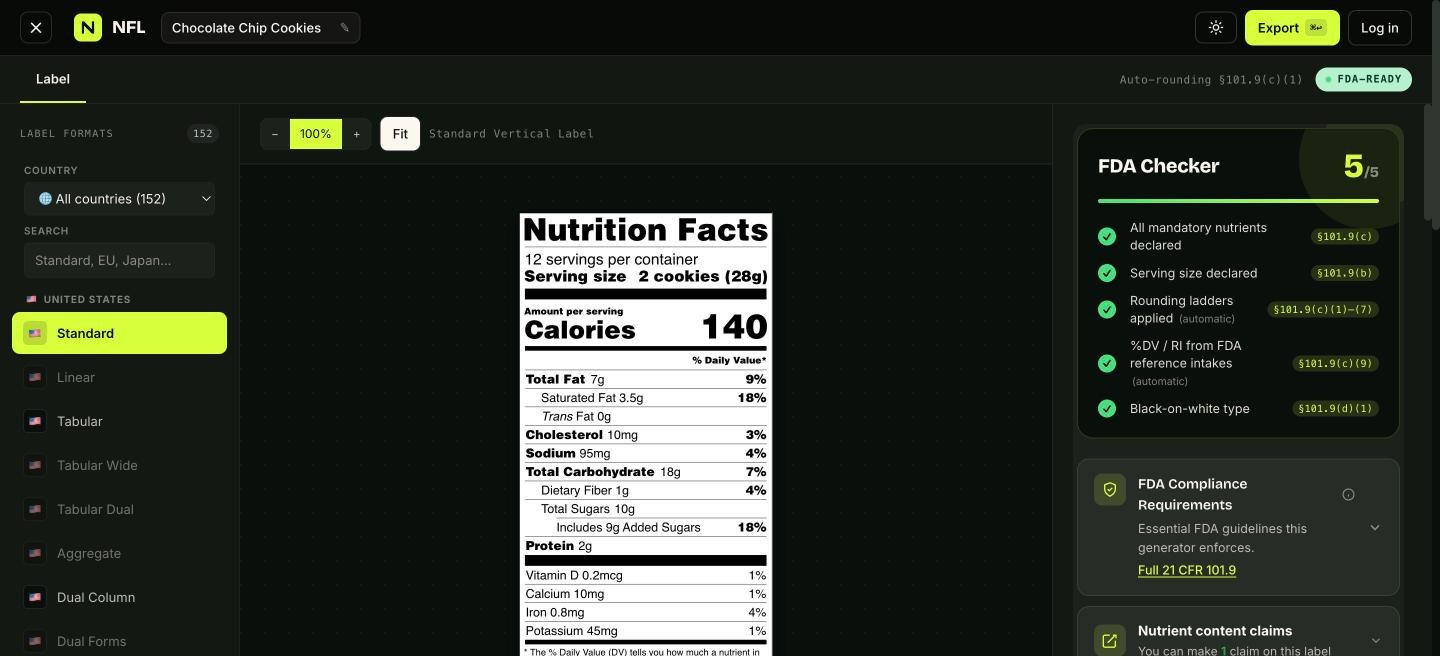
Beverage RACC + serving conventions
Water and RTD drinks default to 240 mL / 8 fl oz serving. Concentrates use 30 mL. Energy shots have their own. We pick the RACC automatically from the FDA table.
Beverage-specific FOP thresholds
Mexico's sugar octagon triggers at ≥ 5% energy for beverages (vs 10% for solids). Chile's "ALTO EN AZÚCARES" fires at 5 g/100 mL. We apply the beverage-specific ladder for every FOP-enabled market.
Caffeine and sweetener disclosures on a drink label
Argentine Ley 27.642 rectangles for "CONTIENE CAFEÍNA" and "CONTIENE EDULCORANTES" trigger when applicable. Similar disclosures in Ecuador, Peru, and Uruguay.
Managing labels across many flavour SKUs
10 flavors of the same base? Save the base, duplicate + tweak the flavor essence, generate 10 labels. Ingredient statements adjust automatically per SKU.
If it contains juice, you owe a percentage declaration
A beverage that purports to contain juice - by name, by image, or by implication - has to declare its percentage juice content under 21 CFR § 101.30. This catches more products than people expect, because the trigger is what the package suggests rather than what the formula contains.
A sparkling water with a lime on the front and no juice in the bottle raises the question. A "berry" flavoured drink with two percent juice has to say two percent. The declaration sits near the top of the information panel, and it is a common finding in warning letters precisely because brands treat the fruit imagery as marketing rather than as a claim.
Is your energy drink a beverage or a supplement?
This is the single biggest fork in beverage labeling, and brands sometimes pick a side without realising they have.
A product marketed as a conventional beverage carries a Nutrition Facts panel under § 101.9, uses food additives that are permitted for that use, and cannot carry structure/function claims freely. A product marketed as a liquid dietary supplement carries a Supplement Facts panel under § 101.36, operates under DSHEA, and takes the structure/function disclaimer.
What decides it is not the format of the container. The FDA looks at how the product is represented - its name, its labeling, its marketing, the serving size, the packaging format, and whether it is positioned as something you drink for refreshment or take for an effect. A 16 oz can sold in the chiller next to soft drinks reads as a beverage no matter what the panel says.
Getting this wrong means the wrong panel, potentially the wrong permitted ingredients, and claims you are not entitled to make. It is worth deciding deliberately, early, and documenting the reasoning.
If there is alcohol in it, the FDA may not be your regulator
Most alcoholic beverage labeling falls to the TTB - the Alcohol and Tobacco Tax and Trade Bureau - under the Federal Alcohol Administration Act, not to the FDA. That covers distilled spirits, wine above the statutory threshold, and malt beverages made from malted barley and hops.
But the split is not clean, and the exceptions are exactly where the modern drinks market lives. Certain low-alcohol wines, ciders below the threshold, and beers brewed without malted barley or without hops can fall outside TTB's remit and back under the FDA - which means a Nutrition Facts panel and FDA ingredient labeling rather than TTB requirements.
Hard seltzers, sake-based products, and gluten-free beers made from sorghum or rice are the usual candidates for this confusion. If you are anywhere near that boundary, confirm which agency governs your product before you commission artwork, because the two regimes want genuinely different labels.